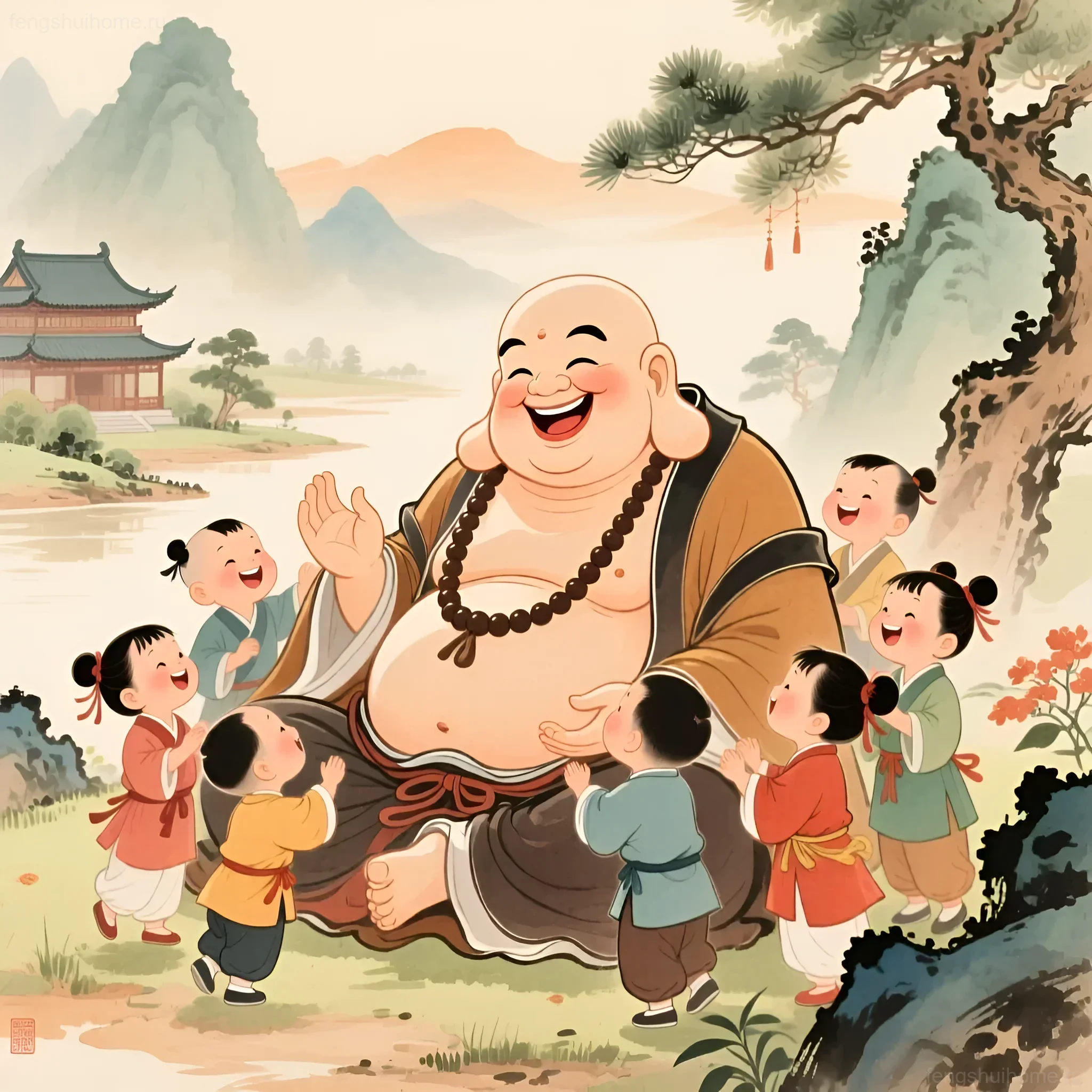
Dear readers and connoisseurs of spatial harmony! Today, we will delve into the world of one of the most beloved and powerful symbols of feng shui – Hotei, also known as the Laughing Buddha. If your goal is to fill your home with boundless joy, stable prosperity, and robust health, then the correct choice and placement of this talisman will be your key step. Hotei is not just a decorative figurine; it is a powerful conductor of positive Qi energy, capable of transforming the atmosphere of your dwelling and attracting good fortune into all areas of life.
Hotei: Who is He and Why Does He Bring Good Luck in Feng Shui
Hotei, which literally translates to “cloth bag,” is not the historical Buddha Shakyamuni, but one of the Chinese gods of happiness and wealth. In feng shui tradition, he embodies abundance, carefree joy, good nature, and the fulfillment of desires. His prototype is considered to be the real monk Qici, who lived in China during the Liang Dynasty (10th century).
Key aspects why Hotei is so important for attracting good luck:
- Symbol of Abundance: His large belly symbolizes wealth, and the bag represents a container for all worldly sorrows and treasures, which he is ready to distribute to those who walk the path of virtue.
- Absorption of Negativity: Hotei is a “vacuum cleaner” for negative energy. His laughter and positive image neutralize Sha Qi (harmful energy) and transform it into favorable, creative Sheng Qi.
- Wish Granter: There is a belief that if you rub Hotei’s belly 300 times while thinking of your desire, it will surely come true. This is a ritual that establishes a direct connection between you and the talisman.
Qi Energy and the Laughing Buddha: How They Interact
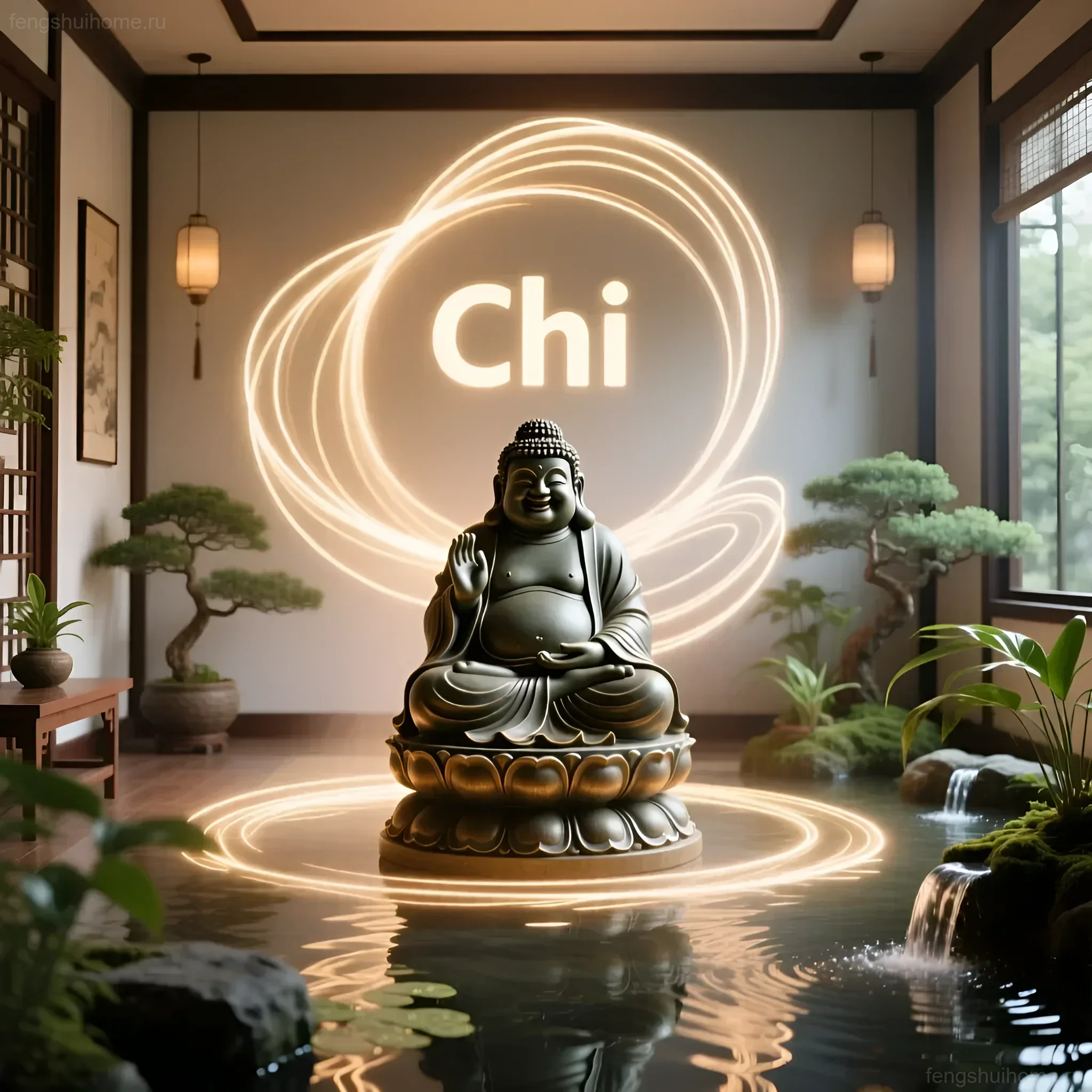
Feng shui is based on managing the flow of Qi energy. Hotei, with his rounded shape and ever-smiling face, is an ideal “accumulator” and “distributor” of this energy. He embodies pure Yang – the active, bright, positive principle necessary for prosperity.
When you place Hotei in your home, the following happens:
- Attracting Qi: The rounded, smooth shape of his body acts as a magnet for incoming positive Qi.
- Holding and Accumulating: Hotei’s large belly symbolizes the ability to accumulate wealth and happiness, preventing good fortune from slipping away.
- Stabilizing: In areas where energy is too active or, conversely, stagnant, Hotei introduces an element of balance, stabilizing the flows according to the principles of Yin-Yang. His cheerful disposition softens sharp corners and tension.
Master’s Tip: The larger Hotei is, the more positive Qi he can gather. However, size is less important than the harmonious correspondence of the figurine to the scale of your dwelling.
Choosing Your Hotei: What to Look For
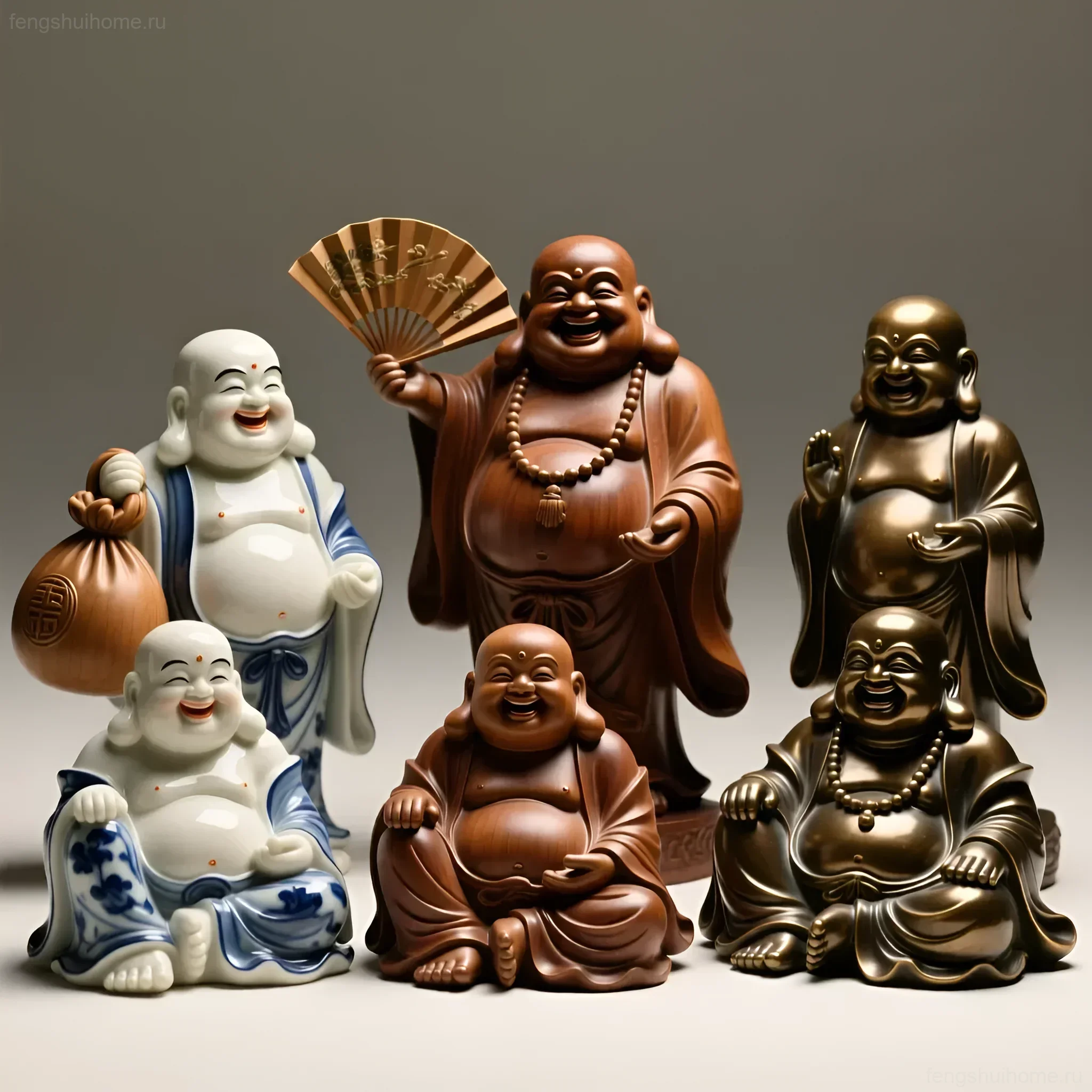
Choosing a figurine is the first and most important step. Your Hotei should “resonate” with you, evoking feelings of joy and trust. In addition to personal feelings, pay attention to the following parameters:
Material of Manufacture
The material should correspond to the activation goal and the element of the zone where you will place it:
- Bronze, Brass, Metal: Ideal for the Wealth sector (Southeast – although this is Wood, Metal supports Water, which nourishes Wood) and, of course, for the Helpful People sector (Northwest, Metal element). They bring stability and financial protection.
- Wood, Ceramic, Clay: The best choice for the Family sector (East) or Health sector (Center/East). Wood symbolizes growth and development, which is important for happiness and family well-being.
- Jade or Stone: Used for stability and longevity, especially good in the Knowledge sector (Northeast, Earth element).
Pose and Symbols Held by Hotei
Various attributes in Hotei’s hands enhance his action in a specific area:
| Symbol in Hands | Meaning and Activation | Bagua Sector |
|---|---|---|
| Bag and Coins (or Ingots) | Direct attraction of financial well-being and income growth. The most common variant. | Southeast (Wealth) |
| Pearl or Magic Ball | Spiritual wealth, wish fulfillment, wisdom, and harmony. | Northeast (Knowledge) |
| Fan | Waving away problems and obstacles, ease in achieving goals. | South (Fame) |
| Staff or Gourd (Wu Lu) | Longevity, health, protection from illness. | East (Family/Health) |
| Children (five little Hoteis) | Family happiness, fertility, luck for couples wishing to have children. | West (Children/Creativity) |
Where to Place Hotei to Attract Wealth and Happiness: Bagua Sectors
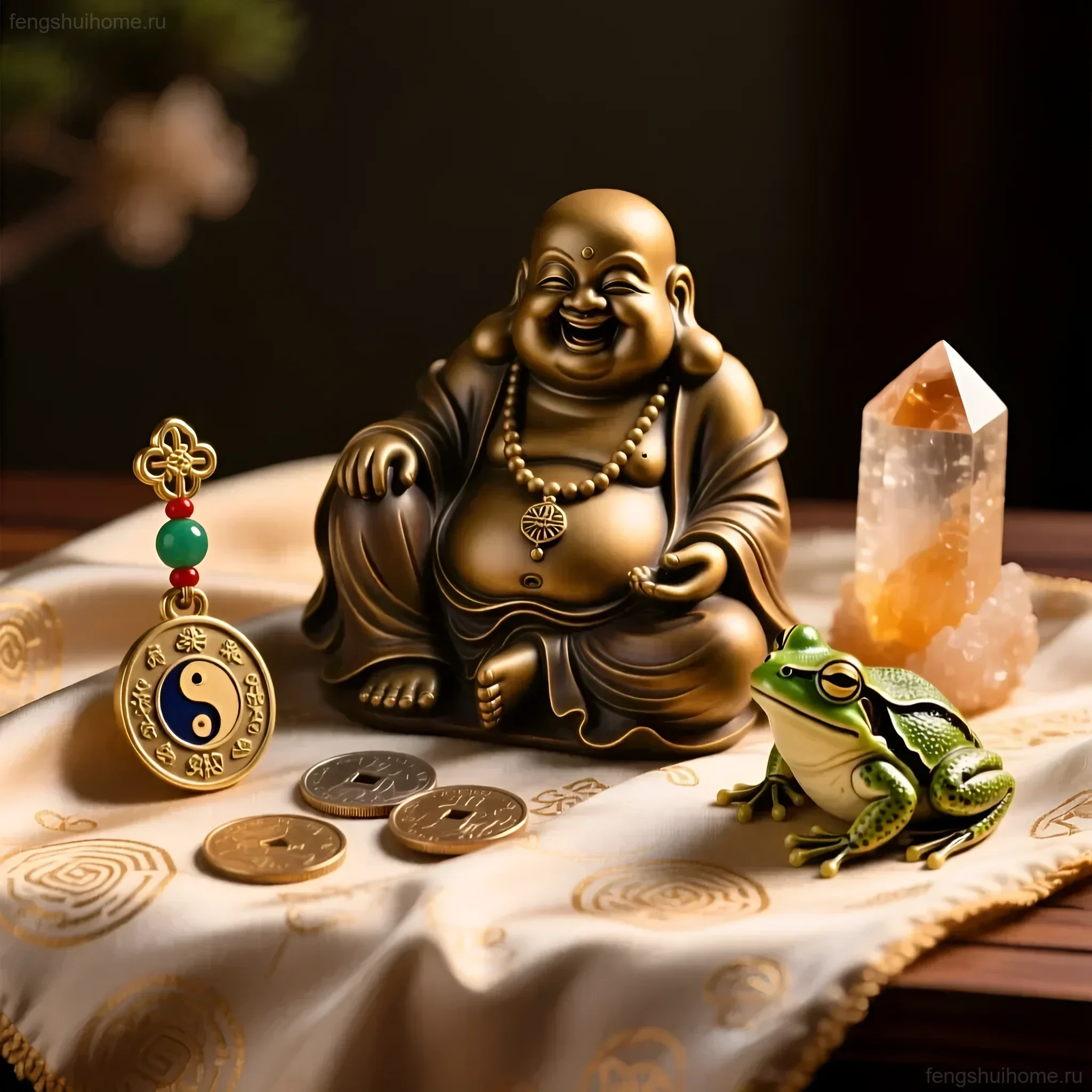
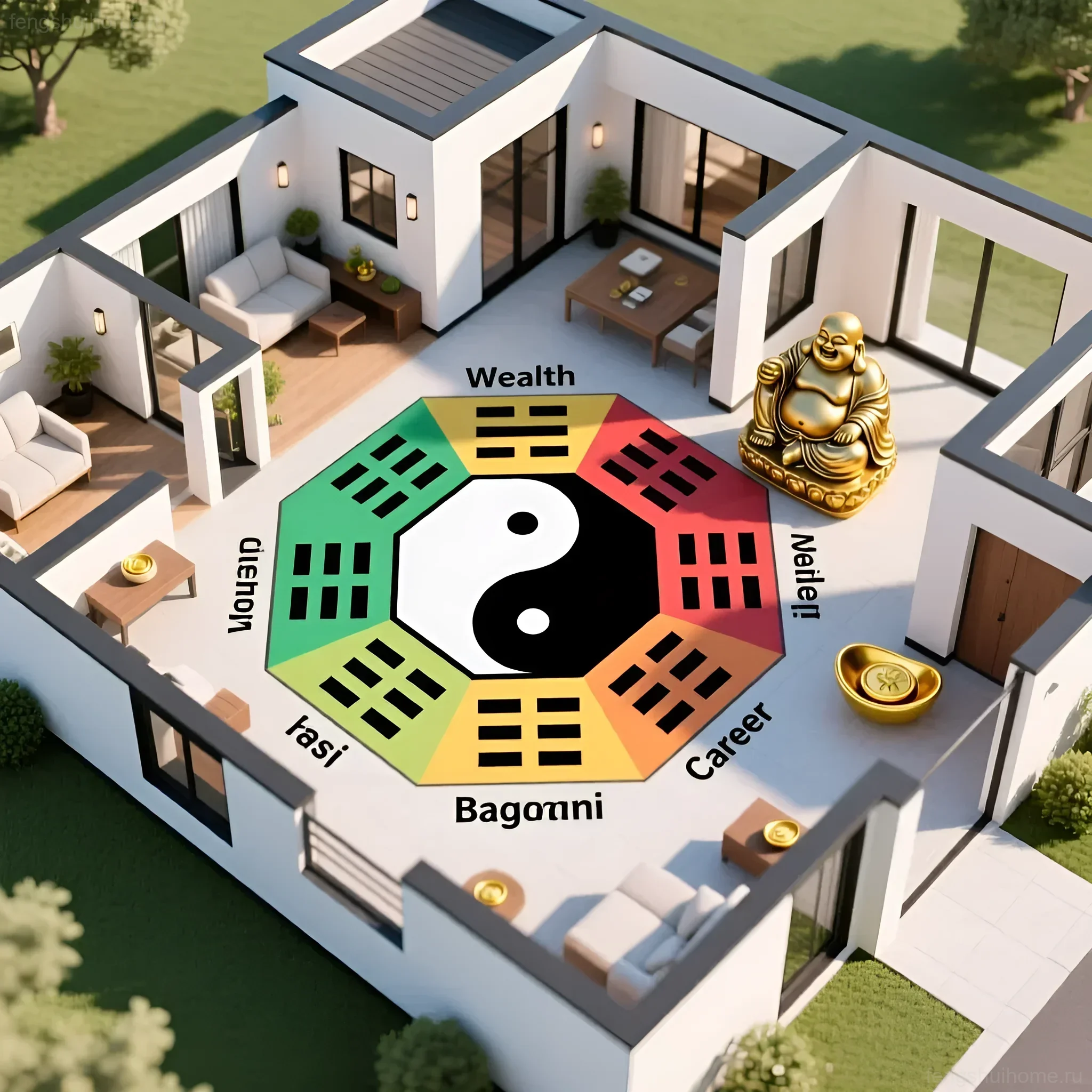
The placement of Hotei should be conscious and strategically correct. We use the Bagua grid to precisely determine which area of life you want to enhance. Remember: Hotei should be placed in a visible spot, but not be overwhelmed or hidden.
1. Wealth Sector (Southeast)
This is the most popular and powerful location for Hotei, focused on finances. Here, he should be large, preferably made of metal (bronze) or wood, holding coins or gold ingots. Place him so that he faces into the room, as if “bringing” wealth into the home.
2. Family and Health Sector (East)
If your main goal is harmony in relationships, strengthening family ties, and health, a Hotei with a Wu Lu gourd or staff, made of wood or ceramic, will be ideal. He will bring laughter and kindness into everyday interactions.
3. Helpful People and Travel Sector (Northwest)
In this sector, a Hotei, preferably made of metal, will help you find influential patrons, support, or favorable opportunities for travel. His energy will ensure a favorable turn of events.
4. Entrance Area (Facing the Entrance)
Placing Hotei opposite the entrance door (but not directly on the floor) is a classic technique. He should be at a height of about 70-100 cm. In this position, he will greet all incoming Qi, neutralize negativity, and transform it into well-being before it spreads throughout the house. This placement maximally promotes general happiness and good fortune.
Important: Never place Hotei in the bedroom, bathroom, or kitchen. These areas are either too intimate or associated with cleansing/absorbing processes, which weakens his powerful Yang energy.
Talismans and Symbols That Enhance Hotei’s Energy
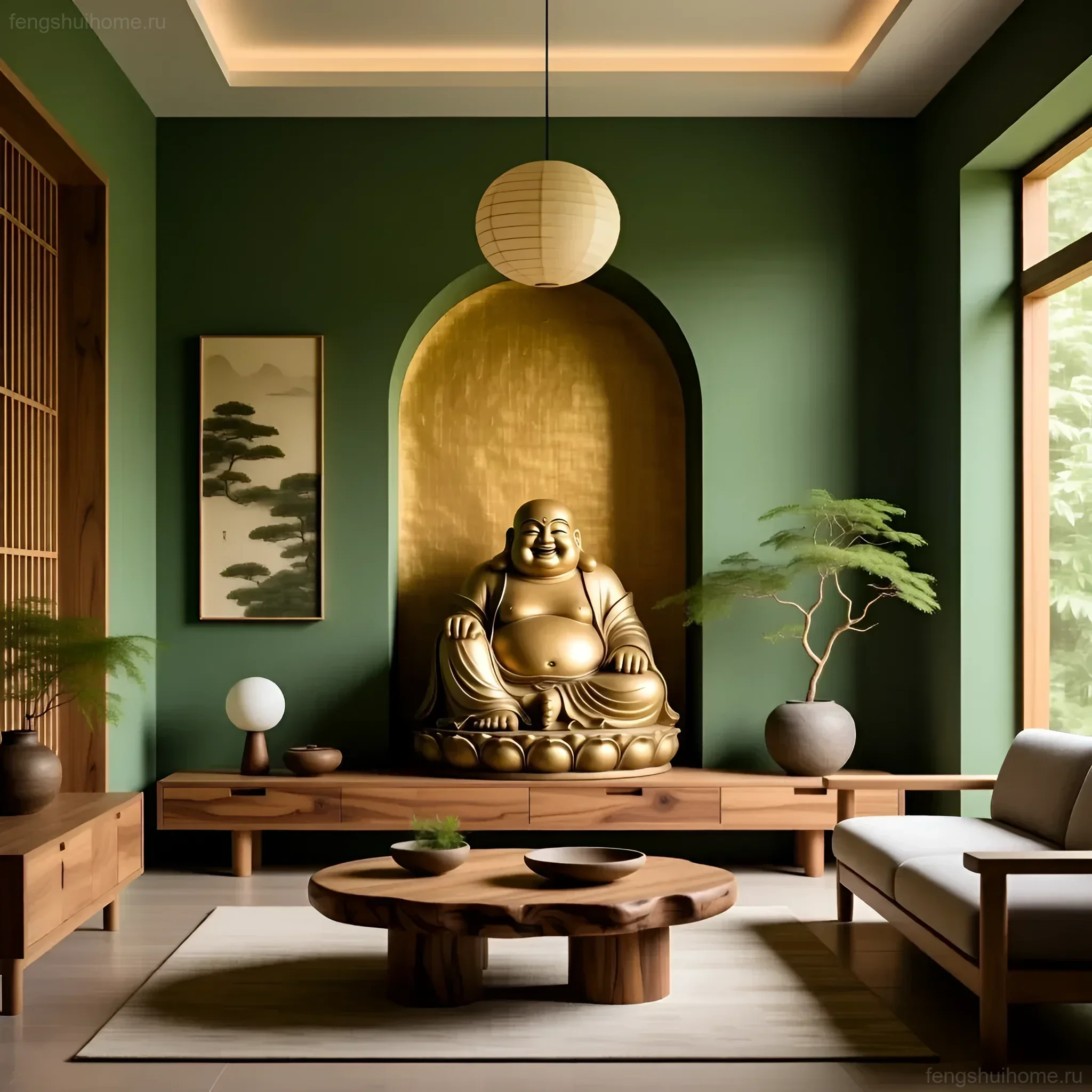
For maximum feng shui effectiveness, we often use combinations of talismans. Hotei’s energy combines perfectly with symbols that enhance his focus on wealth and longevity.
- “Lucky Three” Coins: Place three Chinese coins tied with a red ribbon next to or under the figurine. This doubles the money energy.
- Money Tree (Crassula): In the Wealth sector, Hotei standing next to a live plant symbolizing growth will create a powerful synergistic effect.
- Three-Legged Toad (Chan Chu): If Hotei is responsible for the inflow of happiness and wealth, the toad is responsible for retaining and multiplying it. Place the toad slightly lower and in front of Hotei.
- Crystals and Stones: In the Wealth sector, use citrine or pyrite to enhance the Earth element (which generates Metal and supports Wood in the cycle).
Colors and Materials: How to Create a Harmonious Environment for Hotei
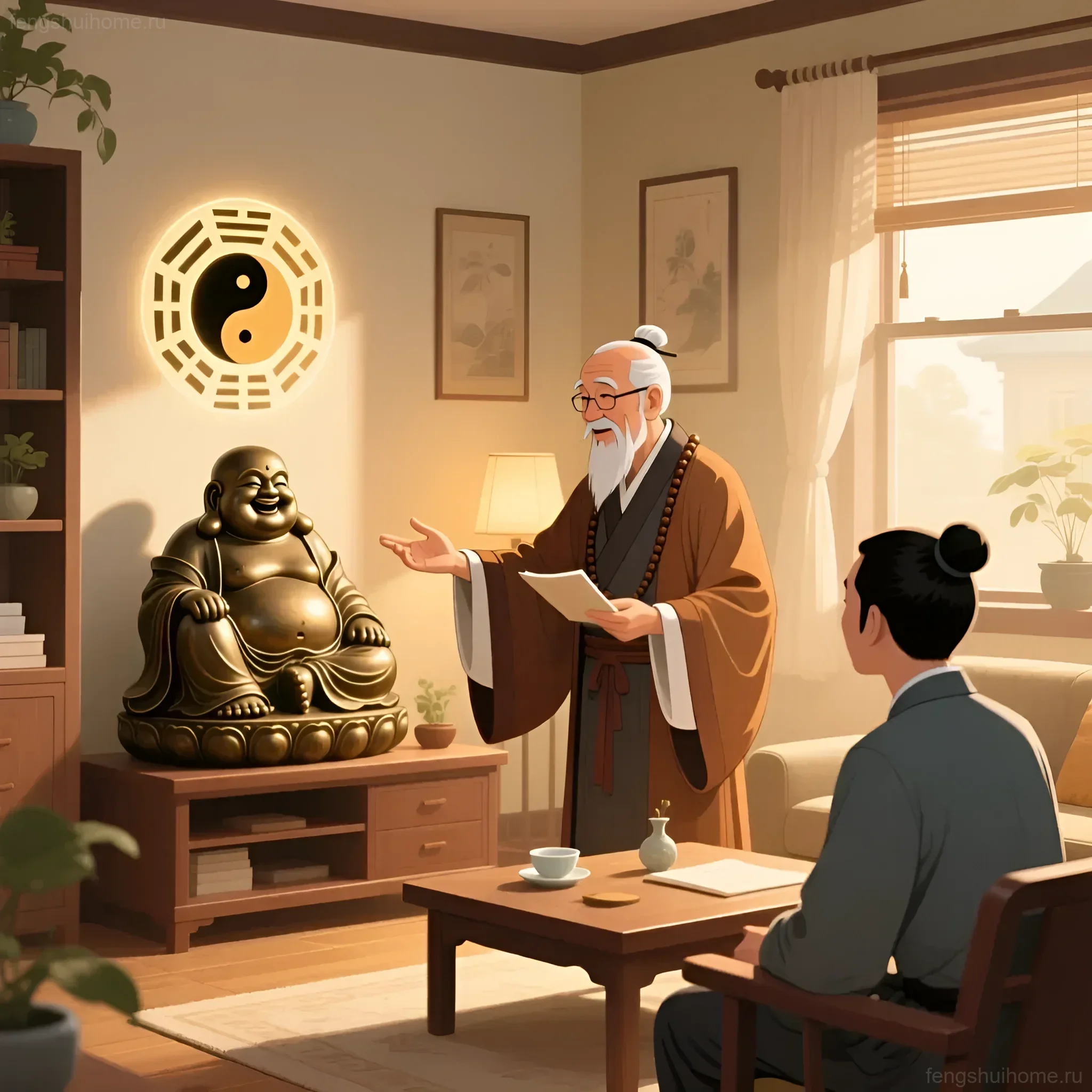
The environment around the figurine should support its energy and correspond to the element of the chosen Bagua zone. The wrong color or material can weaken Hotei’s Qi.
Principles of Creating Elemental Harmony:
- Southeast (Wood): Use green and blue colors (Wood and Water, which nourishes it). If Hotei is made of metal, ensure there is a Water element nearby (e.g., a blue base) to avoid the Metal -> Wood conflict.
- Northwest (Metal): Use white, gray, gold, and silver colors. Place Hotei on a stone or metal base to emphasize his strength.
- Center (Earth): Use yellow, orange, and beige colors. Earth represents stability, so ceramic or stone Hoteis are appropriate here, surrounded by potted plants or crystals.
Critical Point: Avoid red color (Fire) near a metal Hotei in the Metal sector, as Fire melts Metal, weakening its power.
Feng Shui Master’s Tips: How to Activate Hotei’s Energy in Your Home
Simply placing the figurine is not enough. For Hotei to work at full strength, he needs to be activated and interacted with regularly.
Activation Ritual
When you bring Hotei home, perform a small ritual:
- Cleansing: Wipe the figurine with a clean cloth.
- Positioning: Place him in the chosen sector on an auspicious day (you can use the lunar calendar).
- Intention: Looking at Hotei, clearly state your intention (e.g., “I ask you to bring joy, financial stability, and robust health into this home”).
- Offering: Place coins, a small fruit (mandarin or orange), or a cup of rice next to him. This symbolizes hospitality and respect.
Daily Interaction
The most famous way to activate him is, of course, by rubbing his large belly. Do this daily, clockwise, with positive thoughts about your desire or simply with gratitude for the well-being you already have in your life. 30-50 rubs are sufficient.
Important: Always approach Hotei with joy. He is a symbol of Laughter, and your interaction should be light and positive.
Common Mistakes When Placing Hotei and How to Avoid Them
Even the most powerful talisman can lose its strength if placed incorrectly. Avoid the following critical mistakes:
1. Incorrect Height
Hotei is a deity, and he should not be placed on the floor, on a windowsill (unless it faces into the room), or in a dark corner. He should be at eye level or higher, on a clean, stable surface. The minimum height is 70 cm.
2. Facing the Toilet or Bathroom
The energy in these rooms is considered “draining” or “unclean.” Placing Hotei here will result in his beneficial Qi being washed away, and wealth flowing out.
3. Too Close to Electrical Appliances
Strong electromagnetic radiation (TVs, computers) creates chaotic energy that can suppress Hotei’s calm and beneficial Qi. Try to keep him at a distance from such devices.
4. Opposite Sharp Corners (Sha Qi)
Do not place Hotei so that the sharp corners of furniture, load-bearing columns, or walls are directed at him. Sharp corners create Sha Qi, which “shoots” at the figurine and weakens its protective functions.
Frequently Asked Questions About Hotei and Feng Shui
As a feng shui master, I often encounter the same questions about Hotei. Here are the answers to the most common ones:
- Do I need to have only one Hotei?
No, you can have multiple Hoteis if they are placed in different Bagua sectors and serve different purposes (e.g., one for wealth, another for health). The main thing is that they are not concentrated in one place and do not overpower each other.
- What should I do if the figurine breaks?
If the figurine breaks, it means it has absorbed a strong negative impact. Immediately wrap the fragments in a clean cloth or paper and dispose of them with gratitude. This is not a bad omen, but the completion of its service cycle. Replace it with a new Hotei within a week.
- Can I give Hotei as a gift?
Yes, it is one of the best gifts, symbolizing wishes for happiness and prosperity. When giving it as a gift, be sure to explain to the recipient how to properly place and activate it.
- Should Hotei face the door or into the room?
If he is placed opposite the entrance door, he faces the door, greeting the Qi. If he is placed in a Bagua sector (e.g., Southeast), he should face into the room, as if bringing and distributing wealth within your space.
Interesting Facts About Hotei: History and Legends
Understanding the cultural context of the talisman enhances your connection with it and its energetic power.
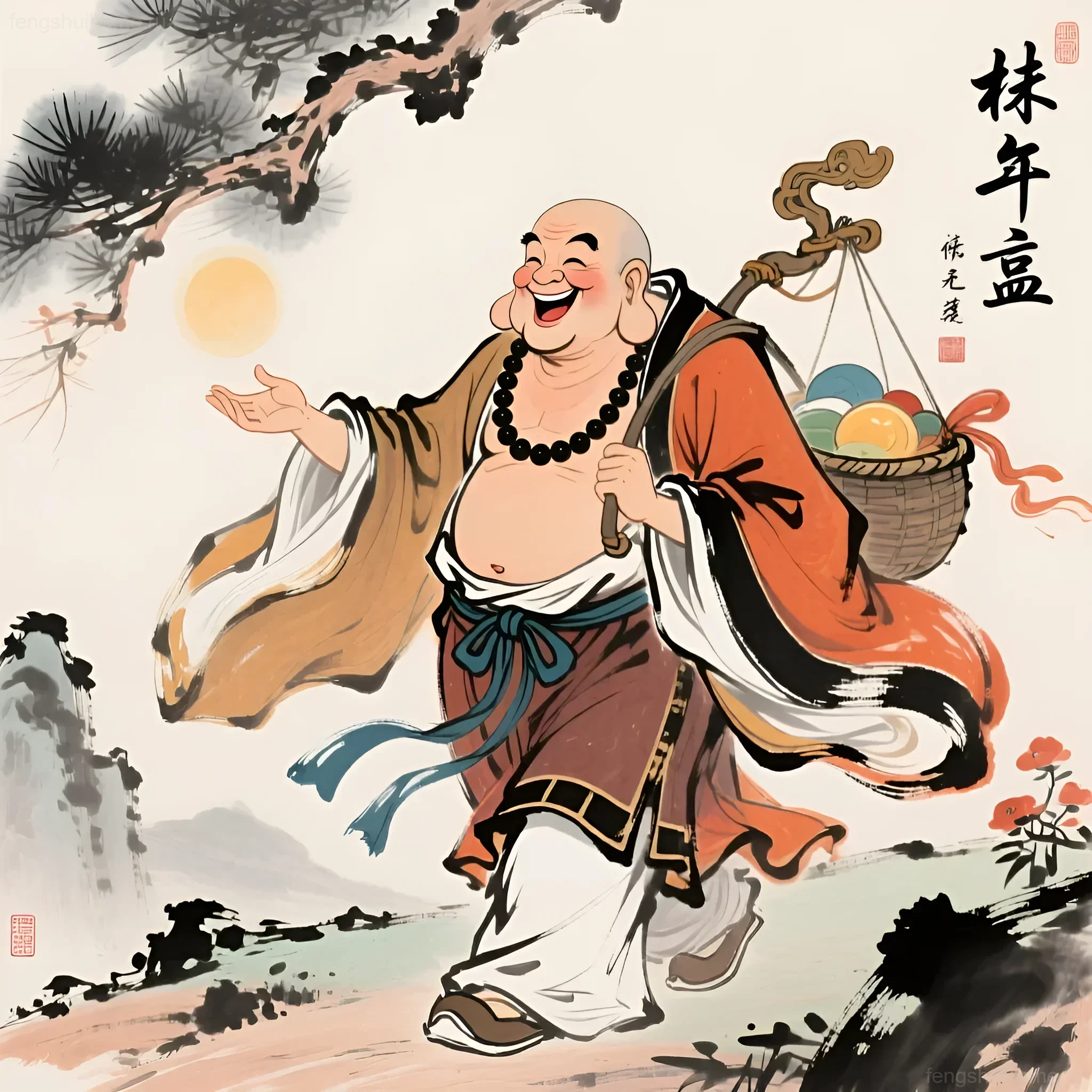
Hotei, or Budai (Buddha-monk), has deep roots in Chan Buddhism. He is considered an incarnation of Bodhisattva Maitreya – the Buddha of the future era.
Here are a few legends that make this symbol even more inspiring:
- The Legend of the Bag: It was said that Hotei’s bag never ran empty. In it, he carried not only gifts that he distributed to children and the poor, but also all worldly sorrows and worries. He collected people’s misfortunes to transform them into joy.
- Weather Forecaster: In some legends, Hotei used his fan not only to ward off problems but also to control the weather. It is said that if he started fanning himself, it heralded good changes.
- Symbol of Carefree Joy: Hotei is always depicted barefoot, symbolizing his freedom from worldly attachments and limitations. He reminds us that true happiness lies not only in material wealth but also in a lighthearted approach to life.
By choosing and placing Hotei with respect for his symbolism and feng shui traditions, you are not just decorating your home, but also opening a powerful portal for positive Qi to enter. May your Laughing Buddha bring you abundance, joy, and boundless happiness!