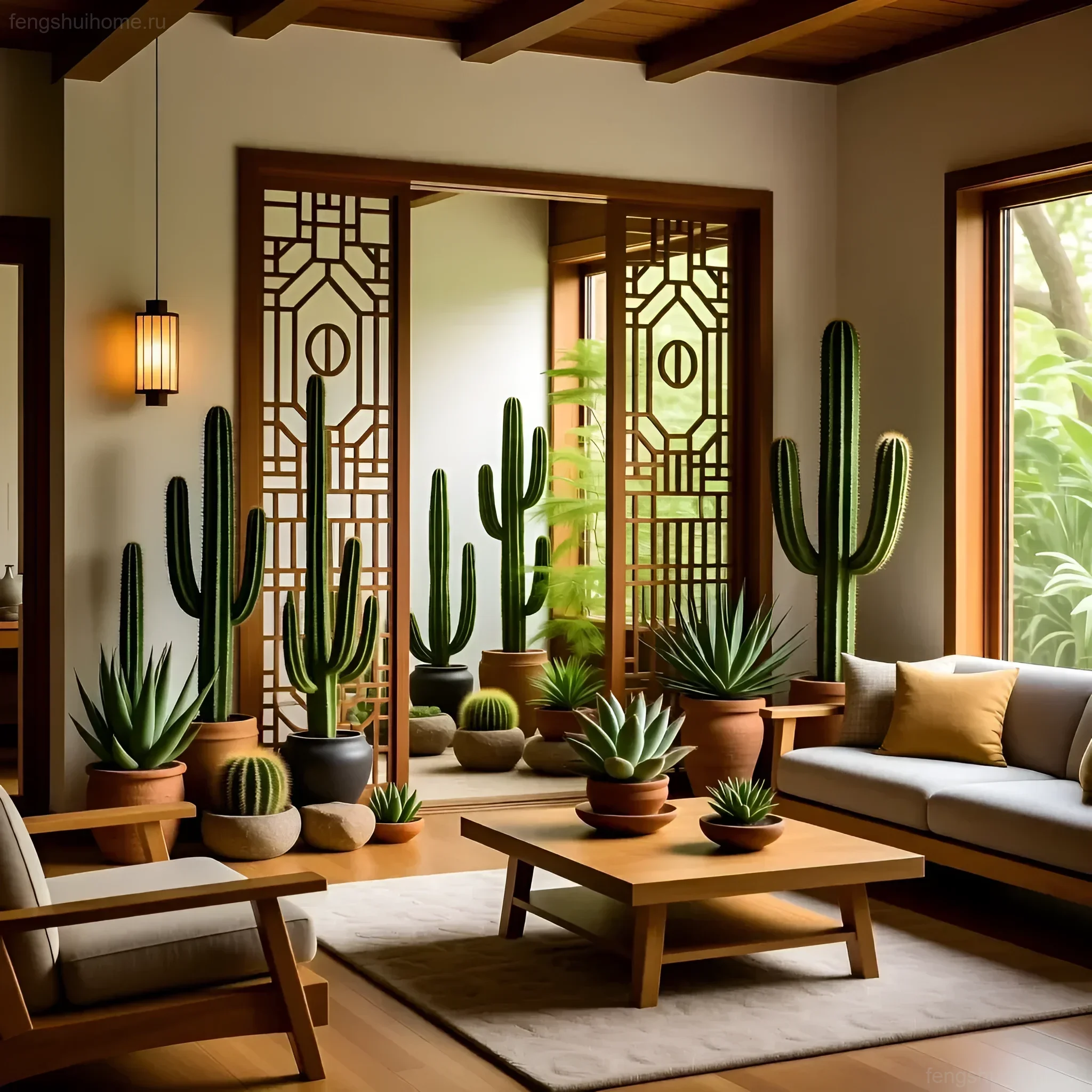
Dear readers of fengshuihome.ru, today we will touch upon one of the most acute (in every sense) topics in space organization practice: can you keep cacti and other succulents at home. These plants are incredibly popular due to their unpretentiousness and exotic appearance, but in the world of Feng Shui, they cause a lot of controversy. Cacti carry a powerful charge of energy, which can serve as both protection and a source of conflict. My task as a Master is to give you clear, practical recommendations on how to use their strength for good, without disturbing the harmony of your home.
Cacti and Succulents in the Home: A Feng Shui Perspective – Between Protection and Aggression
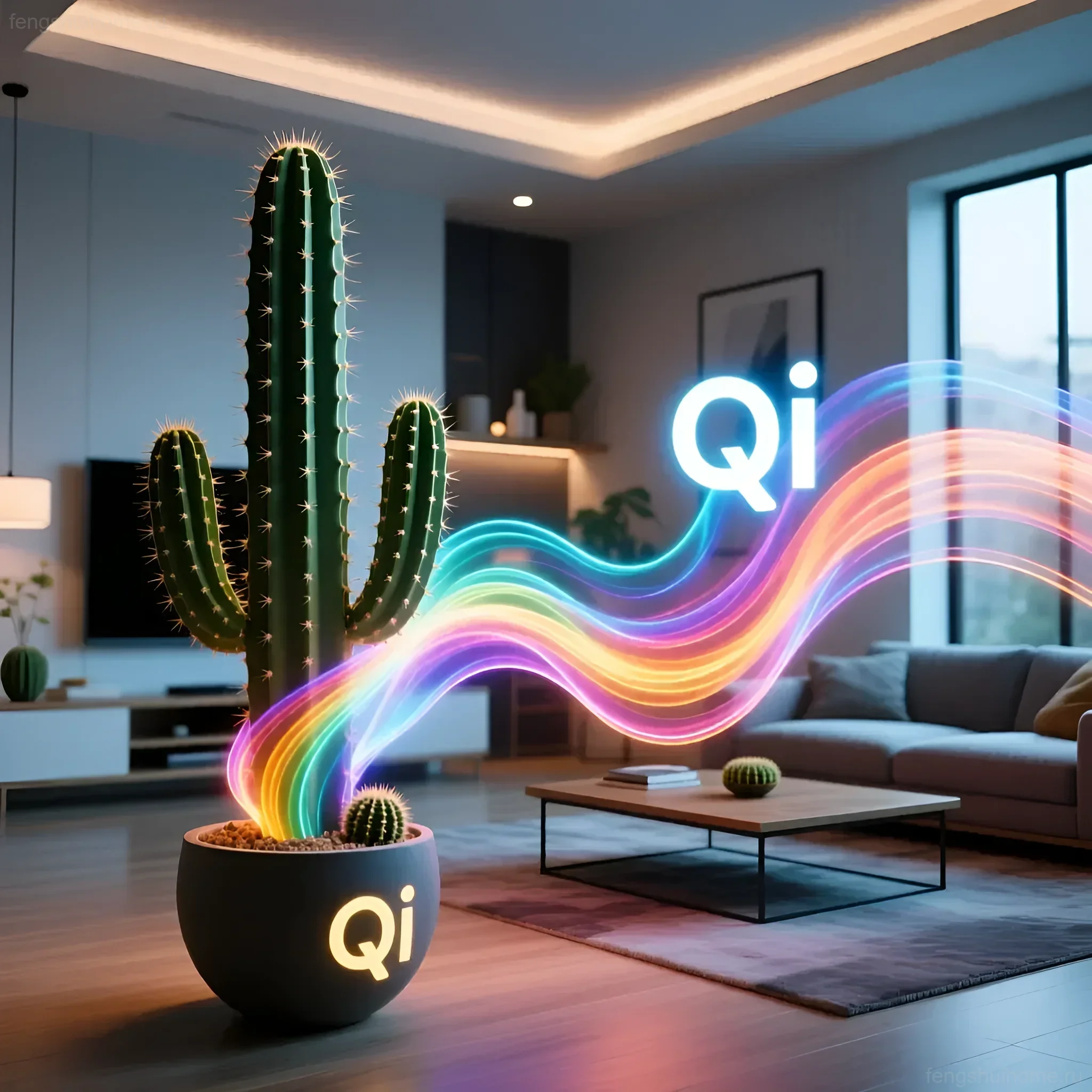
From a Feng Shui perspective, any plant is a living Wood energy that promotes growth and development. However, cacti and many succulents have a unique structure that requires a special approach. Their key feature is the presence of sharp thorns or stiff, pointed leaves, as well as the ability to store moisture.
Sharp thorns create so-called Sha Qi (aggressive, cutting energy). Sha Qi directed into the living space can provoke:
- conflicts, quarrels, and misunderstandings between family members;
- health problems, especially related to skin or sharp pains;
- financial “punctures” or sudden losses.
But don’t panic! This same Sha Qi, directed outwards, becomes a powerful protective barrier. Cacti are ideal “guards” capable of repelling negative external influences. Moreover, their ability to store water (a symbol of the Water element, associated with Wealth) and their belonging to the Earth element (stability, steadfastness) makes them symbols of thriftiness and survival.
Succulents without thorns (e.g., Echeverias or money plants with soft, rounded leaves) do not carry such aggressive Sha Qi and are generally safer to place inside the home. They are a pure symbol of accumulation and stability of the Earth.
Qi Energy and Thorny Plants: How Cacti Affect Flows in the Home
Qi energy should flow smoothly through the house, like a river, nourishing all corners of your space. When sharp or thorny objects are encountered in the path of the flow, Qi accelerates, becomes sharp and intermittent. This is called “Sha arrows.”.
Placing a cactus in an area of active movement of Sheng Qi (life-giving energy) – for example, in the center of the living room or directly opposite the entrance door – is highly undesirable. It is equivalent to installing a barrier or barbed wire in the path of well-being.
A cactus can be useful if:
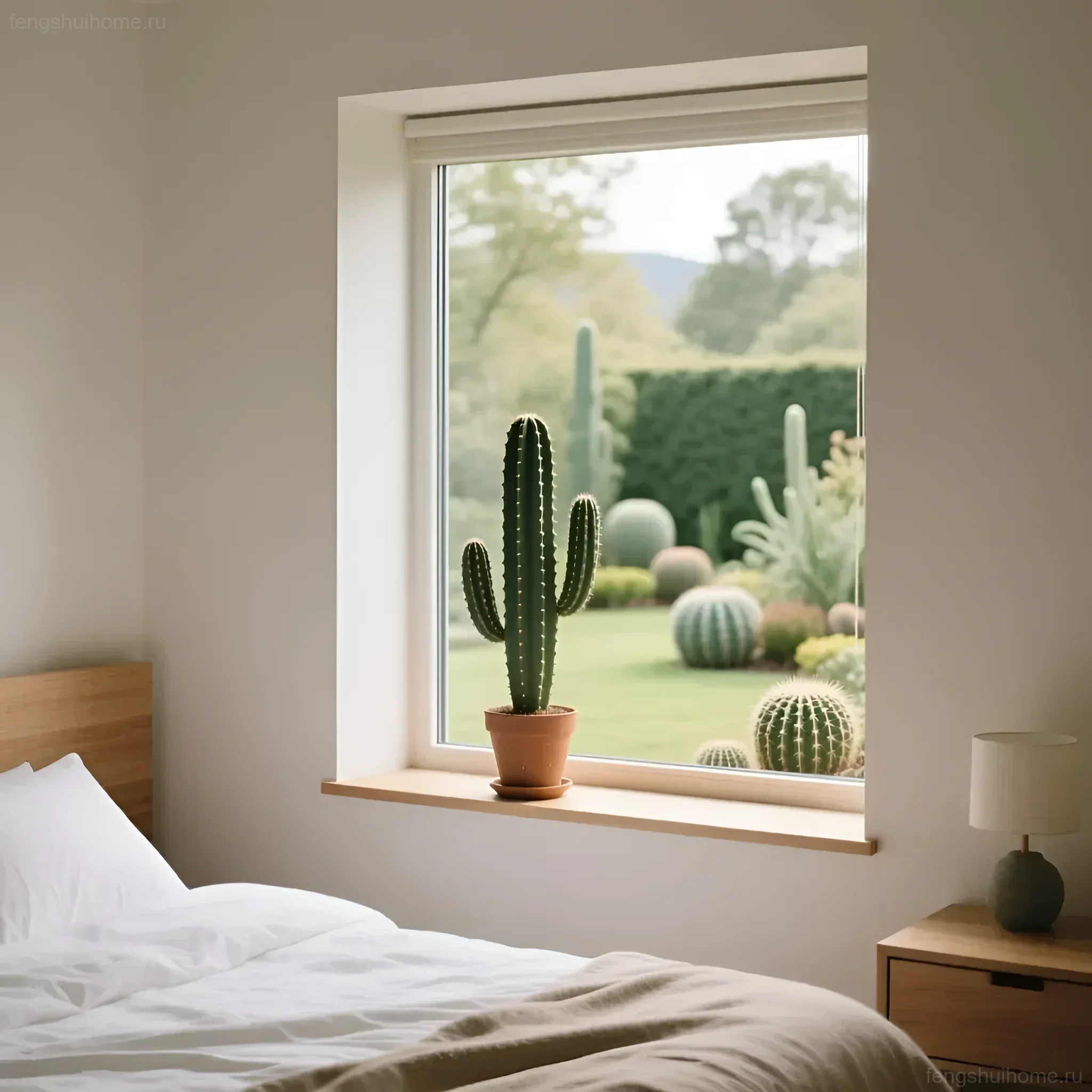
- It reflects Sha Qi from the outside: For example, if your window faces the sharp corner of a neighboring building, power lines, or a hospital morgue. A cactus on the windowsill acts as an energy shield.
- It absorbs electromagnetic smog: It is believed that cacti, especially near a computer or TV, can absorb some of the negative radiation. But remember: this should not be your primary workspace where you spend many hours in a row, otherwise the cactus’s own Sha Qi will begin to affect your concentration and health.
Qi Rule: The closer the cactus is to you when you are resting, sleeping, or working, the stronger its negative impact on your personal Qi. Distance is the key to safety.
Where to Place a Cactus Without Causing Harm: Practical Feng Shui Recommendations
The choice of location for a thorny plant should be strategic. We place them where protection is needed, not where we want to receive nourishment and peace.
Areas Where Cacti Are Appropriate:
1. Windowsill (exterior side):
- If you live on the first floor or in an area where external aggression is felt, placing a cactus on the windowsill (so that the thorns face outwards) creates protection from the negative energy of the street or malicious glances (analogous to the “evil eye”).
2. Technical and utility rooms:
- Pantry, laundry room, garage, balcony. These are areas that do not require active Sheng Qi inflow and often need protection from stagnation or external threats.
3. Computer or office equipment area (at a distance):
- A small succulent can be placed near the monitor, but not on the desk, but on a separate shelf, so that its Sha Qi is not directed at you. Minimum distance of 1 meter.
Areas Where Cacti Are STRICTLY Forbidden:
- Bedroom: Sha Qi in the bedroom destroys harmony, provokes insomnia, anxiety, and sexual problems.
- Kitchen: Especially near the dining table. Cacti can “cut” the energy of digestion and well-being associated with food.
- Center of the house (Tai Qi): This is the area of health and overall harmony. Thorny plants here disrupt the balance of all spheres of life.
- Entrance door (inside): A cactus will repel incoming Sheng Qi and potential opportunities.
Cacti and Bagua Zones: Impact on Different Life Spheres
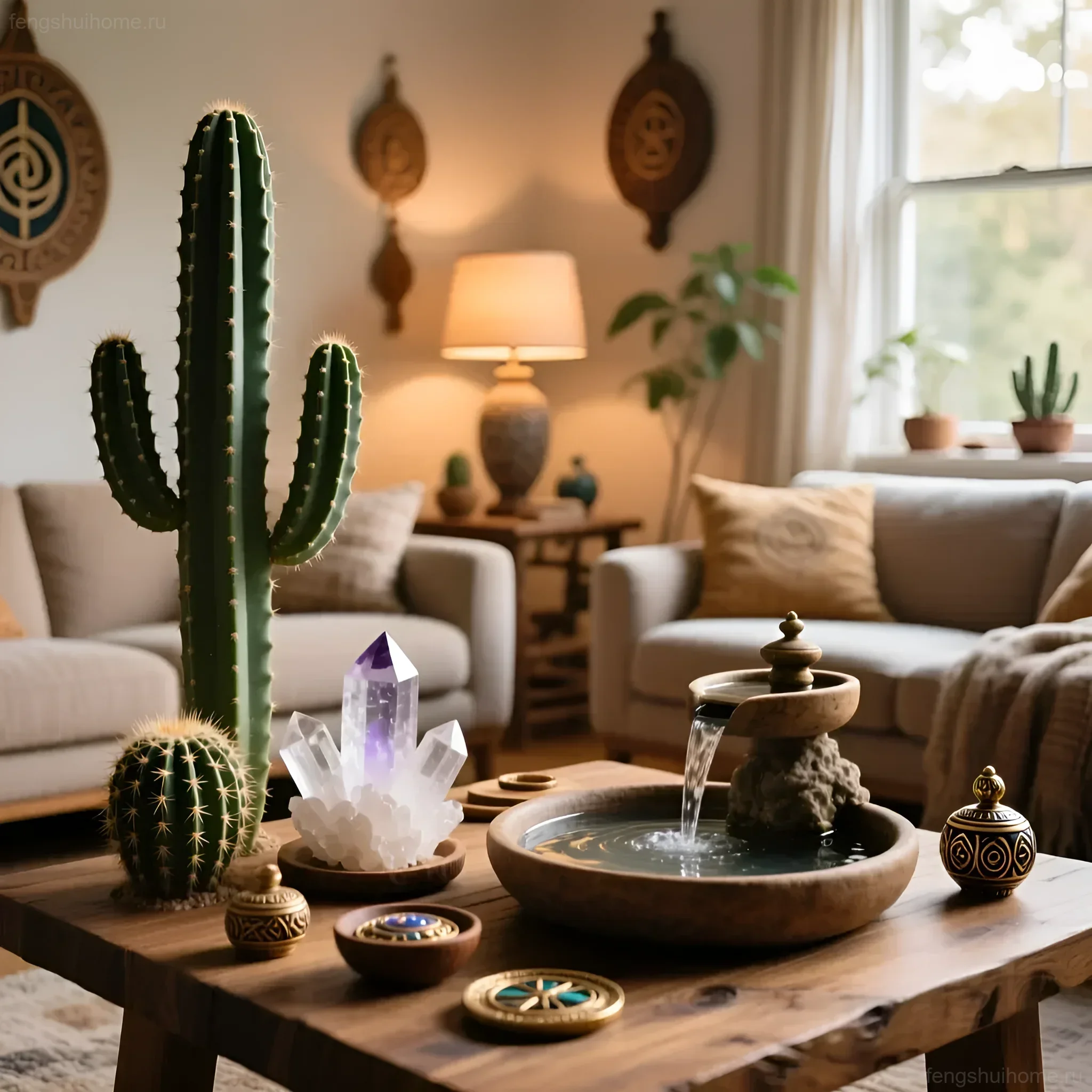
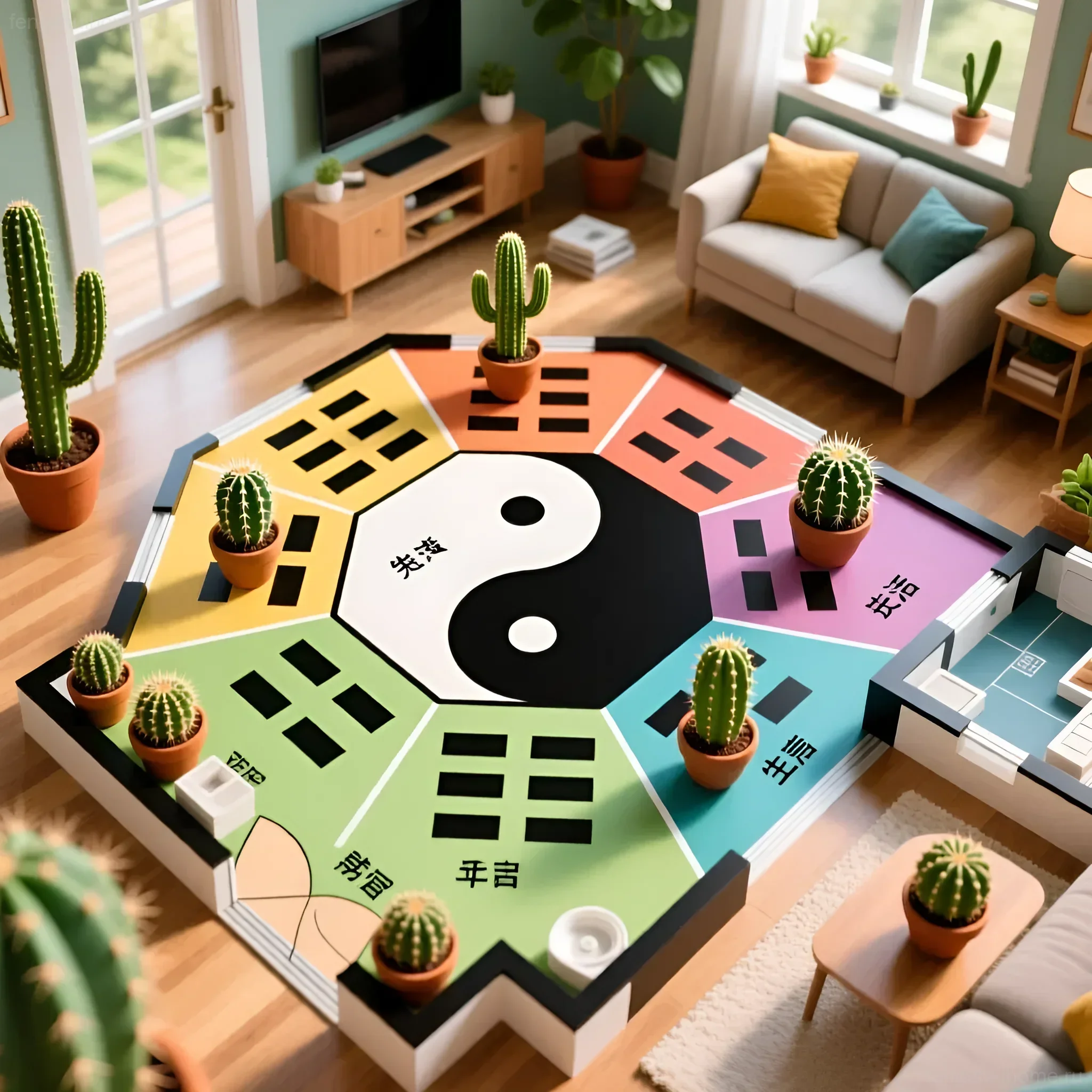
When using the Bagua grid, we must consider that the aggressive Sha Qi energy generated by a cactus will affect the life sphere for which this sector is responsible. Maximum caution is required here.
| Bagua Sector | Element | Impact of Cactus | Master’s Recommendations |
|---|---|---|---|
| Wealth (Southeast) | Wood, Water | Risk. Sha Qi can “puncture” financial flows, causing sudden expenses or losses. | Only succulents without thorns (e.g., money tree – Crassula). Cacti are strictly prohibited. |
| Family/Health (East) | Wood | Extremely negative. Provokes conflicts, quarrels, and aggression in relationships with loved ones. | Not allowed. If Earth is needed for balance, use stones or smooth ceramics. |
| Marriage/Relationships (Southwest) | Earth | Negative. Sha Qi destroys partnership harmony, brings aggression and pain. | Strictly forbidden. This sector requires softness and paired symbols. |
| Children/Creativity (West) | Metal | Negative. Can suppress creative energy or cause problems for children. | Avoid. If you really want to, use a cactus with rounded shapes, but away from children’s rooms. |
| Helpers/Travel (Northwest) | Metal | Moderately positive. Cacti can act as “defenders” and “helpers” in repelling threats. | Allowed. It is best to place it on the border of the sector so that the protection is directed outwards. |
| Knowledge/Wisdom (Northeast) | Earth | Neutral/Positive. Succulents symbolize stability, concentration, and endurance. | Good. Use cacti with thick, fleshy stems and minimal thorns. |
Talismans and Neutralization of Negative Cactus Energy: Enhancing Positive Aspects
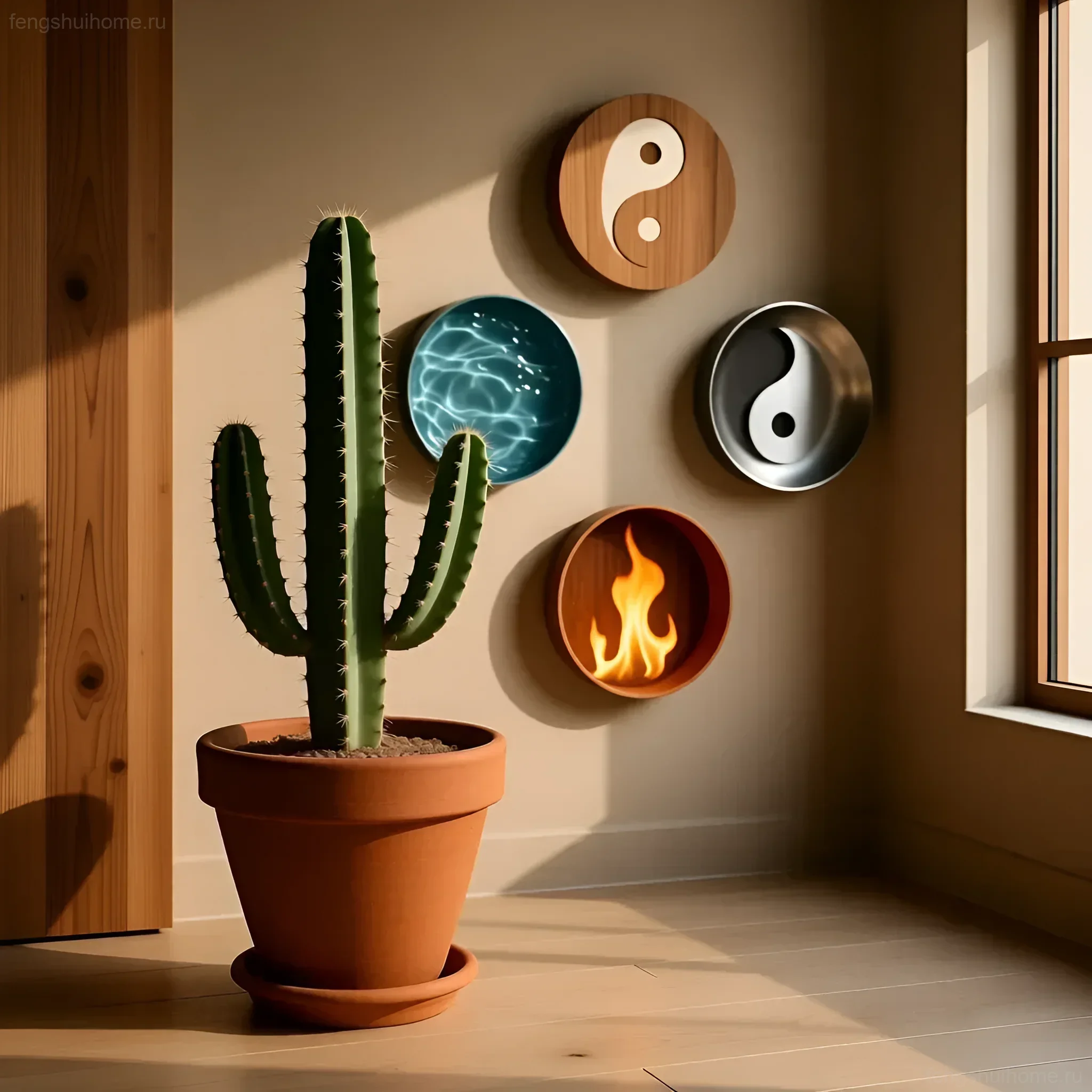
If you cannot or do not want to remove a cactus, you must use techniques to neutralize Sha Qi to preserve its protective functions, while softening its aggression.
Methods for Softening Sha Qi:
1. Roundness and Earth. Use pots that symbolize the Earth element and have a round shape. Smooth, heavy ceramic or terracotta absorbs and stabilizes the aggressive energy emanating from sharp thorns.
2. Water Element. Water is a natural neutralizer for sharp, “fiery” Sha energy. Place a small, smooth aquamarine or blue stone next to the cactus, or a decorative element symbolizing water (but not real stagnant water, to avoid creating stagnation).
3. Mirrors and crystals. If the cactus is on the windowsill and reflects external Sha Qi, you can enhance its protective function by placing a faceted crystal or a small mirror next to it, directed outwards. This will help disperse the negative energy before it reaches the house.
4. Soft surroundings. Surround the thorny cactus with plants with soft, rounded leaves or cascading branches. This will create a visual and energetic contrast, softening the overall atmosphere.
Colors and Materials in Combination with Cacti: Harmonious Surroundings
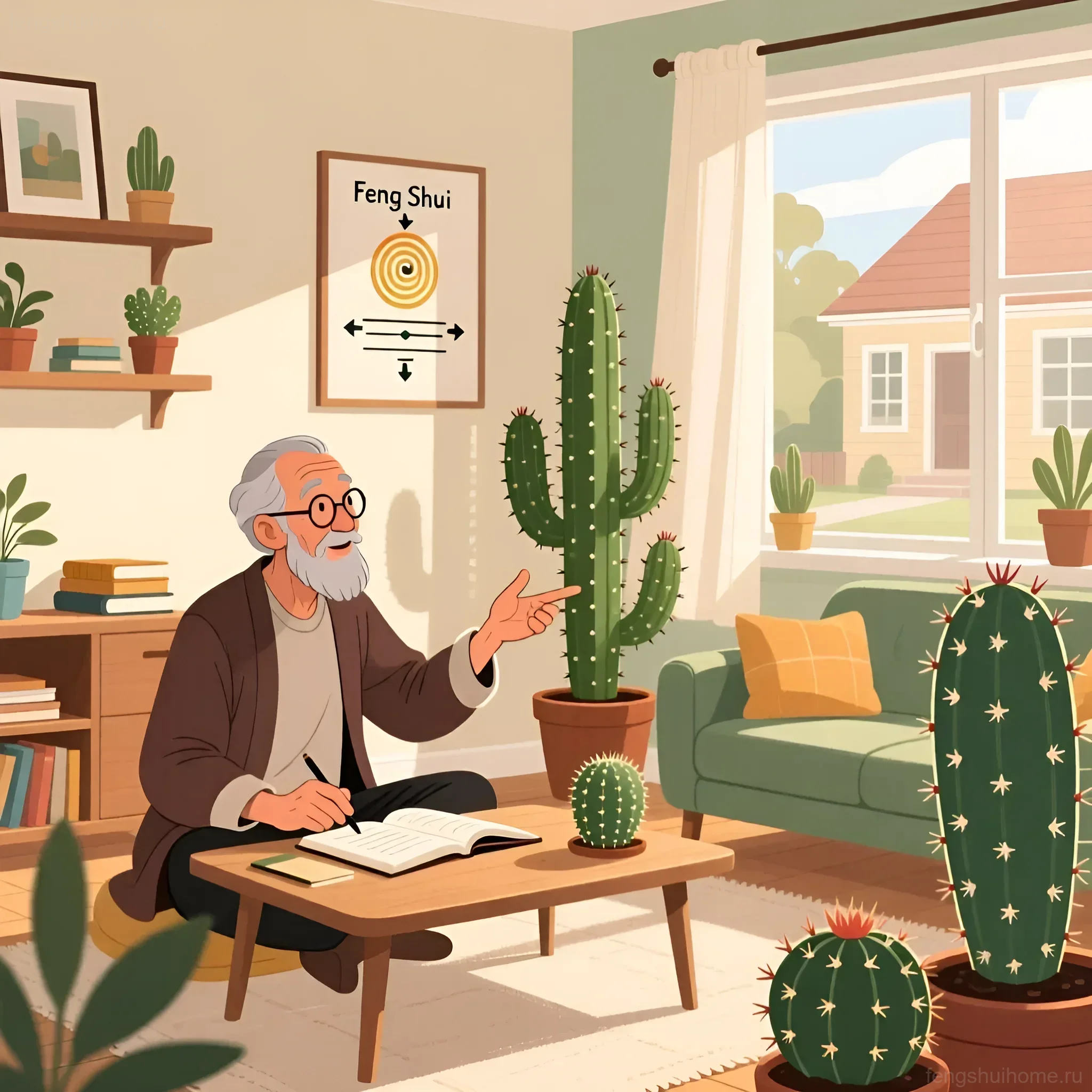
Choosing the right color and material for the pot is not just decor, but an important Feng Shui element that helps integrate a thorny plant into the home’s energy.
Harmonization Through Elements:
- Earth (Yellow, Brown, Beige): This is the native element for most succulents. Earth stabilizes the cactus’s Qi, making it more predictable and less aggressive. Use pots made of unglazed clay or matte ceramic. This is the best choice for any cactus.
- Water (Blue, Black): Water weakens aggression (Fire, associated with sharp forms) and softens Sha Qi. A blue pot is ideal if the cactus is in a neutral or protective zone, as it helps “calm” its energy.
- Metal (White, Gray, Gold/Silver): Metal controls Wood (the plant). This can be useful for restraining excessive growth or activity of the cactus, but avoid sharp metal stands that will only enhance Sha Qi.
- Fire (Red, Orange): Red color intensifies the aggression of Sha Qi. Absolutely avoid red pots for cacti, especially if they are inside the house.
Feng Shui Master’s Tips: How to Create Balance with Thorny Friends
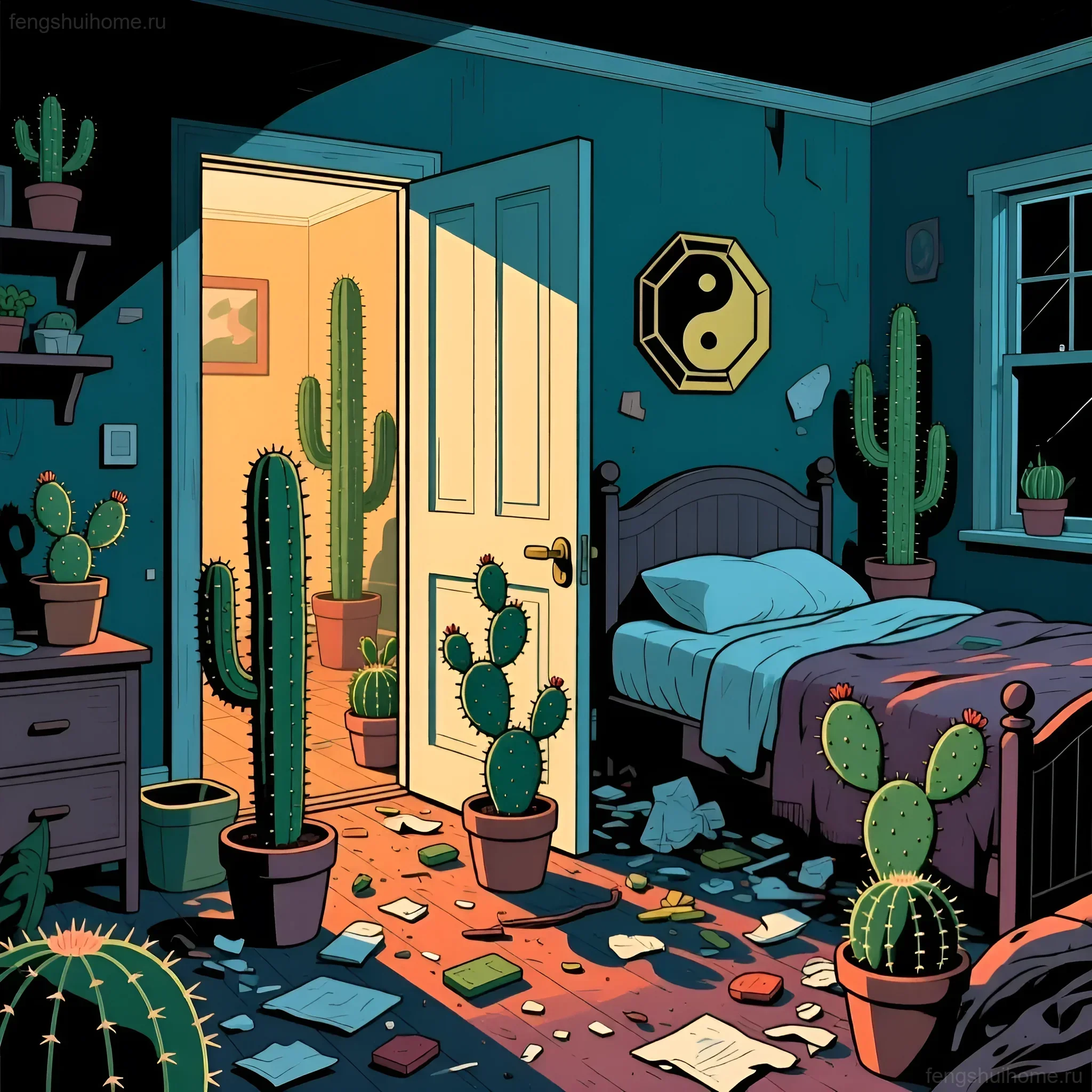
Your intention and awareness when placing a plant play as important a role as its physical location. If you keep a cactus, you must understand its function.
1. Conscious Placement: Before placing a cactus, ask yourself: “What is its purpose?”. If the purpose is protection from external negativity, place it in border zones. If the purpose is decor, choose soft succulents.
2. Regular Care: A healthy plant generates purer Qi. A wilting or sick cactus, even without thorns, creates stagnant, negative Qi. Provide it with proper watering and sufficient light.
3. Yin-Yang Balance: Cacti are a bright Yang object (active, sharp energy). Balance it with Yin elements: soft fabrics, flowing lines, subdued lighting in the same room.
“A cactus is an energy sword. It can protect you from an enemy, but you cannot put it next to your pillow,” – this is the main principle you should be guided by.
Common Mistakes When Placing Cacti in the Home According to Feng Shui: What to Avoid
Violating these rules often leads to unexpected problems in the lives of the home’s inhabitants. Avoid the following common mistakes:
- Mistake 1: Pointing thorns at resting places. Never place a cactus so that its thorns “look” at a sofa, armchair, dining table, or bed. This directs Sha Qi directly at people, causing irritability and health problems.
- Mistake 2: Placement in a corridor. A corridor is the path through which Qi enters the house. A cactus in the corridor creates a “traffic jam” and prevents energy from distributing freely throughout the rooms.
- Mistake 3: Using cacti in pairs. In areas requiring harmony (e.g., in the Marriage sector), paired items symbolize unity. Two cacti together can amplify the energy of conflict and rivalry.
- Mistake 4: Too many thorny plants. If cacti and other thorny plants predominate in the house, it creates an atmosphere of constant struggle, defense, and tension. Remember the balance of Wood: most of your plants should have rounded, soft leaves (ficus, money plants, myrtle).
Frequently Asked Questions About Cacti and Succulents in Feng Shui
Question: Are small succulents (mini-cacti) considered less harmful?
Master’s Answer: Yes. The smaller the plant, the weaker its energetic impact. A small succulent without obvious sharp thorns (e.g., Haworthia) in a ceramic pot is quite acceptable in neutral zones. However, even a miniature cactus with sharp needles should not be placed in the bedroom or on a desk.
Question: What about flowering cacti? Does flowering soften their Sha Qi?
Master’s Answer: Flowering is a manifestation of active, positive Yang energy. It temporarily softens the aggression of Sha Qi, bringing joy and beauty. If your cactus blooms, it’s a good sign. However, after the flowering ends, its energetic properties return to normal. This does not negate the need for proper placement.
Question: Can artificial cacti be used for decoration?
Master’s Answer: Artificial plants do not carry living Qi. However, their shape still generates Sha Qi. A plastic or fabric cactus that imitates thorns will create the same visual and energetic discomfort as a real one, but without the protective properties of a living plant. It is best to avoid any artificial imitations of Sha Qi.
Interesting Facts About Cacti and Their Symbolism in Different Cultures
While Feng Shui requires caution, in other cultures, cacti are revered as symbols of strength and resilience, confirming their powerful energy:
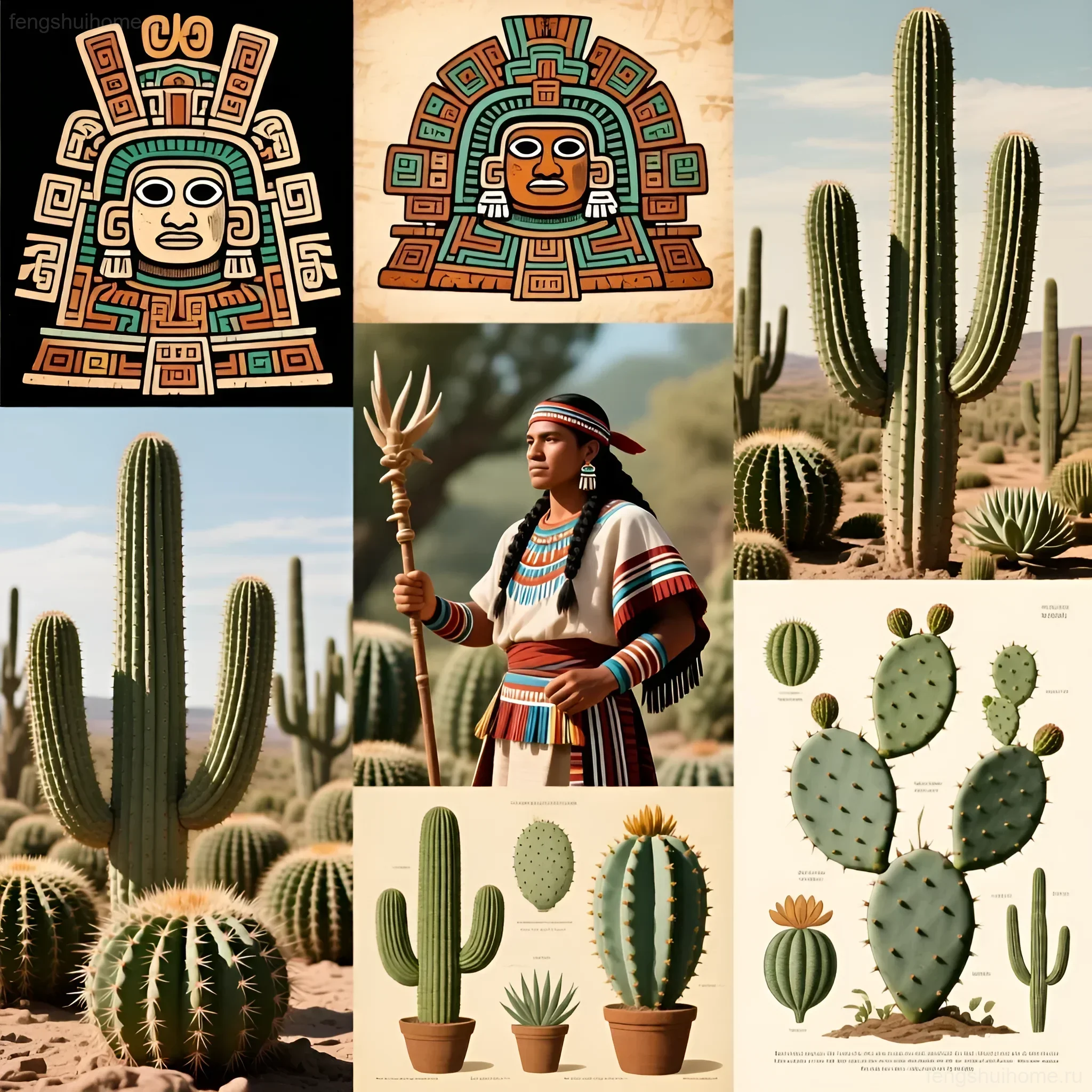
- Mexico: The cactus is a national symbol and is associated with endurance, protection, and the ability to thrive in the harshest conditions. The prickly pear (nopal) is a symbol of abundance.
- Native Americans: Some tribes use cacti in spiritual practices as a symbol of longevity and connection with the desert nature. They see in it the wisdom of resource conservation.
- In Asia (outside traditional Feng Shui): Cacti are sometimes used to ward off evil spirits and ill-wishers, which completely aligns with their function as energy guardians in Feng Shui.
Remember, dear readers, that Feng Shui is the art of balance. Cacti and succulents are strong but demanding friends. By applying knowledge of Sha Qi and Bagua, you can not only enjoy their beauty but also use their powerful protective energy without compromising the harmony and well-being of your home.