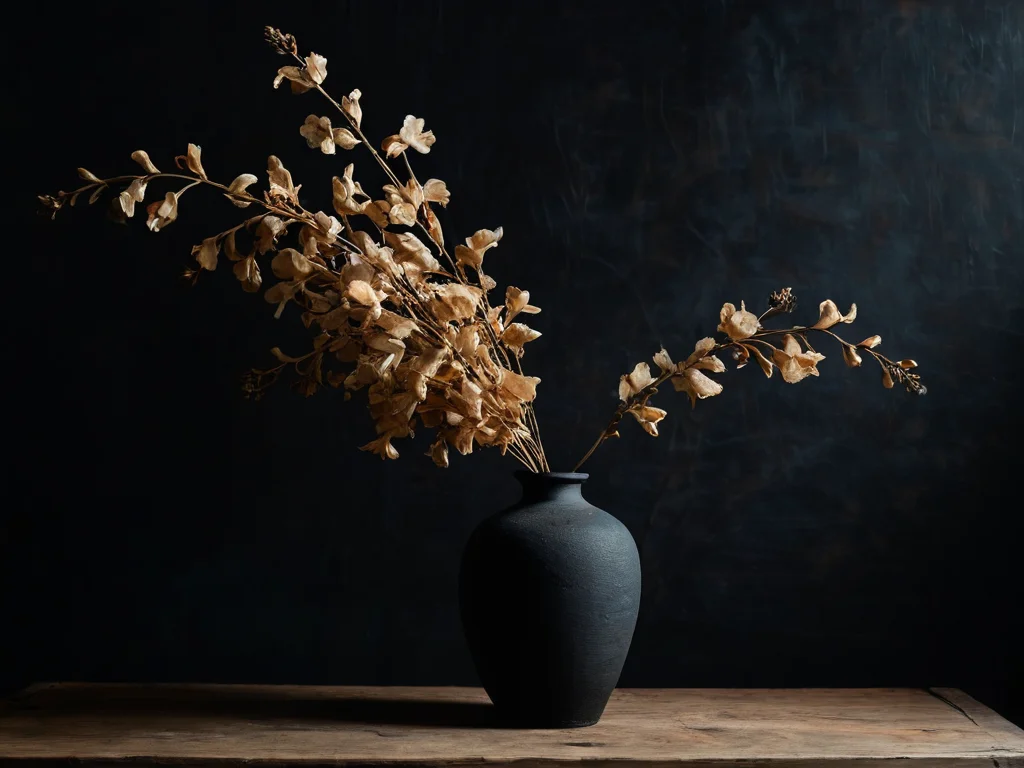
For many of us, dried flowers, elegant herbariums, and compositions of dried plants are the embodiment of natural beauty, a tribute to autumn, or a reminder of summer. They seem like the perfect home decoration, capable of adding coziness and bohemian charm. However, from the perspective of the ancient art of Feng Shui, these seemingly harmless decorative elements can harbor a hidden threat to the well-being and harmony of your space.
As Feng Shui experts, we often encounter questions about the permissibility of using dried flowers in interiors. And while their aesthetic appeal is undeniable, their energetic component raises serious concerns. In this article, we will delve into why dried flowers and herbariums are considered carriers of “dead” energy, how this energy affects all aspects of your life – from health to finances – and how to properly create a space filled with living, thriving Qi energy around you.
Introduction: Beauty or Hidden Threat? Why Dried Flowers Raise Questions in Feng Shui
When visiting friends or browsing interior design magazines, you may have admired elegant bouquets of dried herbs, ears of grain, or even roses, which seem to add a special charm, a vintage touch, or rustic simplicity to a home. These compositions retain the shape and color of living plants but lack their main essence – life force. This is where the key contradiction with the fundamental principles of Feng Shui lies, which always prioritizes living, moving Qi energy.
In Feng Shui, every object in your home, every plant, every decorative element carries a specific energy that either nourishes your space or depletes it. Dried flowers, by their very nature, are life in suspension. They are plants that were once full of vital Qi but whose life cycle has now ended. They do not grow, do not breathe, do not purify the air, and do not release oxygen like living flowers do. They are static, their energy is frozen, and this is precisely what makes Feng Shui masters treat them with great caution, and most often, recommend complete avoidance in living spaces.
The question we ask ourselves when considering dried flowers is not so much about their visible beauty, but about their invisible energetic influence. Can they bring not just stagnation, but actively harm the well-being of those who live in that space? And if so, what is the mechanism of this impact? To understand this, we need to delve deeper into the concept of living Qi energy.
The Breath of the Home: The Crucial Importance of Living Qi Energy in Space
At the core of all Feng Shui philosophy lies the concept of Qi – the universal life force that permeates all existence. It is an invisible yet tangible energy that flows through our world, nourishing and sustaining life. In the context of a home, Qi is its “breath,” its pulse. When the Qi in your home is fresh, clean, and flows harmoniously, you feel energetic, healthy, and happy, and luck accompanies you in all your endeavors.
Imagine your home as a living organism that needs a constant supply of fresh air, nutrients, and light to thrive. Just as your body needs oxygen and food, your home needs living Qi. This energy can manifest in various ways: in the sunlight streaming into rooms, in the fresh breeze carrying scents after rain, in the gentle murmur of water in a home fountain, in the bright, harmonious colors of the interior, in the flowing lines and shapes of furniture, and, of course, in living plants.
When Qi flows freely, it brings opportunities, abundance, good mood, and health. It promotes growth and development in all areas of life. Conversely, stagnant, “dead,” or Sha Qi (negative energy) can lead to problems – from minor inconvenconveniences to serious obstacles. Feng Shui masters teach us to create spaces that actively attract and retain beneficial Sheng Qi (positive energy) and to avoid anything that can generate Sha Qi.
This is why we pay so much attention to cleanliness, order, free movement of air and light, and the selection of items that radiate life and positivity. Everything that surrounds us is part of our home’s energy field, and each element contributes to the overall quality of Qi. And here we come to the main question: what happens when elements devoid of life force are introduced into this field?
Life in Suspension: How Dried Flowers Bring Yin Energy and Stagnation into Your Home
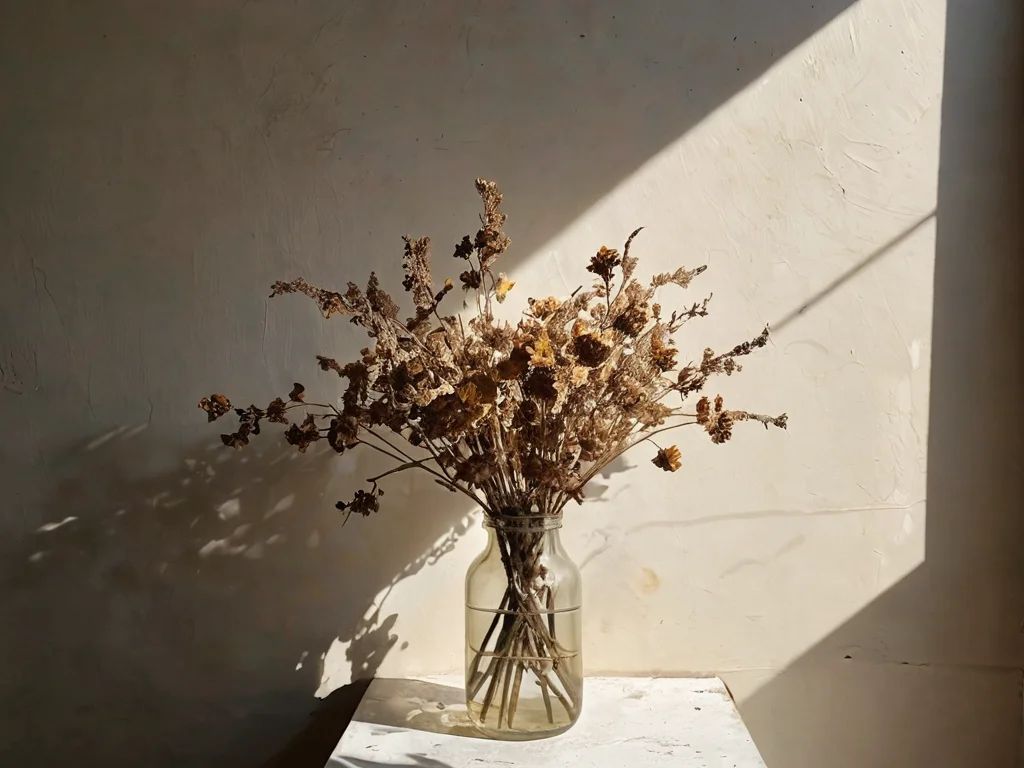
Now that we understand the importance of living Qi energy, it becomes clearer why dried flowers cause such concern in Feng Shui. Dried flowers, by their nature, are a symbol of suspended life. They have completed their development cycle, their growth has stopped, and they no longer generate fresh, active Yang energy. Instead, they begin to radiate Yin energy – passive, static, associated with cessation, decay, and ultimately, decomposition.
In a harmonious Feng Shui space, a balance between Yin and Yang energies is necessary. Yang is light, movement, activity, growth, life. Yin is shadow, stillness, passivity, completion, death. An excess of Yin energy in a living space, especially emanating from objects that embody stagnation or “death,” can disrupt this delicate balance and lead to undesirable consequences.
How does this manifest on an energetic level? Dried flowers not only stop producing vital Qi, but they begin to absorb it. Imagine them as small energetic “black holes” that slowly but surely draw active energy from the surrounding space, replacing it with their own stagnant, heavy Yin energy. This process creates Sha Qi – negative, aggressive, or stagnating energy.
One can draw an analogy to a stopped clock. It might be incredibly beautiful, antique, masterfully crafted, but if it doesn’t tell time and doesn’t run, it ceases to fulfill its primary function and becomes just a dead object, a reminder of past time, but not participating in the present. Or imagine a perfectly preserved taxidermied animal. It looks alive, but it doesn’t breathe, doesn’t move, doesn’t radiate warmth. Energetically, it carries a very different message than a living pet.
Over time, this stagnant energy from dried flowers accumulates in your home. It becomes denser, heavier, and its influence intensifies. A space that should be a source of energy and inspiration gradually turns into a place where energy wilts and dies. This doesn’t happen instantly, but gradually, imperceptibly to the eye, penetrating every corner of your life like an invisible but powerful energetic blow.
The Invisible Blow: The Impact of “Dead” Energy on Health, Relationships, and Finances
Perhaps you’ve already started to feel that something is not right. Unexplained fatigue, apathy, minor family quarrels, problems at work – all of these can be symptoms of the influence of stagnant, “dead” energy generated by dried flowers. In Feng Shui, it is believed that this energy has an invisible but powerful impact on all areas of our lives, gradually undermining our well-being.
Impact on Health:
- Physical Health: Stagnant energy in the home can weaken your personal Qi, making you more susceptible to illness. This manifests as chronic fatigue, feeling sluggish in the morning, frequent colds, and weakened immunity. Dried flowers also collect dust, which can exacerbate allergies and respiratory problems. Your home ceases to be a place of recovery and becomes a source of energy leakage.
- Mental and Emotional Health: An excess of Yin energy can lead to apathy, depression, anxiety, and a sense of hopelessness. You may find it difficult to find motivation for new endeavors, feel like you are “stuck” in place, and the joy of life gradually fades. A home should inspire, not depress.
Impact on Relationships:
- Family Relationships: Stagnant energy can “dry up” feelings, just like dried flowers themselves. Quarrels may become more frequent among household members, misunderstandings may arise, and a sense of distance and coldness may develop. Love and passion may gradually fade, giving way to routine and indifference.
- Relationships with Partners and Finding a Soulmate: If you are single and looking for love, a home filled with “dead” energy will radiate stagnation rather than attractiveness. This can repel potential partners, as subconsciously people are drawn to lively, energetic environments, not to wilting ones.
Impact on Finances and Career:
- Career Stagnation: “Dead” energy can hinder career growth. You may encounter a lack of new opportunities, blocks in development, and a feeling of being “stuck in a rut.” There’s a sense that doors are closed and opportunities are slipping away.
- Financial Difficulties: A home that cannot attract prosperity energy will also experience difficulties with financial flow. This can manifest as unexpected expenses, money leaks, decreased income, or simply a lack of financial growth. The energy of money loves movement and novelty, not stagnation.
These effects manifest gradually and are rarely directly linked to harmless decorative items. However, Feng Shui masters are convinced that a conscious choice in favor of living energy is the first step towards creating a home that truly supports your health, harmony in relationships, and prosperity in all areas of life.
The Secret List: Which Dried Flowers, Herbariums, and Compositions Are Strictly Forbidden
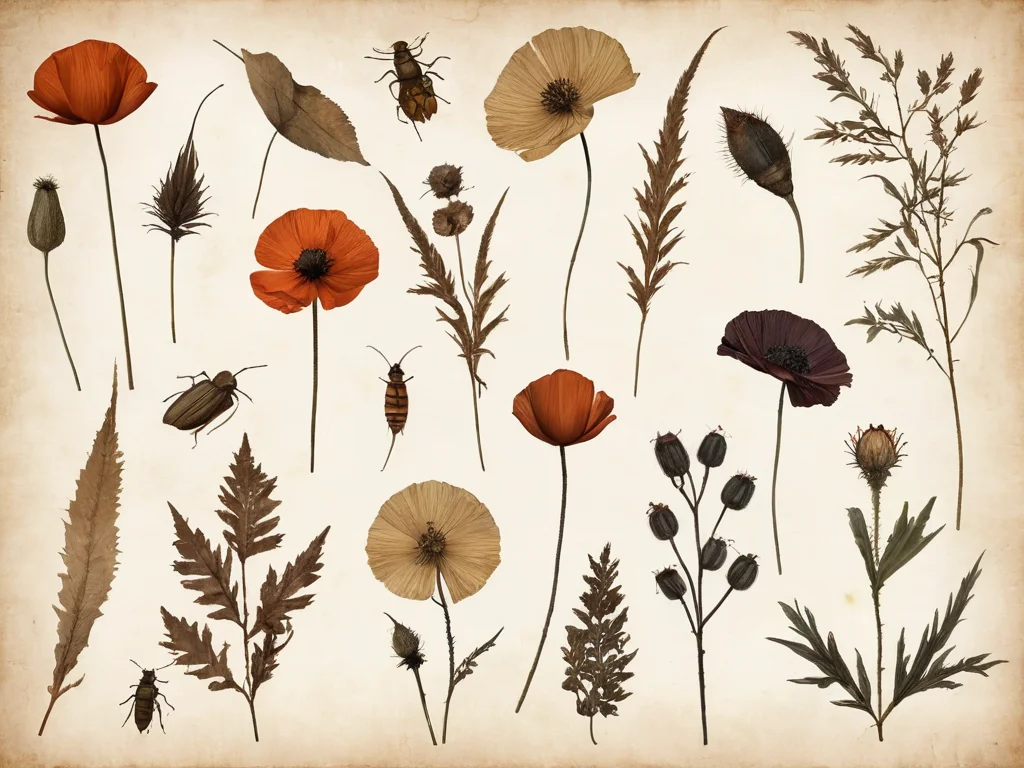
To help you create a harmonious space, it is important to clearly understand which items fall into the category of “forbidden” from a Feng Shui perspective. The list is quite extensive, as it includes everything that was once alive but has now lost its life force and is in a state of suspension or drying.
Main Categories to Avoid:
- Any Dried Flowers: This includes absolutely all bouquets of dried roses, lavender, baby’s breath, statice, eucalyptus, wheat ears, cotton, and any other plants that have undergone a drying process. Regardless of how beautiful they look, their energetic state represents the end of a life cycle.
- Herbariums and Pictures of Dried Plants: Despite their artistic value, such compositions also contain dead energy. Sealed under glass or glued to a base, they fix this energetic stagnation.
- Dry Branches, Leaves, Snags: If you bring beautiful branches or snags from the forest home, and they haven’t taken root (i.e., they are not living plants), they also carry Yin energy. Exceptions might include, for example, bonsai or branches specially treated for long-term preservation, which are used in very specific rituals or places, but they are not suitable for ordinary decor.
- Pampas Grass: This incredibly popular interior design element – fluffy, voluminous plumes – is a typical example of dried flowers. Its airy and light appearance is deceptive; energetically, it carries the same stagnant energy as any other dried flower.
- Artificial Flowers: Although they were never alive and did not die, artificial flowers often imitate living plants but are devoid of their life energy. They do not breathe, do not purify the air, and do not radiate Qi. In Feng Shui, they are considered “empty” or even “deceptive” elements that can create an illusion of life but actually deprive the space of the ability to breathe.
Special Cases and Exceptions (Use with Caution):
There are some rare exceptions where dried elements may be permissible, but they require a very conscious approach and are not part of ordinary decor:
- Aromatic Sachets with Herbs: If you use small bags of dried herbs (e.g., lavender or mint) solely for fragrance and regularly refresh them with new ones, this is acceptable. It is important that they are functional, not decorative elements, and are not displayed as ornaments.
- Protective Talismans made of Herbs: Some dried herbs (e.g., bunches of wormwood, St. John’s wort) are traditionally used in some cultures for cleansing or protecting the home. In Feng Shui, they are allowed, but it is usually recommended to keep them hidden (e.g., behind a door), use them temporarily (during a cleansing period), and discard or burn them afterward. They should not be part of permanent decor.
Places Where They Are Strictly Forbidden:
Areas where we rest, recover, and spend most of our time are particularly sensitive to stagnant energy:
- Bedroom: This is the most important place for personal energy, sleep, health, and intimate relationships. Dried flowers in the bedroom can negatively affect sleep, cause fatigue, apathy, and “dry up” relationships between partners.
- Living Room: The heart of the home, a place for receiving guests, socializing, and active Qi movement. Dried flowers here will hinder social activity, block new opportunities, and create a sense of stagnation.
- Children’s Room: Children need the purest and most vibrant energy for growth and development. Dried flowers in a child’s room can negatively affect their energy, mood, and even health.
- Work Area/Office: If you work from home, avoid dried flowers in your study, as they can impede career growth, new ideas, and financial prosperity.
Remember that every item in your home should serve you, support your energy, and contribute to your well-being. Dried flowers, despite their external beauty, do not fulfill this function from an energetic perspective.
Cleansing the Space: How to Properly Dispose of Dried Flowers and Purify Your Home of Negativity
If you find that you have dried flowers or herbariums in your home, do not panic. The main thing is to recognize the problem and act correctly. The process of getting rid of these items is not just cleaning, but a purification ritual that will help free the space from accumulated stagnant energy and prepare it for the influx of new, vital Qi.
Step 1: Making the Decision and Awareness
- Inner Readiness: Before proceeding with physical removal, it is important to make the decision to get rid of dried flowers with full awareness that you are doing it for your own benefit and the well-being of your home. Understand that you are not just throwing away a beautiful object, but freeing yourself from a source of negative energy.
- Gratitude: You can mentally or verbally thank the dried flowers for the beauty they provided, but acknowledge that their time in your home has come to an end. This helps to release emotional attachment and facilitates the parting process.
Step 2: Proper Disposal of Dried Flowers
- Do Not Just Throw Away: It is believed that simply throwing dried flowers into a regular trash bin can lead to the spread of their negative energy into the environment.
- Packaging: Carefully gather all dried flowers and herbariums. It is best to wrap them in paper (newspaper, kraft paper) and then place them in a sealed, opaque bag. This symbolically “seals” the negative energy.
- Disposal Method:
- Burning: If you have the opportunity to safely burn them (e.g., in a bonfire at a dacha or in a fireplace with good draft), this is the preferred method. Fire is considered a powerful purifying element that transforms negative energy.
- Burying: If burning is not possible, bury the dried flowers in the ground far from your home. This returns them to nature, allowing the earth to neutralize the stagnant energy. Choose a place where people rarely walk, such as a forest or an undeveloped area.
- Disposal at a Landfill: As a last resort, if other options are unavailable, take the packaged dried flowers to a landfill. It is important that they are removed from your home and property.
- Hand Cleansing: After handling dried flowers, be sure to wash your hands thoroughly with salt to remove any residual energetic trace.
Step 3: Purifying the Space of Accumulated Negativity
After physically removing the dried flowers, it is necessary to perform an energetic cleansing of the home:
- Thorough Cleaning: Start with a thorough physical cleaning. Dust surfaces (especially where dried flowers stood), wash floors and windows. Cleanliness is the foundation for the influx of fresh Qi.
- Ventilation: Open all windows and doors wide to create a cross-breeze. Allow fresh air to completely refresh the energy in every room.
- Salt Cleaning: Add a little sea salt to the water for washing floors and wiping surfaces. Salt has been considered a powerful cleanser of negative energy since ancient times.
- Smudging: Use incense sticks with sandalwood, frankincense, sage, juniper, or incense for purification. Walk through the entire house with a smoldering stick, paying special attention to corners and places where dried flowers stood.
- Sound Cleansing: Ringing bells or using singing bowls can help break up stagnant energy and raise the vibrations of the space. Walk around the house, ringing a bell or using a bowl.
- Visualization: During cleaning and purification, visualize all negativity leaving your home, as it fills with bright, clean light, fresh energy, and positive vibrations. Imagine your home starting to “breathe” deeply.
This comprehensive approach will help you not only get rid of the source of negative energy but also completely refresh the atmosphere in your home, creating a foundation for a new stage of well-being.
Blooming Harmony: The Best Alternatives to Dried Flowers for Attracting Luck and Prosperity
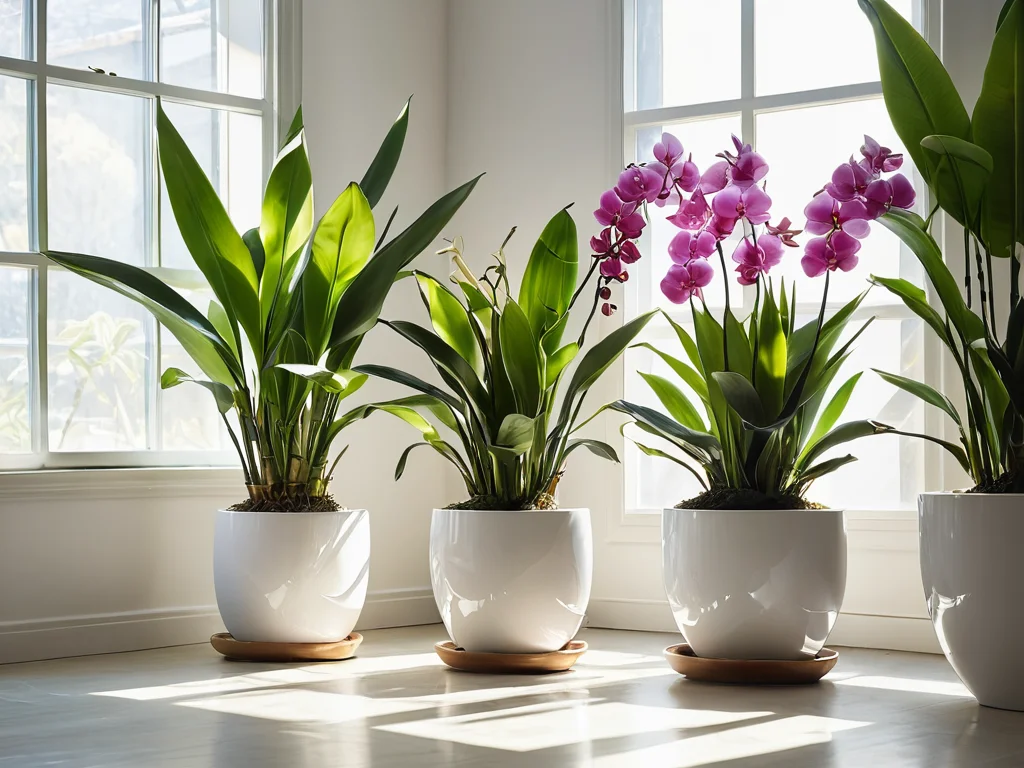
By getting rid of dried flowers, you will create a vacuum in your home that will gladly be filled with new energy. Your task is to actively attract Sheng Qi, living and thriving energy. Fortunately, Feng Shui offers many beautiful and effective alternatives that will not only decorate your interior but also become powerful magnets for luck, health, and well-being.
1. Live Flowers in a Vase:
- Freshness and Dynamism: Nothing compares to a bouquet of fresh flowers in a vase. They bring pure, bright Yang energy into the home, symbolizing life, growth, and renewal. Choose flowers considering their color and symbolism: red for passion and activity, yellow for joy and financial well-being, pink for love and harmony in relationships, white for purity and clarity.
- Proper Care: It is important not only to have live flowers but also to care for them properly. Regularly change the water, remove wilted leaves and stems. As soon as the flowers start to wilt, discard them without regret to prevent the appearance of wilting energy. Your care for flowers is care for your home’s Qi.
2. Houseplants:
- Constant Source of Qi: Live houseplants are perhaps the best investment in your home’s energy. They constantly generate fresh Qi, purify the air, and bring a sense of connection with nature.
- Choosing Plants:
- Plants with Rounded Leaves: They are believed to attract wealth and abundance (e.g., money tree, violets, peace lily, ZZ plant).
- Air-Purifying Plants: Such as spider plants, snake plants, aloe vera are not only beneficial for health but also create a positive atmosphere.
- Flowering Plants: Orchids, azaleas, hibiscus bring additional energy of joy and beauty.
- What to Avoid: Try to avoid cacti and plants with sharp, thorny leaves in living rooms, bedrooms, and near the entrance, as they can radiate “aggressive” Sha Qi. The exception is if a cactus is used for protection in very specific locations (e.g., on a window to reflect external negativity). Also avoid climbing plants if they are not supported and look messy, as they can symbolize difficulties and obstacles.
- Caring for Plants: Healthy, well-maintained plants are the key to good Qi. Water, fertilize, and repot them regularly. A dying or sick plant, even if alive, can become a source of negative energy, so it’s important to monitor their condition.
3. Vase with Fresh Fruits:
- Symbol of Abundance and Prosperity: A vase filled with fresh, bright fruits (oranges, tangerines, pomegranates, peaches) is a powerful symbol of abundance, health, and wealth. Oranges and tangerines, for example, are associated with gold and luck.
- Regular Refreshment: It is important that the fruits are always fresh and do not spoil, otherwise they will become a source of decay energy. Regularly refresh the contents of the vase.
4. Water Elements:
- Energy of Wealth and Movement: Small indoor fountains or aquariums with clean water and healthy, active fish are powerful activators of wealth and movement energy. The sound of flowing water is calming and attracts prosperity.
- Important Conditions: The water must always be clean and clear, and the fish must be healthy. Stagnant or dirty water, as well as sick fish, can have the opposite effect.
5. Images of Nature:
- Visual Harmony: If you cannot place live plants, use paintings, photographs, or wallpaper with images of living, blooming nature. These can be landscapes with green forests, flowering fields, calm lakes, or flowing water (but avoid images of stormy waterfalls, storms, or wilting nature).
- Creating Mood: Such images can create a sense of peace, expansion, and harmony, filling the space with positive energy.
6. Crystals and Minerals:
- Earth Energy: Crystals and minerals are pure Earth energy that promotes stability, harmony, and protection. Place them in the corresponding Bagua areas to enhance the desired aspects of life. For example, amethyst for calmness, rose quartz for love, citrine for wealth.
By choosing these living and energetically charged alternatives, you are not just decorating your home, but actively participating in creating a prosperous, healthy, and harmonious space that will nourish you and your family every day.
Conclusion: Your Home is a Source of Living Energy. Choose Prosperity and Harmony
In conclusion to our discussion, I would like to emphasize once again the fundamental truth of Feng Shui: your home is not just a collection of walls and objects, it is a living organism that breathes, vibrates, and interacts with your own energy. It is a sanctuary where you recover, dream, love, and create. Therefore, every choice you make regarding its arrangement has a profound energetic significance.
The use of dried flowers and herbariums, despite their external attractiveness, is a classic example of how an unconscious choice can lead to stagnation and leakage of life energy. They, like invisible anchors, hold your space in a state of “suspended” life, preventing fresh Qi from circulating freely and bringing you well-being.
We have examined how this “dead” Yin energy can manifest in your life: from unexplained fatigue and weakened immunity to problems in relationships and financial difficulties. And, most importantly, we have provided you with clear recommendations on how to free yourself from this energetic ballast and fill your home with vibrations of prosperity.
Now that you are armed with this knowledge, you can make a conscious choice. Choose live flowers, lush houseplants, vases with fresh fruits, images of blooming nature, and other elements that carry active, positive Yang energy. Care for your space just as you care for your own body and soul.
May your home become a true source of vitality, a place where Qi energy flows freely and harmoniously, bringing you health, love, success, and abundance in all areas. Your home deserves to breathe fully, filling your life with joy and well-being. Choose prosperity and harmony – and let every corner of your home radiate pure, living energy!