
Dear readers and seekers of harmony! As a Feng Shui Master, I often see that when choosing a home fountain, the main attention is paid to its appearance, color, or material. This is, of course, important. However, many forget about the most crucial aspect of the Water Element – its sound. The sound of water is not just a pleasant background; it is an audio manifestation of the flow of Qi, which directly affects your well-being, health, and emotional state.
If a fountain looks perfect but makes the wrong sound, its energetic potential can not only be neutralized but also turned against you. Today, we will delve into what the ideal sound of a home fountain should be, so that it becomes a true magnet for Sheng Qi – the life-giving energy of prosperity.
The Water Element at Home: Philosophy and Significance of a Fountain

In the Feng Shui tradition, Water (Shui) is one of the most powerful symbols and activators of energy. It’s no coincidence that in Chinese, the word “Feng Shui” literally means “wind and water.” Water symbolizes wealth, the flow of opportunities, and continuous movement. A home fountain is a tool that allows us to manage this flow within our living space.
When we talk about a fountain, we talk about movement. Moving water generates Yang energy, activating dormant sectors. But if the water moves chaotically or aggressively, it creates Sha Qi (destructive energy). And it is the sound that is the first indicator of the quality of this Qi.
- Soft sound: symbolizes the easy and effortless inflow of wealth.
- Loud, aggressive sound: can indicate financial difficulties associated with stress or struggle.
- Intermittent sound: foretells instability and delays in affairs.
The Sound of Water and the Flow of Qi: How a Fountain Affects Home Energy
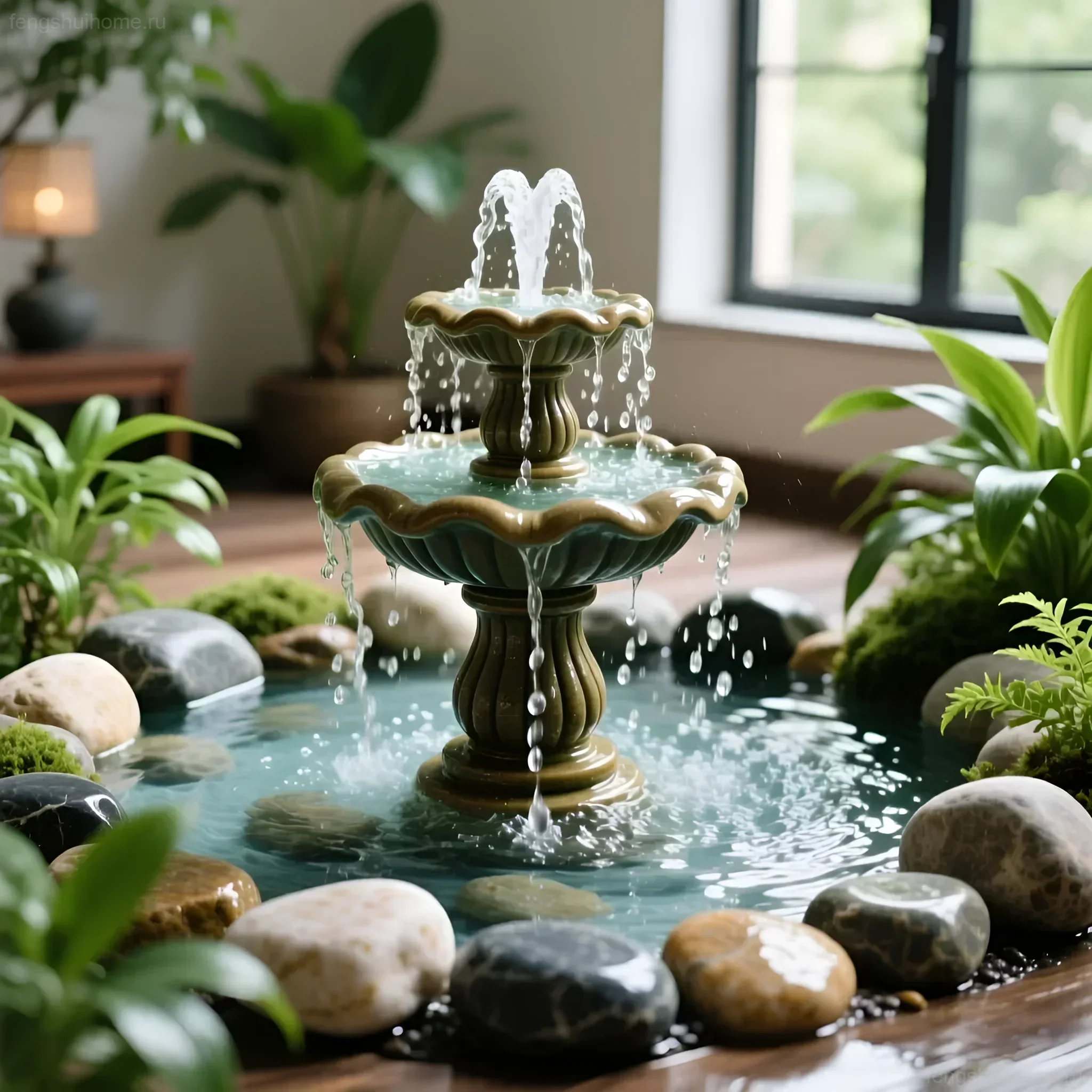
Qi moves along the path of least resistance. The sound of the fountain creates an auditory “path” for Qi, directing it to specific areas of the home. If the sound is sharp, it causes Qi to move too quickly and chaotically, leading to the “washing away” of luck.
The ideal sound is one that aligns with the principles of Yin and Yang harmony. Water is inherently Yin (calm, flowing), but its movement makes it Yang (active). Our task is to find a balance so that the Yang activity is gentle and controlled.
Comparison of Sound Types and Their Impact on Qi:
| Sound Type | Qi Quality | Energetic Effect |
|---|---|---|
| Gentle murmuring, whispering | Sheng Qi (Life-giving Qi) | Attracts abundance, calms the mind, promotes concentration. Ideal for relaxation and wealth areas. |
| Clear, rhythmic dripping | Yang activating Qi | Stimulates movement, supports income stability. Good for work areas. |
| Loud splashing, waterfall roar | Sha Qi (Destructive Qi) | Causes anxiety, financial losses, conflicts. Too much Yang, creating stress. |
| Weak, barely audible dripping | Yin stagnation | Symbolizes slow fading of opportunities, financial stagnation. Insufficient activation. |
The Ideal Feng Shui Fountain Sound: What It Should Symbolize
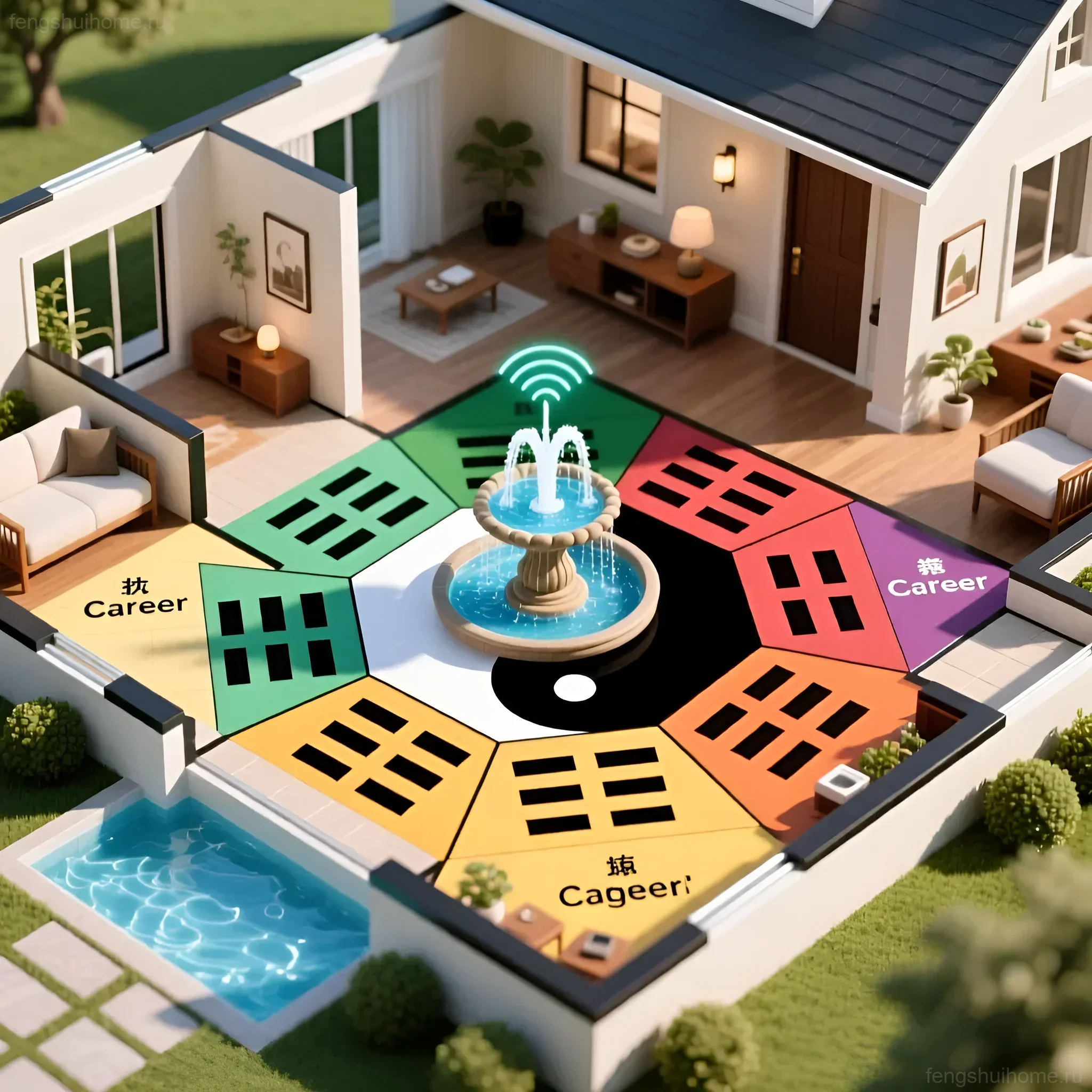
The ideal fountain sound should resemble a soft, continuous flow that easily enters your home, like money into your wallet. It should be audible but not dominate conversation or silence. We are looking for the “golden sound” – a sound that inspires peace and prosperity.
Criteria for the Ideal Sound:
- Continuity (Stability): The sound should be even, without stuttering or sudden stops. This symbolizes the stability and constancy of financial flow.
- Softness (Harmony): The sound should not be harsh. Avoid sounds that resemble striking jets or hissing. Look for a sound similar to rustling leaves or a gentle stream.
- Purity (Abundance): The sound should be clear, without mechanical noises (pump hum, creaking). Mechanical noises symbolize the effort and struggle required to earn income.
- Rhythm (Accumulation): If your fountain uses cascades or overflows, the rhythm should be gentle and predictable, like counting coins.
Master’s Tip: Try closing your eyes while listening to the fountain. If the sound evokes a feeling of relaxation and anticipation, you have found the right flow of Qi.
The Influence of Fountain Sound on Bagua Sectors: Where to Place for Harmony
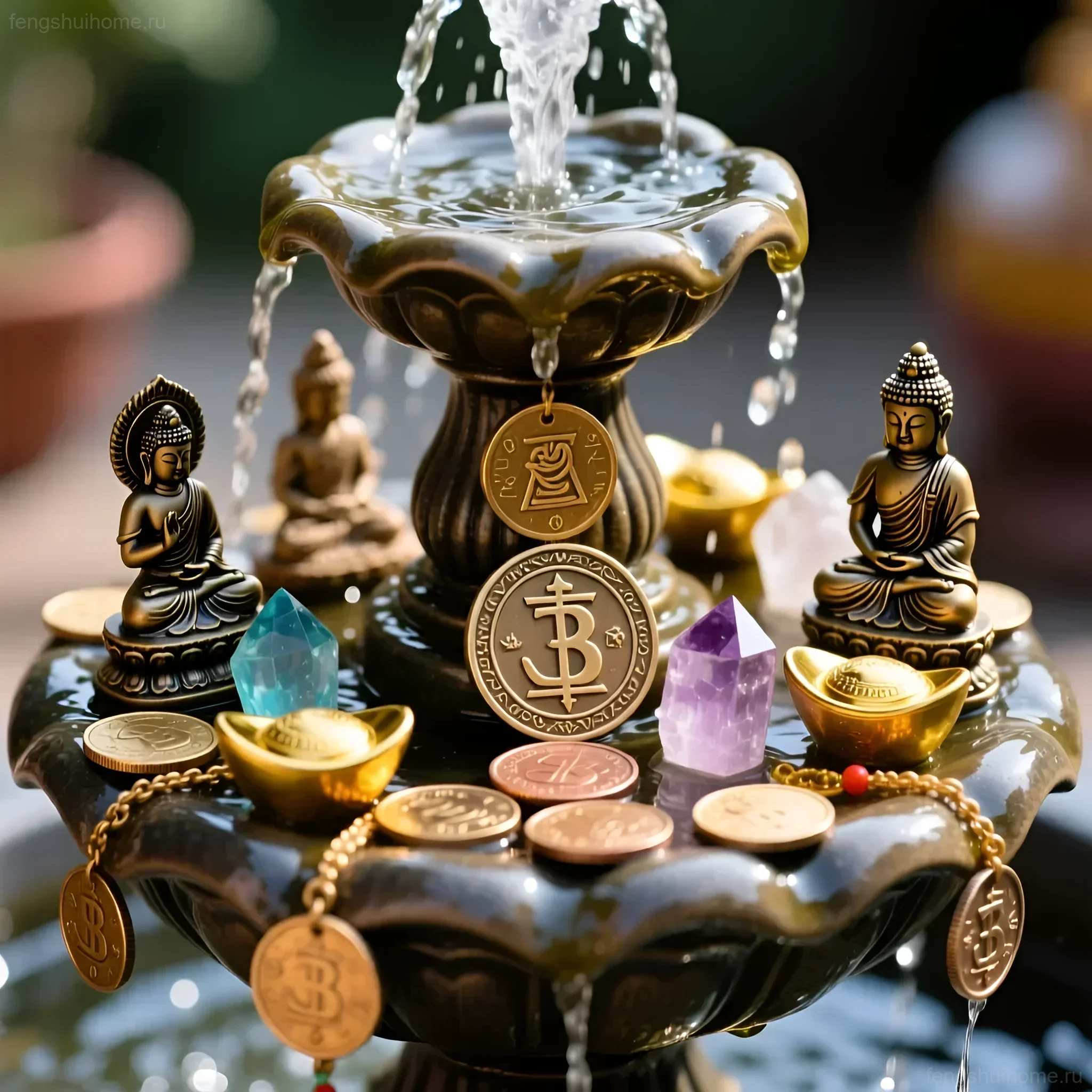
Different Bagua sectors require different intensities and characteristics of Qi. Consequently, the sound of the fountain should be adapted to the needs of a specific sector.
1. Southeast (Wealth Zone)
This is the Wood sector, nourished by Water. Here, active but controlled Qi is required. The sound should be clear and confident. Ideally, a rhythmic but gentle murmur, reminiscent of filling a large bowl. The fountain should be loud enough to activate the sector, but not so much as to cause anxiety.
2. North (Career Zone)
This is the Water sector. Here, Qi should be deep and calm. The sound should be low, meditative, and very soft. An ideal sound is reminiscent of a quiet underground spring or a slowly flowing river. Loud sound here can cause a “flood” in your career – too much work and stress.
3. East (Family and Health Zone)
Harmony is important here. The sound should be calming and even. It can be a gentle dripping that softly massages the ear. Avoid any harsh sounds that could cause family disputes or health problems.
4. West and Northwest (Metal)
Water depletes Metal, so fountains are placed cautiously in these zones. If you do use a fountain in these areas, the sound should be minimal and muffled, so as not to “wash away” the luck of helpers (NW) or creative energy (W). Use materials that soften the sound, such as ceramics.
Talismans and Symbols to Enhance the Positive Influence of Fountain Sound
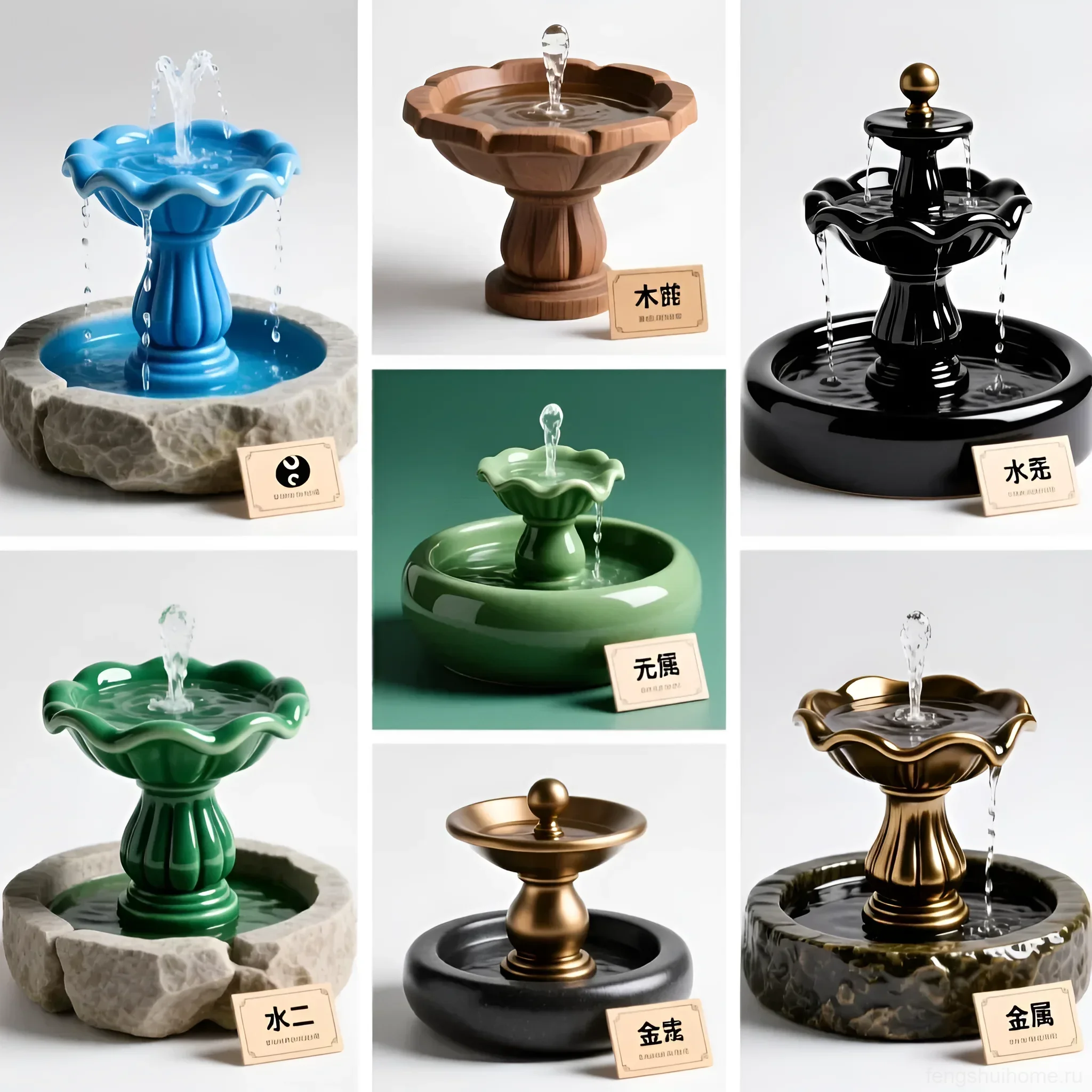
To enhance the beneficial effect of the ideal sound, we can integrate certain symbols into the fountain’s design that visually and audibly emphasize the movement of abundance.
- Moving Balls (Spheres): If water causes a glass or stone ball to spin, it creates an additional, soft, rolling sound. The rotation symbolizes the continuous movement of Qi and the eternal cycle of wealth.
- Coins or Pebbles at the Bottom: Small stones or Chinese coins at the bottom soften the fall of water and create a “sound of money accumulation” – a light, pleasant chime or soft tap. This literally programs the fountain to attract financial luck.
- Multi-tiered Reservoirs: Fountains with multiple bowls (cascades) break up the water flow, making the sound more complex and rich. Ensure the water cascades gently, rather than falling from a height, creating a roar.
- Talisman Fish: While it’s not advisable to keep live fish in small fountains, figurines of carp (Koi) or dragons placed near the water source enhance the beneficial influence of Water. Their presence visually emphasizes that the sound you hear is the sound of good fortune.
Fountain Colors and Materials: How to Choose for Maximum Benefit
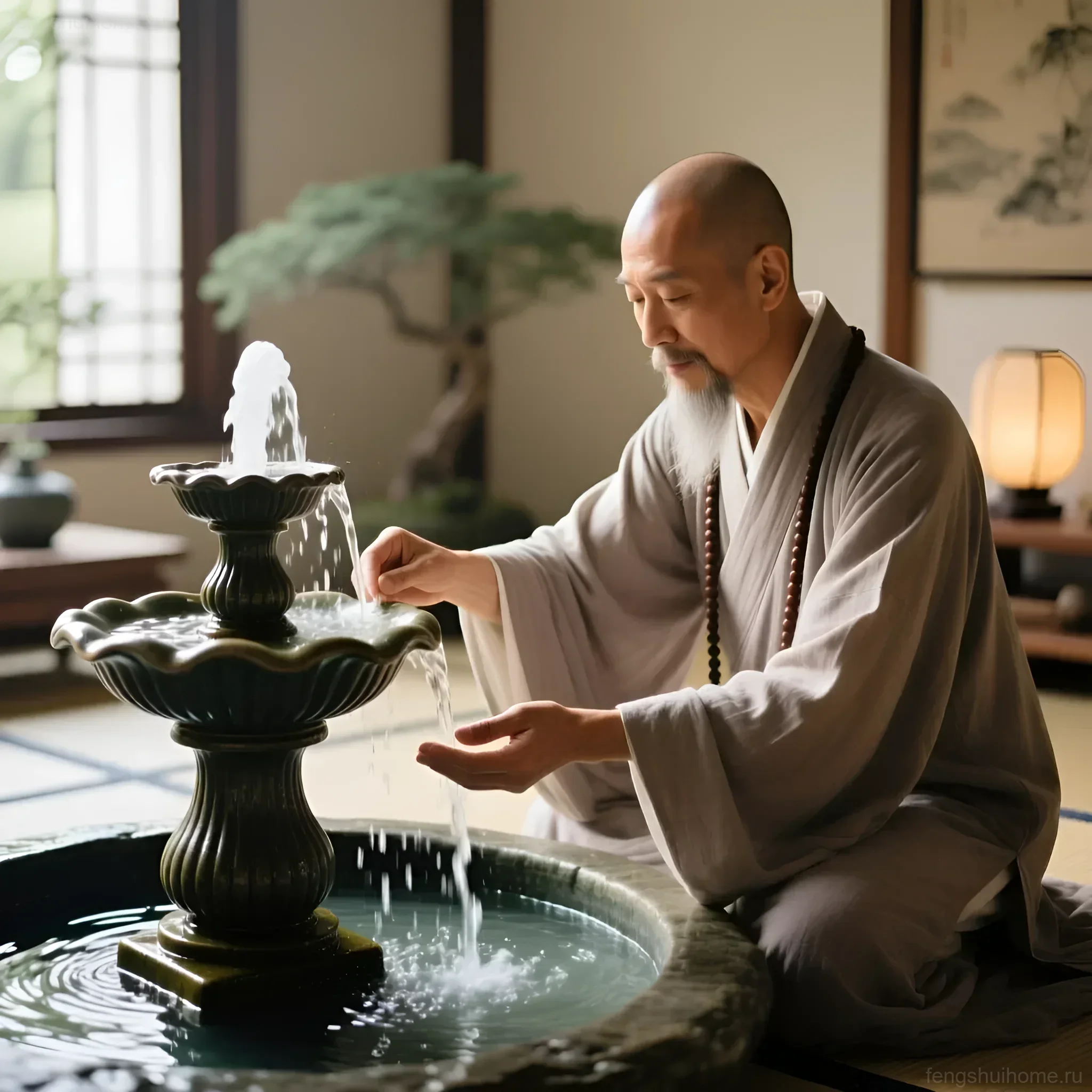
The choice of material directly affects the acoustics of the fountain. A Feng Shui Master always considers how the material interacts with Water (Shui) and how it influences the sound quality, which in turn adjusts Qi.
1. Materials and Their Acoustic Properties
- Ceramics and Clay (Earth Element): These materials absorb and soften sound excellently. Ceramic fountains produce a soft, muffled murmur. Ideal for sectors where calm, Yin Qi is required (e.g., in the bedroom or Health zone).
- Stone (Granite, Slate): Produce a clearer and more resonant sound. If water falls on a smooth stone, the sound can be clearer and more rhythmic. Good for activating the Wealth (Southeast) and Career (North) zones.
- Metal (Bronze, Copper): Metal fountains (though rare) make the sound very resonant and loud. An excessively loud metallic sound can be aggressive (Sha Qi). If you use metal, ensure the water falls from a minimal height.
2. Colors and Their Influence
The color of the fountain should correspond to the required sector, but it can also visually complement the ideal sound. For example, in the Wealth zone (Wood), blue-green shades of water and the basin enhance the effect of a soft, life-giving sound. Black or dark blue (Water color) in the North sector emphasizes the depth and calmness of a low, meditative sound.
Feng Shui Master’s Tips: How to Tune Fountain Sound to Attract Luck
Tuning the ideal sound is an art. It requires attention to detail and an understanding of how even minimal changes affect your home’s Qi.
1. Adjusting Flow Speed
Most home fountains have an adjustable pump. Never set the pump to maximum power. Too strong a flow creates an aggressive noise. Start with the minimum setting and gradually increase it until the sound is audible but remains soft and unobtrusive. We are looking for a sound that “fills” rather than “destroys.”
2. Controlling the Fall Height
The higher the water falls, the louder and sharper the sound. If your fountain has multiple levels, ensure the fall height does not exceed 5–7 cm between cascades. Use flat stones or wide bowls to soften the impact of the water.
3. Using Fillers
If the fountain is too noisy, add large, smooth river stones or glass beads to the bottom of the reservoir. This is not only beautiful but also helps break up the flow, turning a sharp splash into a soft murmur.
4. Eliminating Extraneous Noises
Regularly check the pump. Any humming, vibration, or grinding is Sha Qi. Ensure the pump is fully submerged in water and does not touch the reservoir walls. Clean water prevents blockages and noise.
Common Mistakes When Choosing Fountain Sound for a Home and How to Avoid Them

Even with the best intentions, people often make mistakes that turn a wealth activator into a stress generator.
- Mistake 1: “Leaky faucet” sound. If the fountain makes rare, irregular drips, it symbolizes financial leakage or instability. How to fix: Increase the flow rate or change the water’s falling angle to ensure continuous murmuring.
- Mistake 2: “Mountain waterfall” sound. An excessively loud, roaring sound creates aggressive Yang energy, causing anxiety and conflicts. How to fix: Reduce the pump power, use wider bowls to collect water, or add fillers to soften the fall.
- Mistake 3: Mechanical pump noise. A grating hum that drowns out the sound of water completely neutralizes the fountain’s beneficial effect, symbolizing excessive effort and “grinding teeth” in the struggle for success. How to fix: Check the water level (the pump must be fully submerged) and replace an old pump with a quieter model.
- Mistake 4: Sound in the bedroom. Even the softest sound of water in the bedroom (Yin zone) can disrupt sleep, creating excessive Yang activity, leading to sleep and health problems. How to avoid: If a fountain is necessary in the bedroom for Bagua reasons, it should be turned off at night.
Frequently Asked Questions About Fountain Sound and Feng Shui

1. Should the fountain run 24/7?
To activate the wealth (Southeast) and career (North) zones, the fountain should run most of the day when you are awake. However, if the fountain’s sound interferes with sleep or causes irritation, it should be turned off. Remember: harmony is more important than dogma. If the sound of water causes stress, it creates Sha Qi, even if the sector is activated.
2. What volume level is considered ideal?
The ideal volume level is one where you can hear the water, but you don’t have to raise your voice to have a conversation near the fountain. In decibels, this is approximately 30–40 dB – the level of a soft whisper or a quiet office. The sound should be integrated into the atmosphere, not dominate it.
3. Can a fountain be too quiet?
Yes. If you can barely hear the water, the Qi flow may be too weak (Yin) for effective sector activation. The fountain should be loud enough to “wake up” the Qi in the zone. If the fountain is too quiet, ensure the water hasn’t evaporated and try slightly increasing the pump speed.
4. How to eliminate echo or hum from a fountain?
Echo occurs if the fountain is placed in a large, empty room with hard surfaces. Place plants (Wood Element) or soft furniture near the fountain to absorb excess sound waves. This will make the sound more “warm” and natural.
Interesting Facts About the Sound of Water and Its Impact on Humans
Understanding Feng Shui is inextricably linked with the science of nature and human psychology. Modern research confirms what Masters have known for millennia: the sound of water is incredibly beneficial.
- Stress Reduction: The sound of murmuring water is a type of “pink noise” (a deeper version of white noise). It helps the brain synchronize waves, reducing cortisol levels (the stress hormone) and improving concentration. The ideal fountain sound, therefore, not only attracts wealth but also prepares you to receive it by calming your nervous system.
- Improved Sleep: Gentle, even murmuring masks harsh, distracting noises (dog barking, passing cars), acting as a sound “cushion.” While not recommended for constant use in the bedroom, it’s beneficial for short-term relaxation.
- Association with Safety: Psychologists believe our positive reaction to the sound of flowing water is linked to deep evolutionary heritage. Flowing water is always a sign of life, safety, and sustenance. Thus, the soft sound of a fountain subconsciously signals the brain: “Abundance and safety are here.”
Choosing the ideal sound for a home fountain is not just a technical matter; it’s about tuning your personal energy orchestra. May your fountain bring only pure, soft, and abundant Qi into your home, bestowing upon you the prosperity and harmony you deserve.