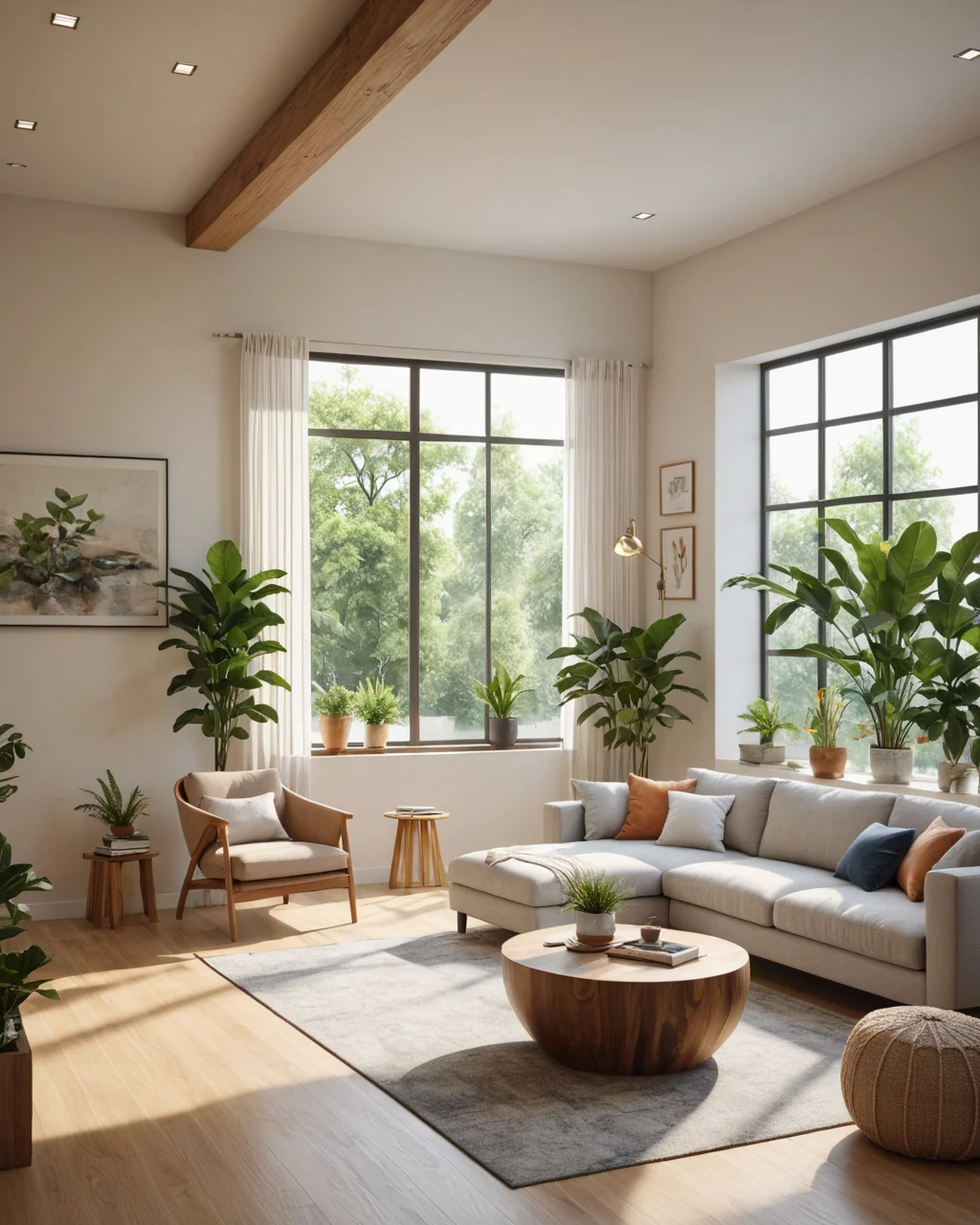
The living room is the heart of any home, a place where loved ones gather, where life’s most important events take place. It is in this room that the atmosphere of coziness and warmth is laid. However, to create a favorable atmosphere, it is worth paying attention to Feng Shui – an ancient Chinese practice focused on harmonizing space. In this article, we will examine in detail how to adjust the energy of the living room in your home using Feng Shui principles.
The Energy of Space: The Foundation of Feng Shui
Feng Shui is based on the concept of Qi – this is the life force energy that permeates everything around. It is important to understand that each room in your house, and especially the living room, has its own level of energy. If Qi flows freely through the room, the atmosphere becomes more harmonious, contributing to good well-being and mood.
To determine the energy levels in your living room, pay attention to several factors. Check if there are any obstacles to free movement. Open spaces promote the free flow of Qi, while cluttered corners and dark areas can block its movement, causing discomfort and a bad mood.
The role of space and its distribution in Feng Shui is also very important. The correct placement of furniture and accessories allows for a balance between the elements of Qi, which contributes to improved energy. Think about how your living room can be organized so that each element supports the overall atmosphere of comfort.
Color Palette for Harmony
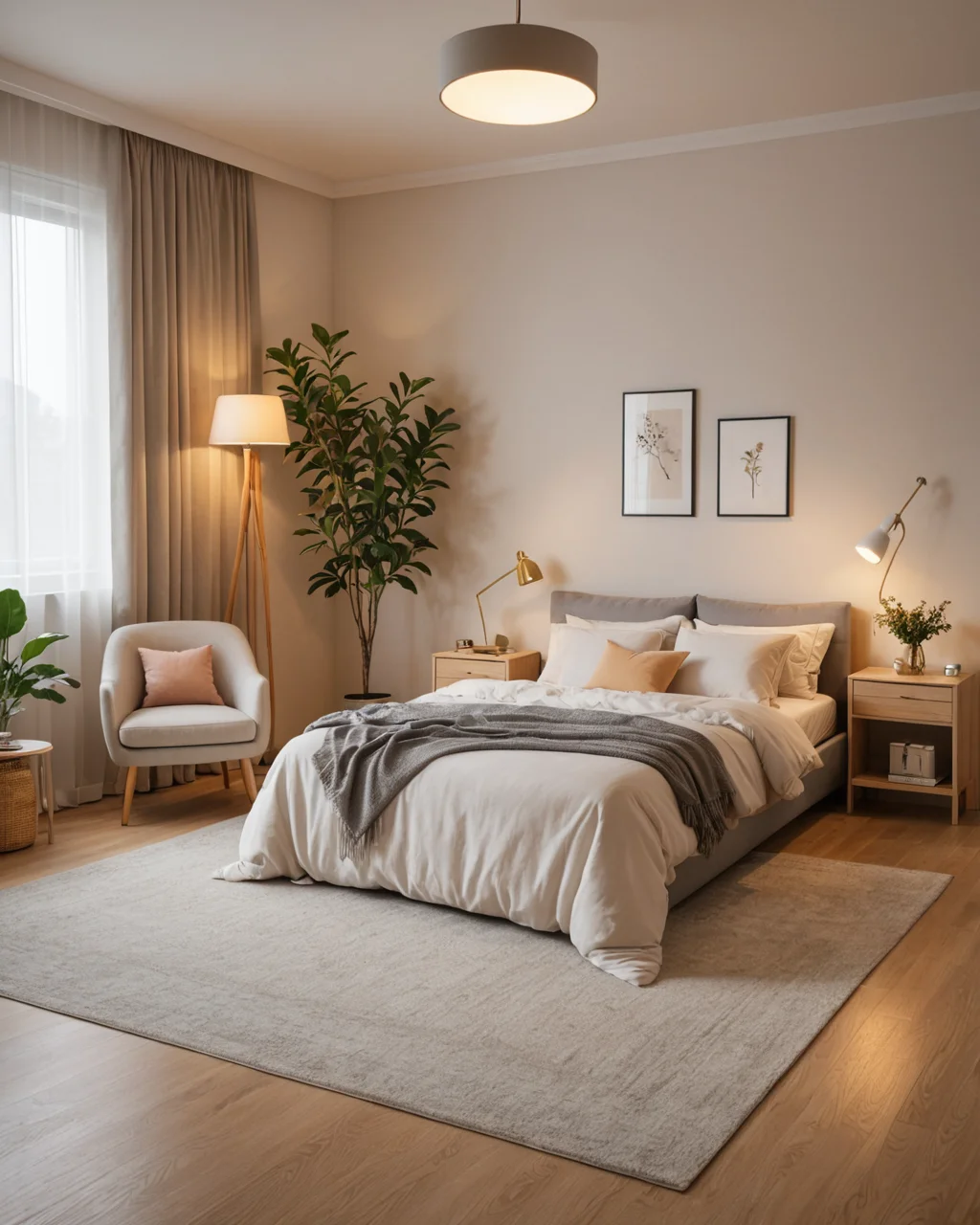
Colors have great significance in Feng Shui, as each shade emits its own energy and affects our perception and mood. For example, warm shades like yellow and orange give the room sunshine and coziness, while cool ones, like blue and green, can bring calmness and tranquility.
When choosing a color scheme for the living room, it is important to consider how certain colors will interact with each other. A combination of warm and cool tones can create an interesting contrast, but do not forget about the need to maintain harmony. One popular approach is to use three main colors that complement each other to create a balanced impression.
In addition, pay attention to lighting depending on the chosen color palette. Bright colors are best perceived in good natural light, while soft and dark shades create coziness in dim light conditions.
Furniture and its Placement: Creating Comfort
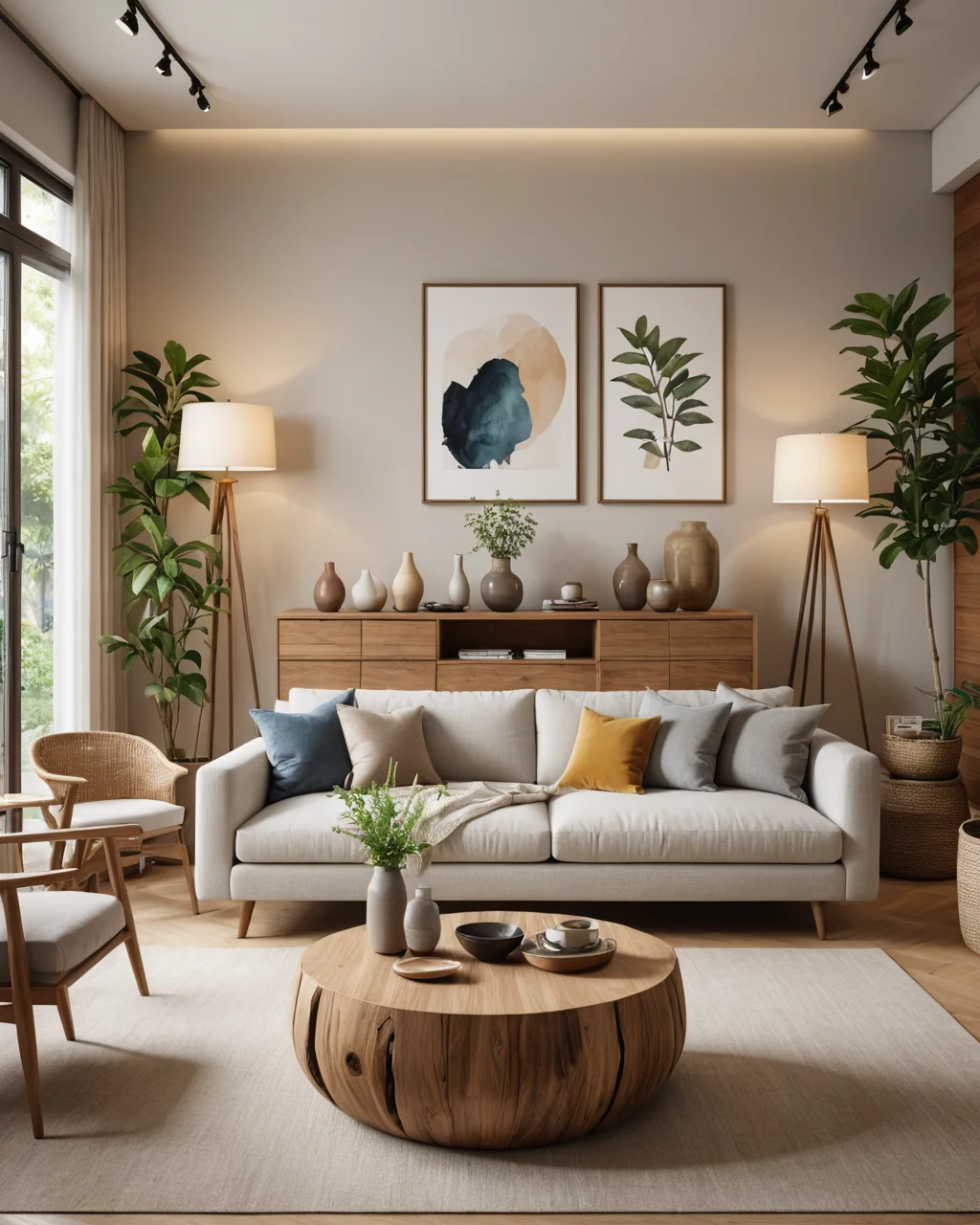
The rules for arranging furniture according to Feng Shui are quite simple, but require careful attention. The main principle is that furniture should be placed in such a way as to create open space, not to block passages. It is best to place the sofa against the wall to create a sense of security and support, rather than leaving it in the center of the room.
The shape and materials of the furniture also matter. Round or oval shapes promote the smooth flow of energy, while sharp corners can create negative flows. Use natural materials such as wood and cotton to maintain a connection with nature and create a harmonious atmosphere.
Do not forget to create a cozy zone for communication and relaxation. Soft armchairs, matching in color and shape, can create a space where your guests will enjoy spending time, talking, and relaxing.
Green Friends: Plants in the Interior
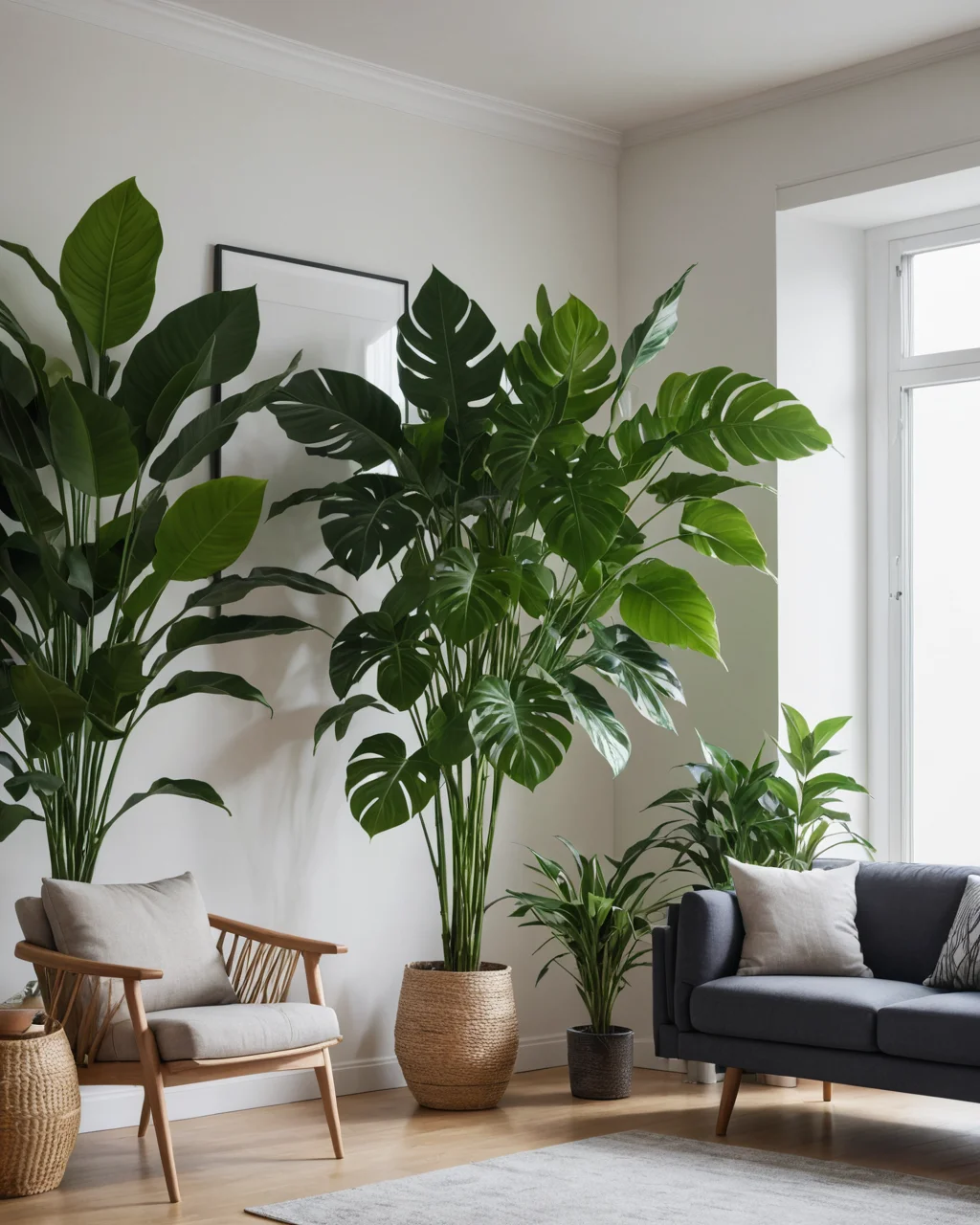
Plants in the living room interior not only decorate the space but also improve Qi circulation. Choose houseplants that favorably affect the atmosphere. For example, ficus and peace lily are considered symbols of well-being and harmony.
The symbolism of plants has its own meaning. Some plants, such as cacti, can create energy blocks due to their sharp spines. Therefore, choose flowers with rounded shapes that promote a soft flow of energy.
Plant care also affects their ability to improve energy. Regular watering and pruning, as well as caring for the health of plants, will raise the Qi level in your home. This not only makes your living room more attractive but also brings positive changes to the atmosphere.
Light and Sound: Important Elements of Feng Shui
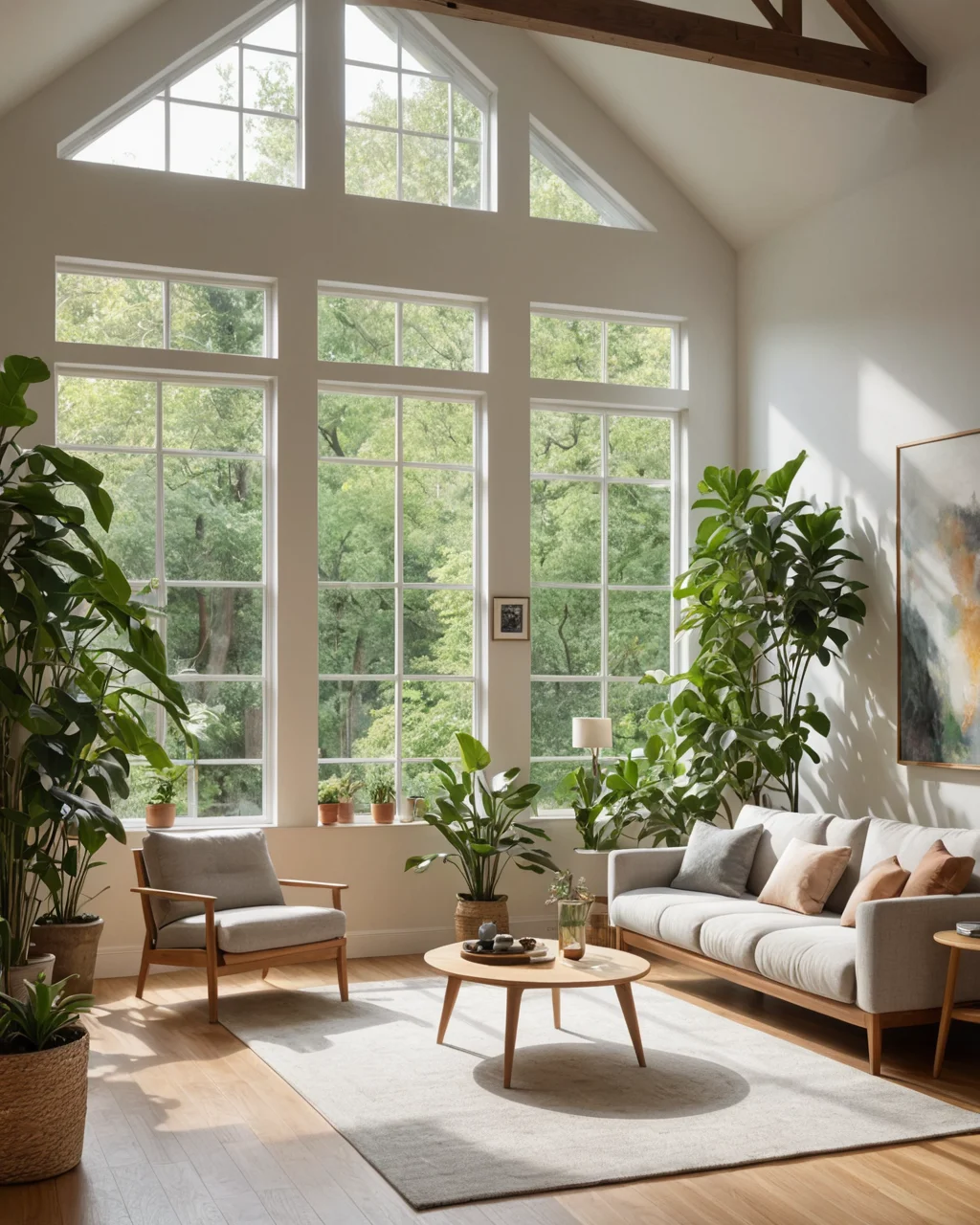
Light and sound are integral elements of creating coziness in the living room. Natural light has special significance, as it contributes not only to illumination but also to improving mood. Try to maximize natural light by arranging furniture so that windows are not blocked.
Artificial lighting also plays an important role. Various light sources, such as wall sconces, floor lamps, and ceiling lights, can create the desired mood depending on the time of day. Soft light will help you relax, while bright light will activate communication and activity.
Sound elements, such as music or nature sounds, can improve the atmosphere and positively affect the Qi level. The sounds that surround you in the living room can create harmony, so choose suitable tracks or sounds for your space.
Decor and Accessories: Details That Matter
Decor and accessories play an important role in creating the atmosphere in the living room. The right choice of interior items can be a catalyst for improving energy. For example, paintings depicting nature or happy moments can contribute to improving mood.
The symbolism of objects also matters. Use items that you like and that radiate positive emotions. Avoid items that evoke negative associations. Every element in your interior should bring joy and harmony.
The issue of negative symbols and objects is an important aspect of Feng Shui. Try to get rid of old or unnecessary things that block energy flows. Cleanliness and order in the living room also contribute to improved energy.
Seasonal Changes: Adapting to the Time of Year
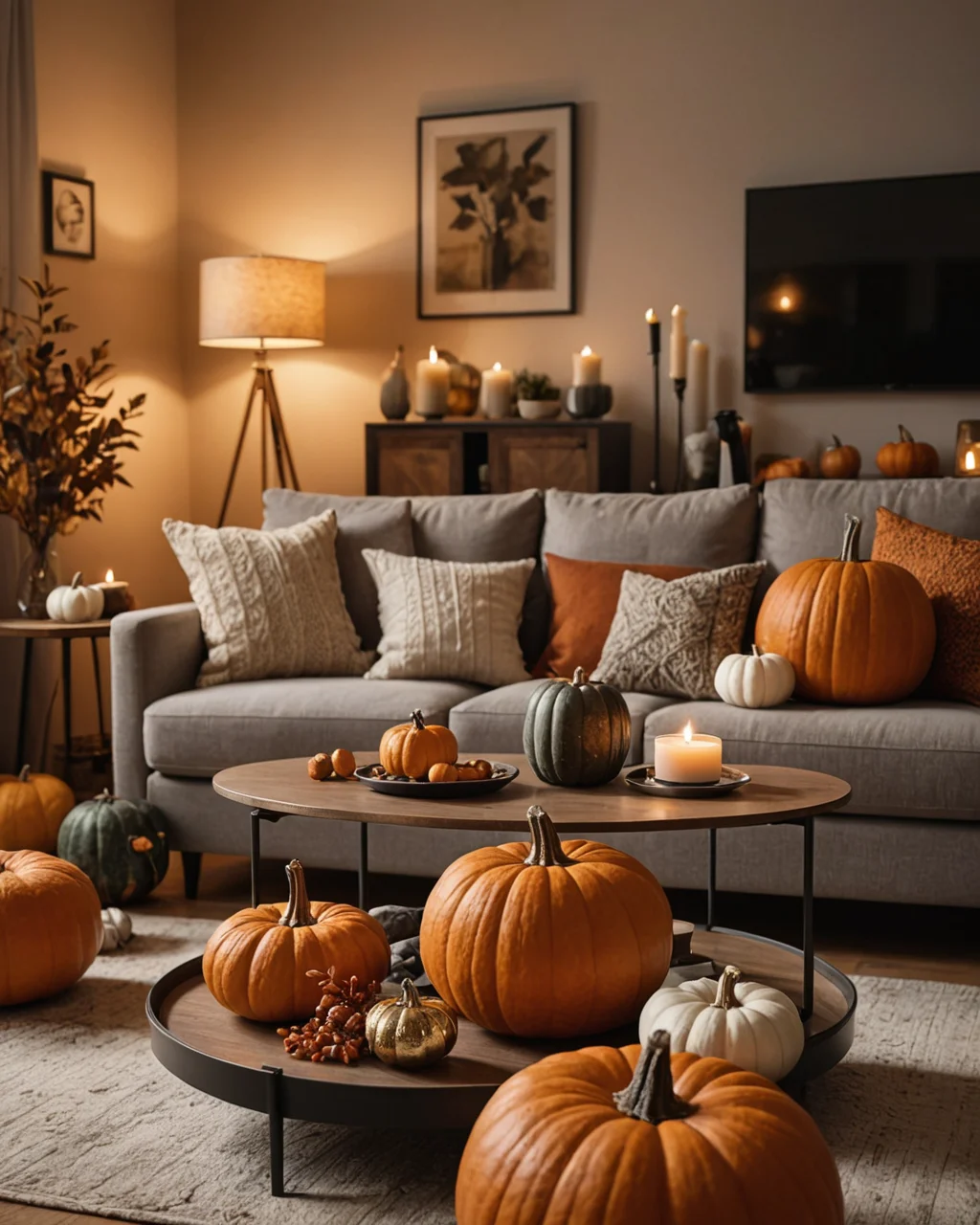
The change of seasons is an excellent opportunity to update the interior and improve the energy of your living room. Use seasonal elements to add variety to the decor. For example, in spring, add fresh flowers and bright colors, and in autumn, warm and cozy textures.
Adapting the interior to the season not only improves energy but also affects the overall mood. Changing decor, adding new details is a way to refresh the space and make it more attractive.
The influence of seasonal changes on mood and atmosphere should not be underestimated. Listen to the season and use opportunities to create a unique atmosphere in your living room that will change with nature.