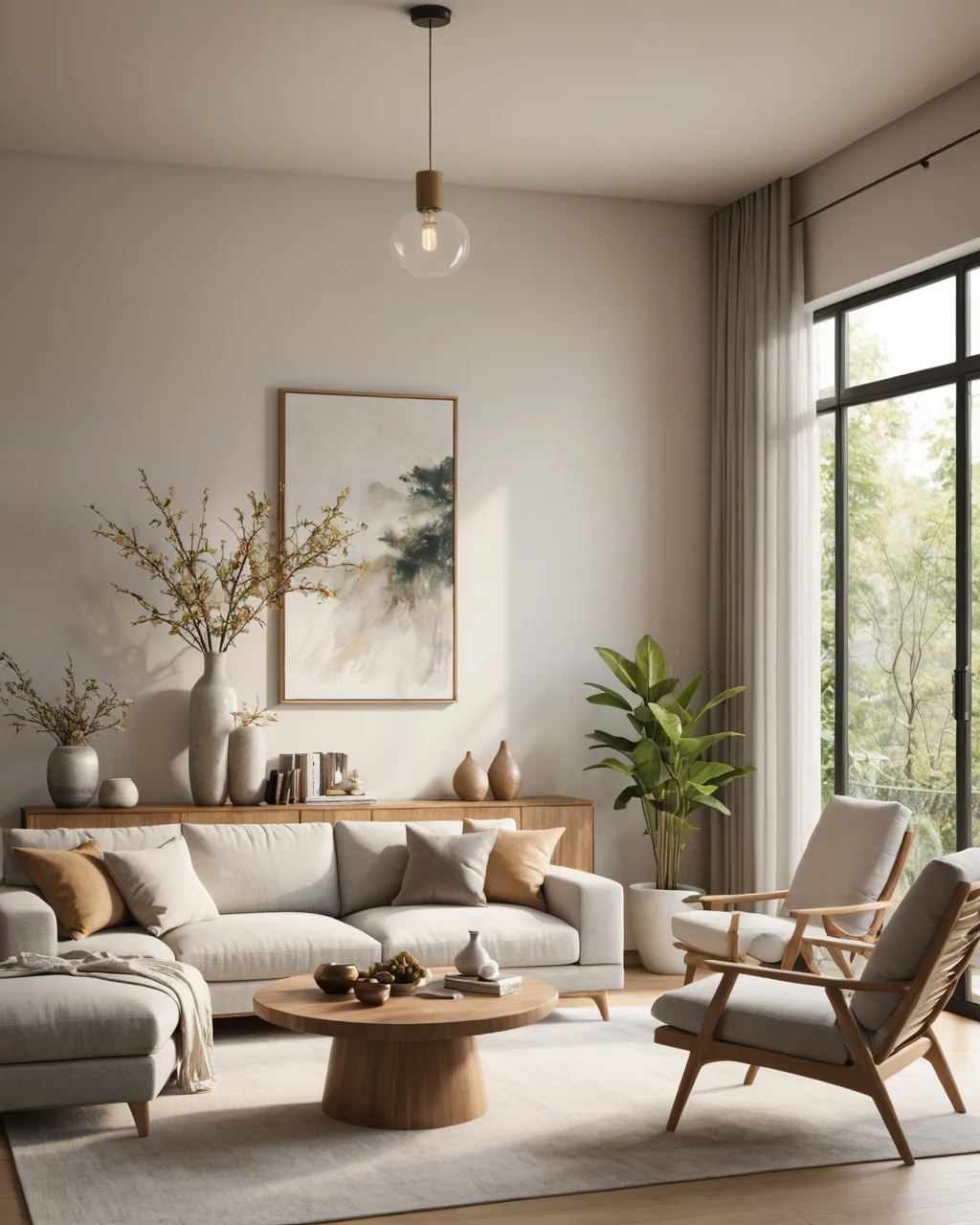
Feng Shui is an ancient Chinese science that studies the influence of the surrounding space on a person’s inner harmony. The basic principles of Feng Shui are aimed at creating a comfortable and harmonious environment in which people live and develop. It is important to understand that every detail of the interior, from the choice of furniture to the wall colors, affects the atmosphere of your home and overall well-being.
One of the key concepts of Feng Shui is Qi energy. It represents the life force that permeates everything around and promotes harmony in space. For Qi to circulate freely, it is important to monitor how interior items are arranged and how the space is organized. A well-balanced environment helps to avoid energy stagnation, which, in turn, affects the health and emotional state of its inhabitants.
The living room is the heart of your home, a place where the family gathers and where many important interactions take place. This space should be a center of harmony and tranquility so that everyone who enters it feels cozy and comfortable. Pay attention to the arrangement of furniture, lighting, and decor – all of these play an important role in creating a positive atmosphere.
Color Solutions for Calming
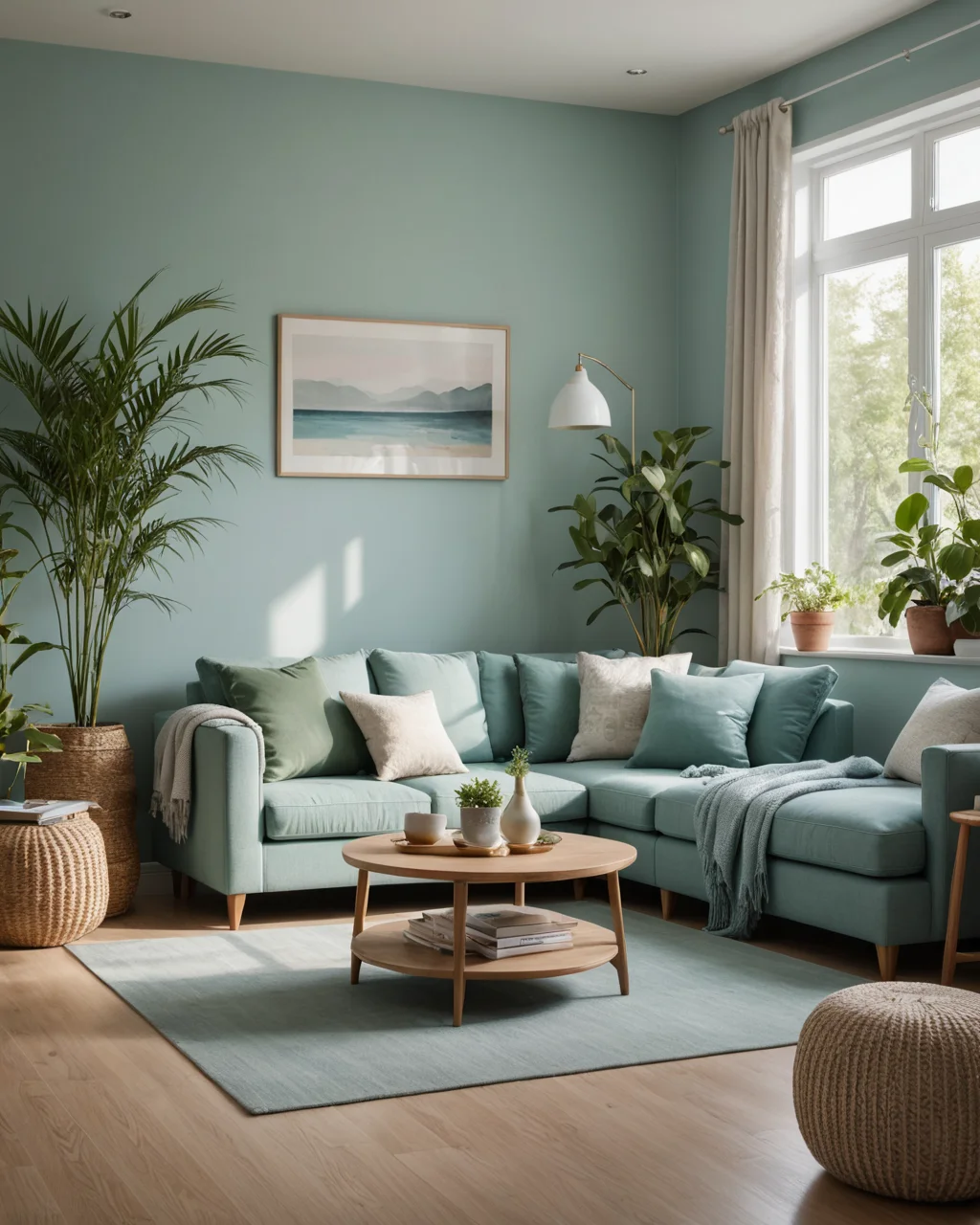
Color plays an incredibly important role in creating the atmosphere in any room, including the living room. The psychology of color in Feng Shui emphasizes which shades promote calmness and peace. For example, soft blue and green tones help reduce stress levels, creating a sense of freshness and tranquility. These colors can be used for walls, textiles, or accessories.
When choosing a color palette, consider the purpose of the space. The living room, as a place for communication and relaxation, requires warm and cozy shades. Gentle cream, beige, or pastel shades can create a relaxing atmosphere. It is also worth paying attention to the combination of warm and cool tones. For example, you can use warm tones for the walls and add cool elements in the form of decor, which will make the interior more balanced and harmonious.
It is important to remember that the color palette should support the individuality and style of your home. To create coziness, try using different textures and shades of the same color. This will add depth and interest to the interior while maintaining an atmosphere of tranquility.
Furniture and its Arrangement: Order and Harmony
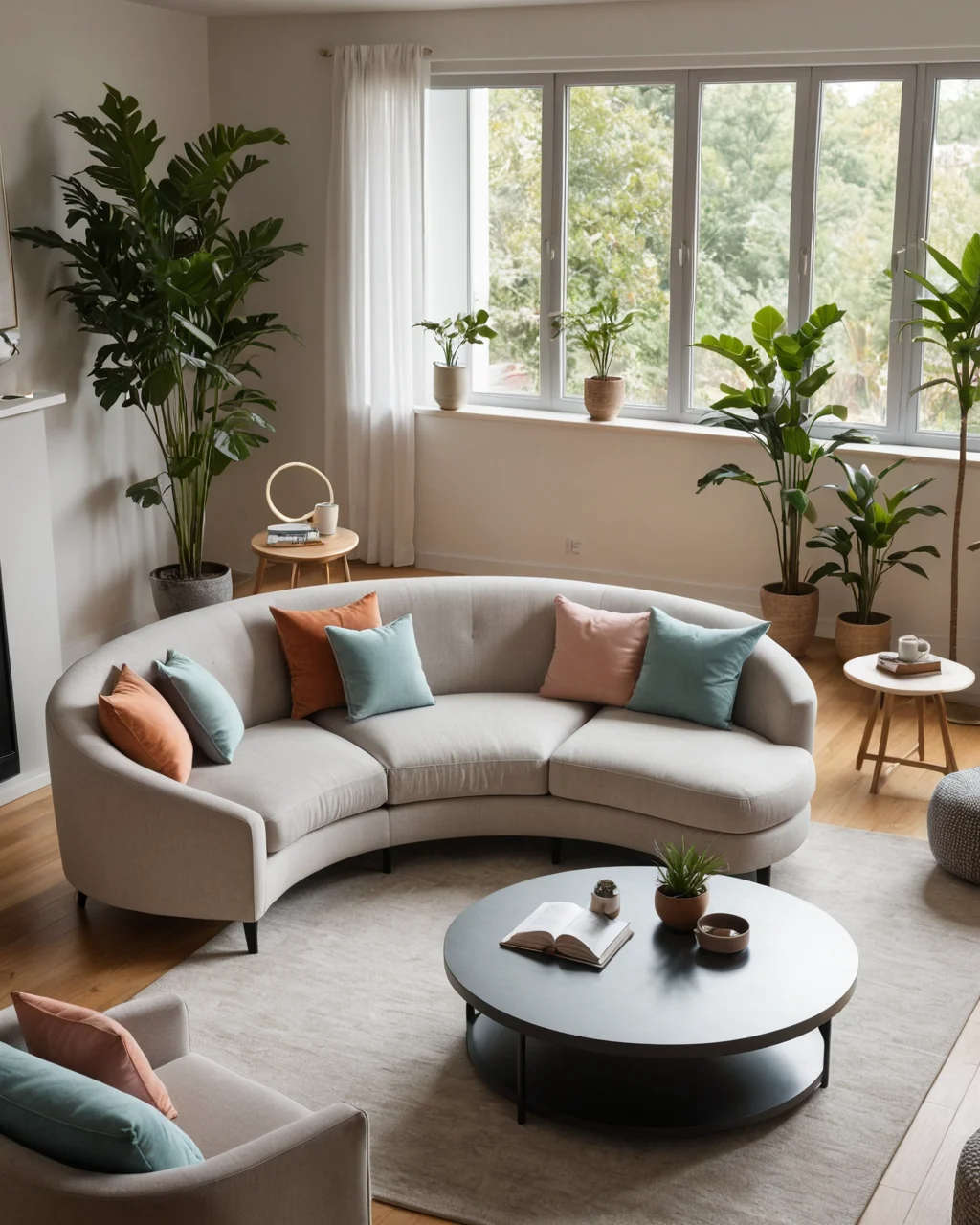
Proper furniture arrangement is one of the fundamental aspects of Feng Shui that directly affects the circulation of energy in space. To ensure the free movement of Qi, try to avoid angular shapes and bulky items that can block the energy flow. It is optimal to place furniture so that there is enough free space between items.
The choice of furniture is also important for maintaining an atmosphere of tranquility. Soft, rounded shapes create a sense of coziness and security. For example, sofas with rounded edges and low coffee tables create a friendly atmosphere where communication is comfortable. Choose materials that add warmth, such as natural wood or textiles with a soft texture.
It is also worth paying attention to the functionality of furniture. Comfortable and multifunctional items will help maintain order in the living room and avoid cluttering the space. When arranging furniture, consider the main zones: for communication, relaxation, and entertainment. This will help create a harmonious space where everyone can find their place.
Natural Elements: Creating a Connection with the Outside World
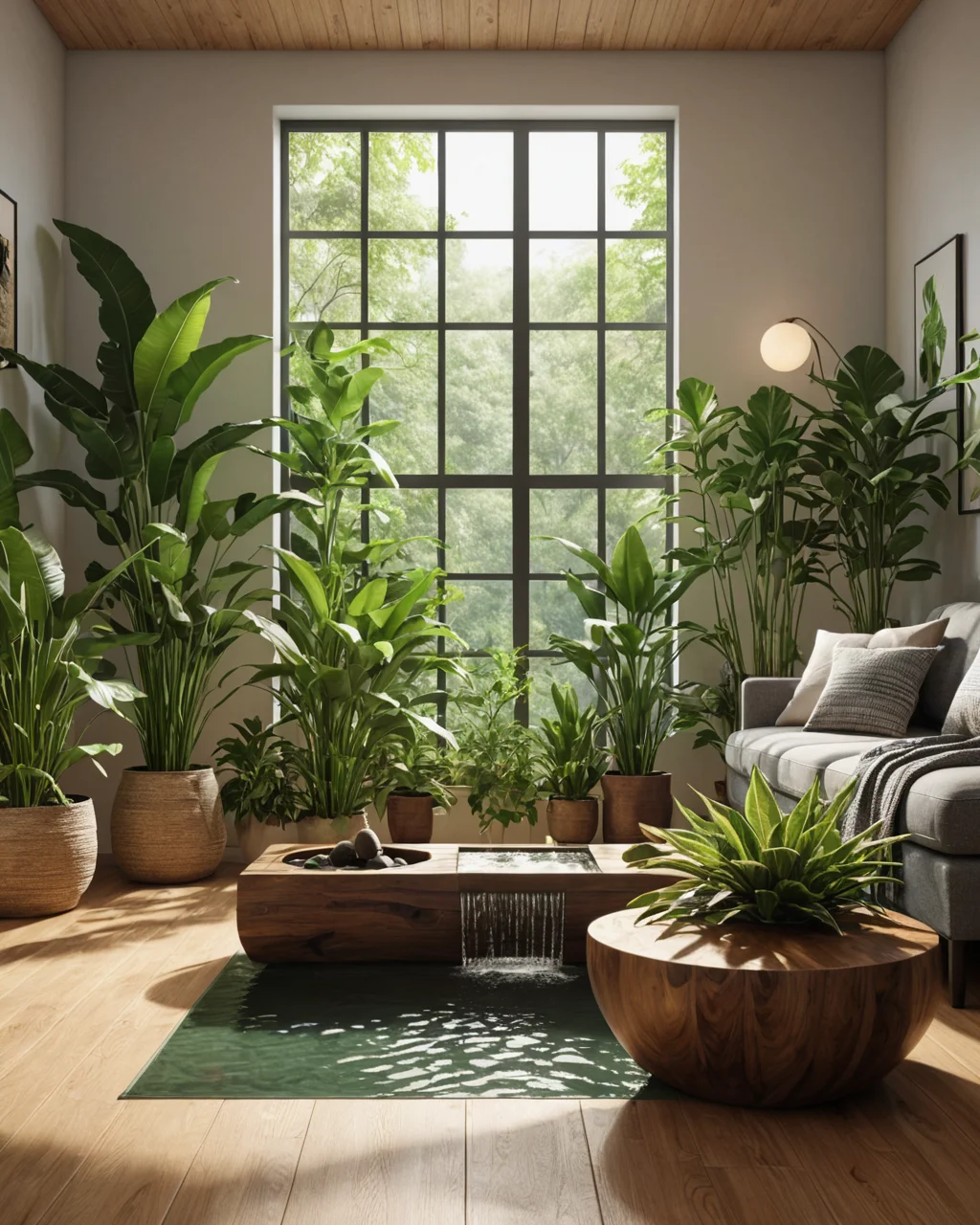
Natural elements play a key role in Feng Shui and help create a harmonious environment that promotes tranquility and inner balance. Live plants in the living room not only purify the air but also bring life energy into the home. Plants such as Spathiphyllum or Sansevieria are particularly beneficial for creating coziness and harmony.
Water and light are also important elements in Feng Shui. Fountains or aquariums can bring the element of water into the space, symbolizing wealth and abundance. Natural light, entering the room through windows, fills the space with positive energy. Try to maximize natural light by adding light curtains that let in light.
Using natural materials is another way to create a sense of closeness to nature. Wooden floors, stone accents, and textiles made from natural fibers add warmth and coziness to the room. This not only makes the interior more stylish but also improves the overall atmosphere, creating a space that is pleasant to be in.
Sound Harmony: Creating a Calm Atmosphere
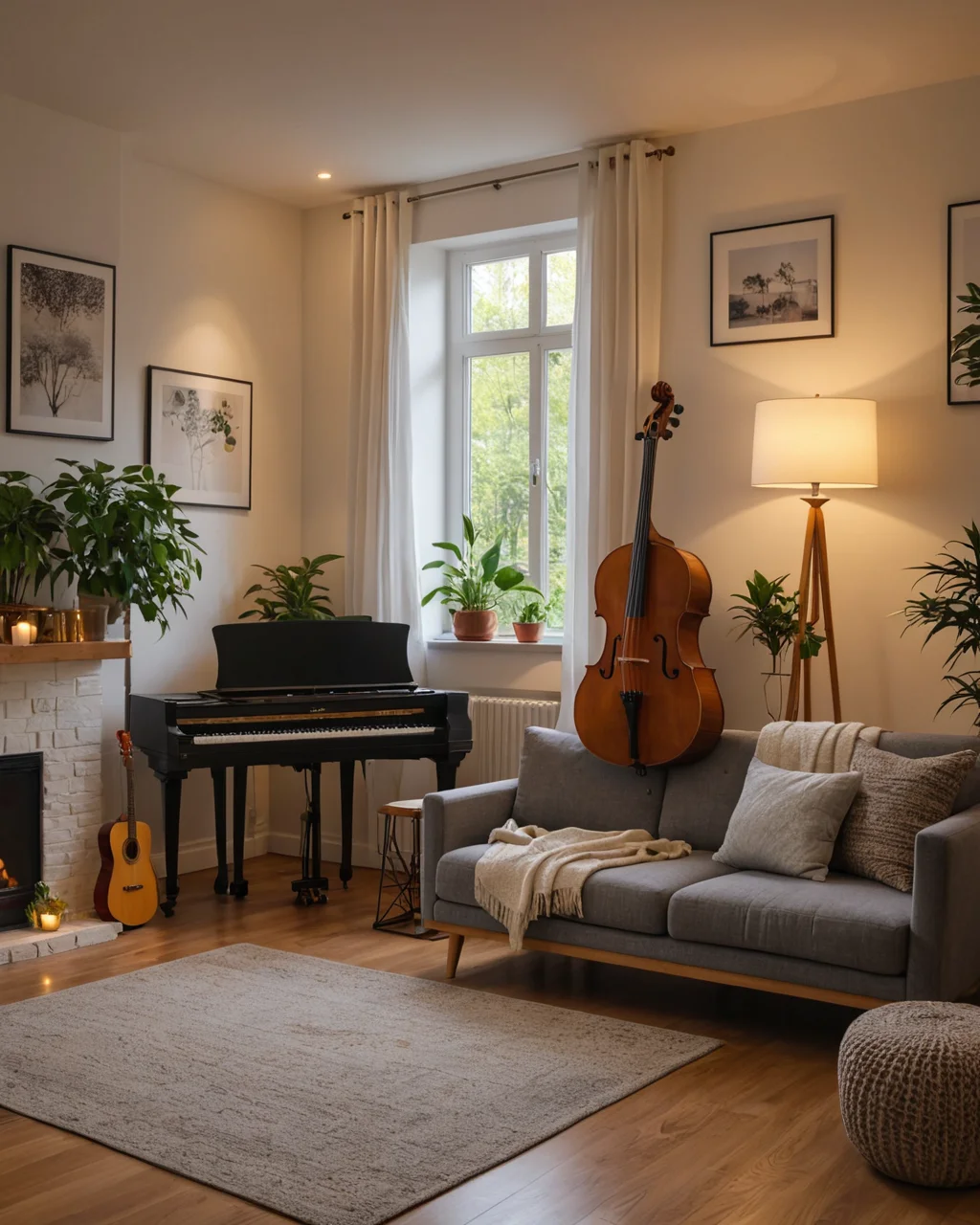
Sound plays an important role in Feng Shui, and its impact on mood should not be underestimated. Calm music or nature sounds can create a relaxing atmosphere conducive to peace. Choose melodies that you like and that help you focus or relax. This can be anything from the sounds of water to acoustic music.
Musical instruments can also become part of the decor and a source of positive energy. If you have a favorite instrument, don’t hesitate to display it prominently – it can become an interesting accent in the interior and a source of inspiration. Remember that the sound should be pleasant, not distracting, and conducive to relaxation.
Isolation from external noise is another important aspect of creating a comfortable atmosphere in the living room. Use dense curtains or carpets to minimize noise from outside. This will help create a secluded space where you can rest and restore your strength.
Aromatherapy: Scents That Create Coziness
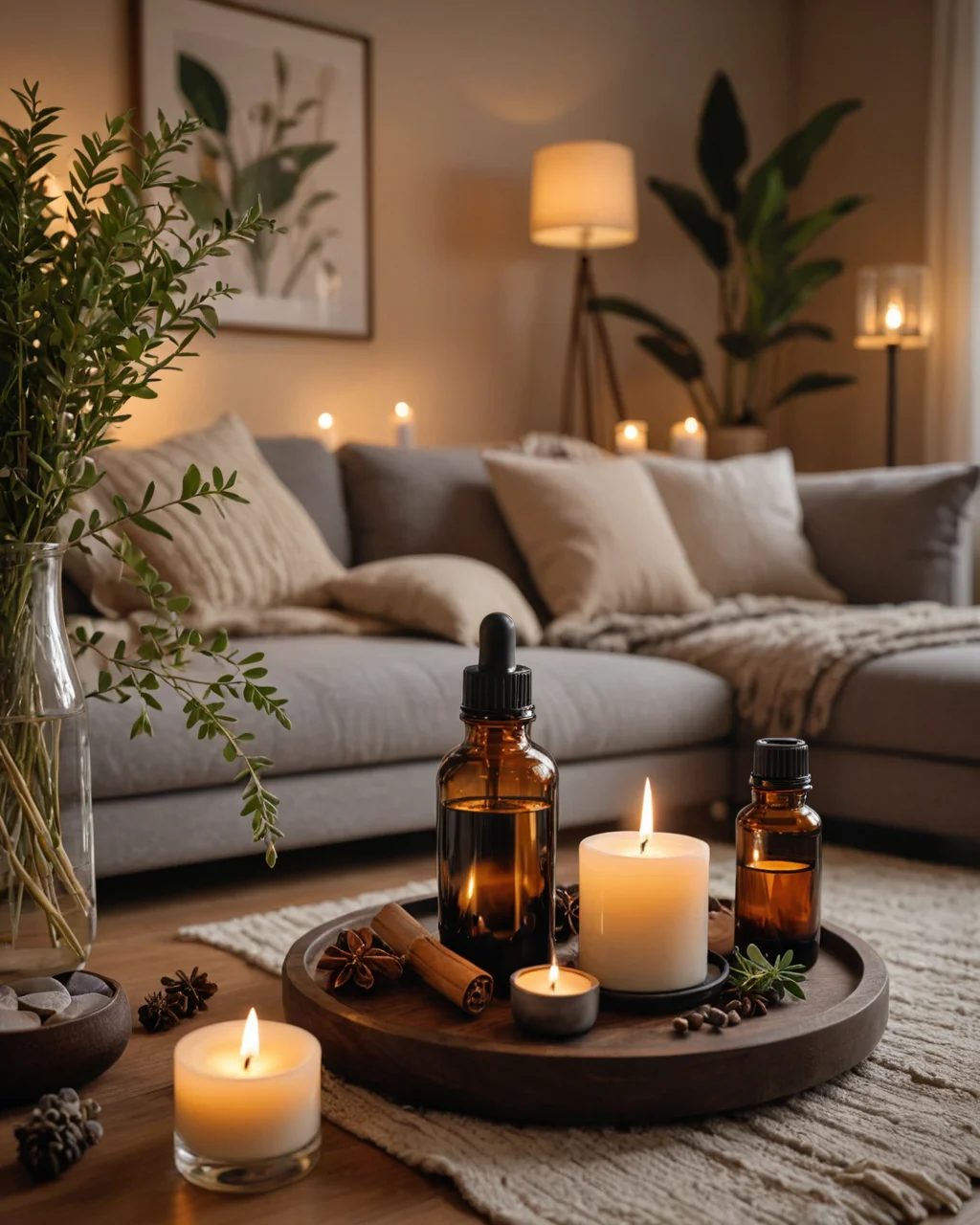
Scents have a powerful effect on a person’s psycho-emotional state. Aromatherapy can be a great way to create coziness and a relaxing atmosphere in the living room. Essential oils such as lavender, ylang-ylang, or bergamot help relieve stress and improve mood. Use them in aroma diffusers or add them to water for aromatic lamps.
The choice of essential oils should be based on your preferences and desired effect. For a relaxing atmosphere, oils with calming properties are suitable, and for mood enhancement – fresher and more invigorating aromas. Combining different oils can also create a unique and harmonious scent.
Aromatic candles and diffusers are not only practical but also aesthetically pleasing decorative elements. Choose candles made from natural waxes to avoid harmful chemicals and place them in relaxation areas. This will help create an atmosphere of warmth and coziness, especially in the evening.
Decor and Symbolism: Choosing Items for a Positive Space
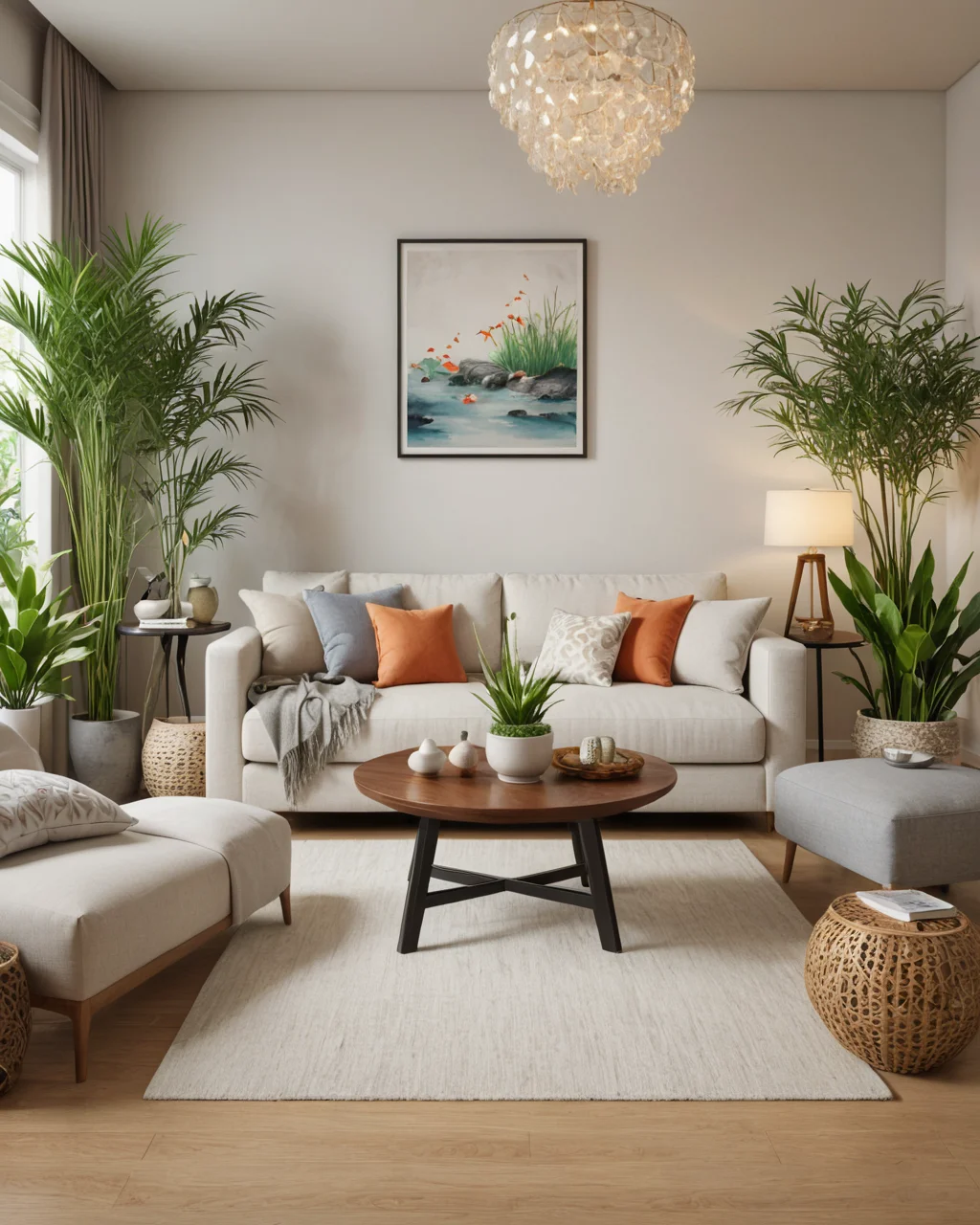
Decor in the living room not only beautifies the space but also reflects your personality and preferences. It is important to choose items that comply with Feng Shui principles. For example, paintings depicting nature or calm landscapes will help create a peaceful atmosphere. Try to avoid overly aggressive and harsh images that can disrupt harmony.
Symbols of luck and well-being can also become part of the decor. Images of fish, dragons, or the lotus flower are considered positive symbols in Feng Shui. By placing such elements in the living room, you bring positive energy into the space and create conditions for harmonious existence.
Balance between personal preferences and the energy of objects is key when choosing decor. It is important that every detail of the interior evokes positive emotions and contributes to creating coziness. At the same time, do not forget that the space should be free and uncluttered so that energy can circulate freely.