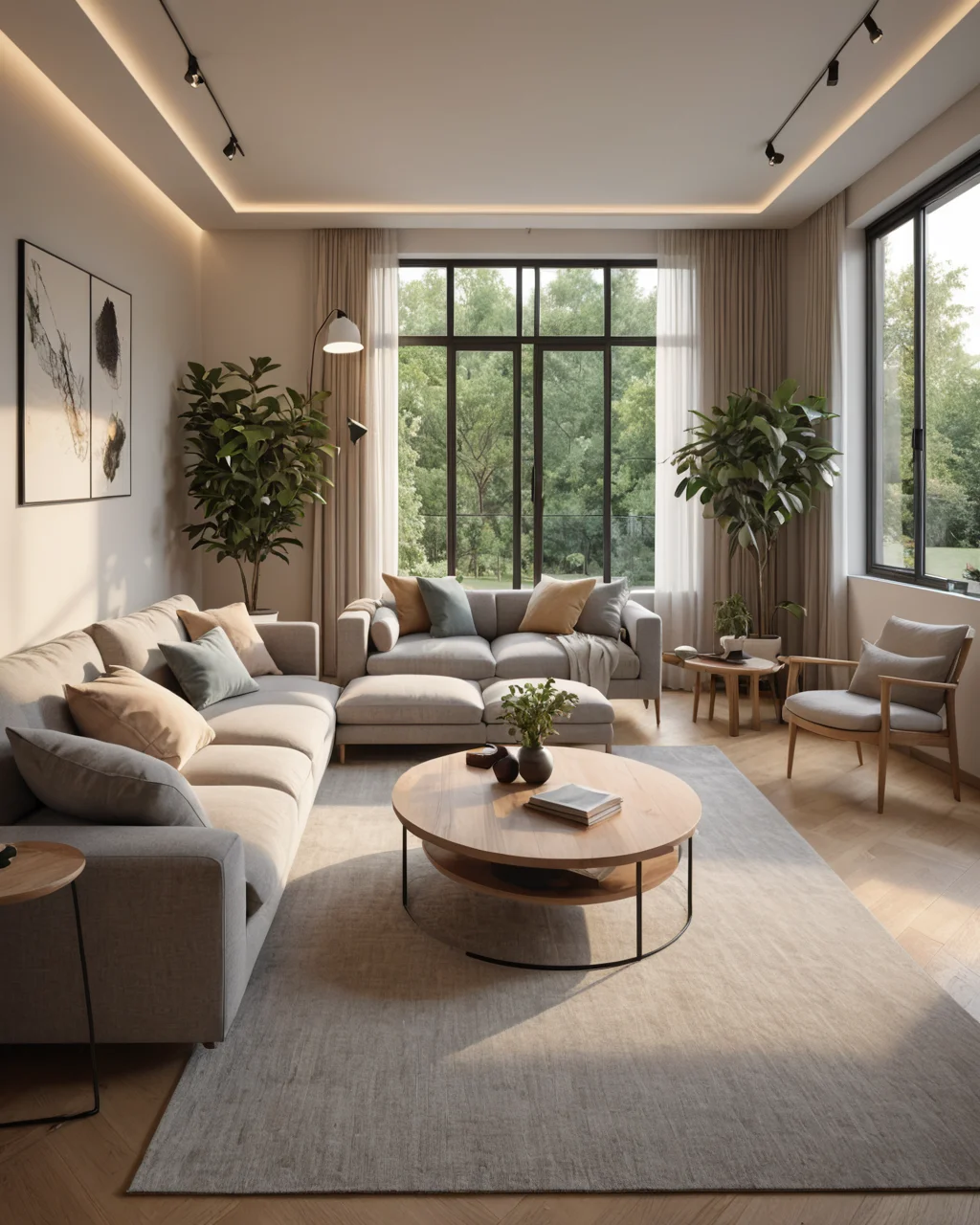
Each of us dreams of a cozy corner where we can relax after a long day at work. The living room is not just a room; it is a space filled with energy that can influence our mood and overall well-being. It is especially important to pay attention to Feng Shui if you have a small apartment where every detail matters. In this article, we will look at how to properly design a living room in accordance with Feng Shui principles to create an atmosphere of coziness and harmony.
The Energy of Space: The Foundation of Feng Shui
Understanding Feng Shui begins with studying the flow of Qi energy that permeates every space. It is important to realize how this energy moves and distributes in your living room. For example, if furniture is arranged in a way that obstructs movement, it can block positive energy flows. An optimal space design allows for free movement around the room. Use light and airy solutions to avoid overloading the space.
Also, pay attention to the shapes and angles in your interior. Sharp corners can create tension and aggression, while rounded shapes promote relaxation and harmony. When decorating, choose furniture with soft lines and smooth transitions. This will help create a softer and more comfortable atmosphere in your home.
The importance of open and closed zones should also not be underestimated. Open spaces promote energy circulation, while closed spaces can create a sense of coziness and security. Therefore, try to balance these elements, creating zones for active communication and solitude.
Color Palette for Coziness and Harmony
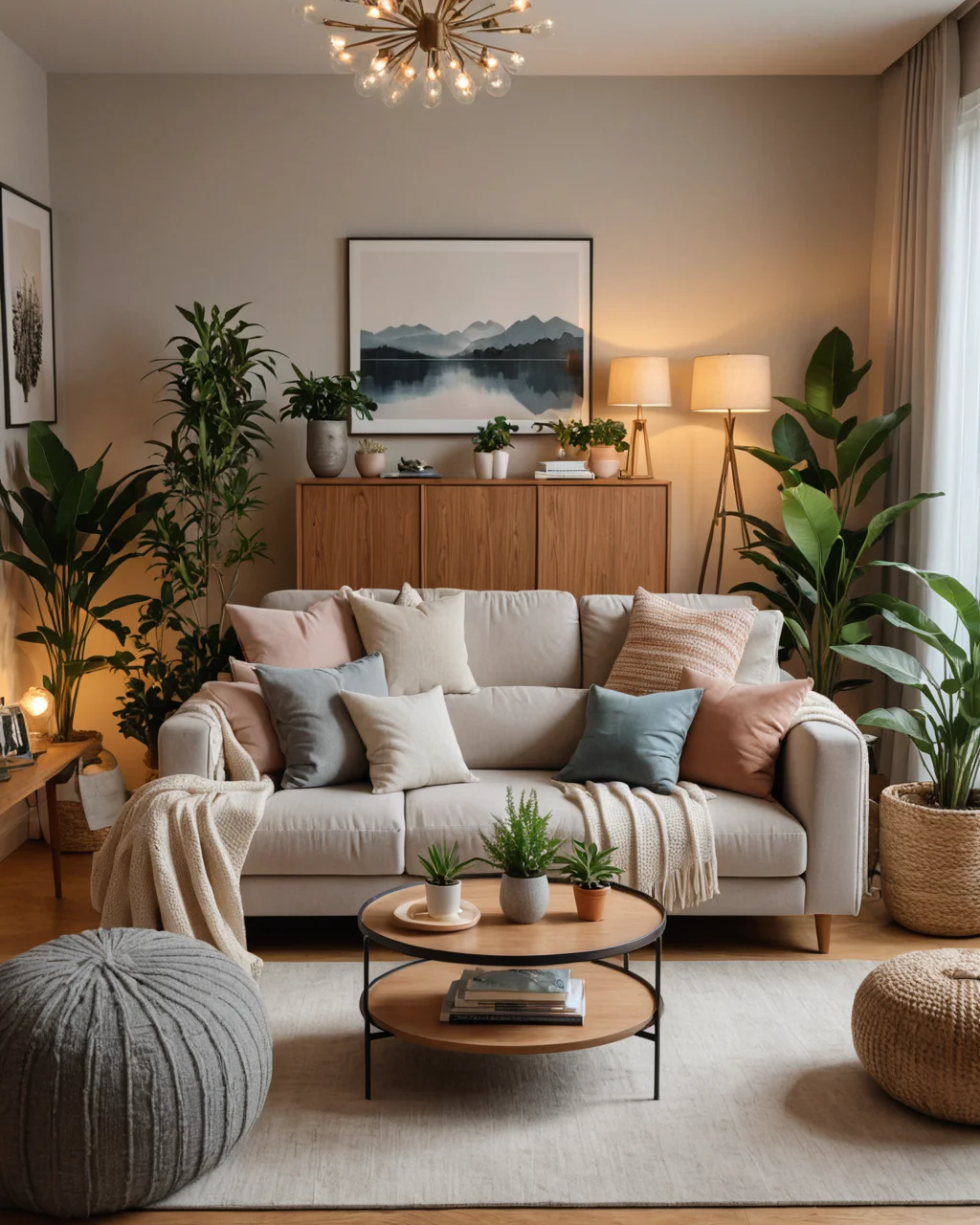
Colors in the interior play a huge role in creating atmosphere. Choosing a color palette depending on the purpose of the space can significantly affect the overall perception. For example, warm shades like beige, terracotta, and light yellow create an atmosphere of coziness and warmth, while cool tones like blue and green can visually expand the space and create a sense of calm.
The psychology of color is a separate science that studies how different colors affect our emotions. For example, red can increase energy and activity levels, while blue promotes relaxation and calmness. When choosing a palette for your living room, consider what you want to feel when spending time in this space.
The combination of warm and cool shades is also important for achieving balance. For example, using neutral tones in combination with bright accents can make the space more vibrant and interesting. Try adding bright details – pillows, paintings, or accessories – to introduce dynamism into your interior.
Furniture as a Source of Harmony
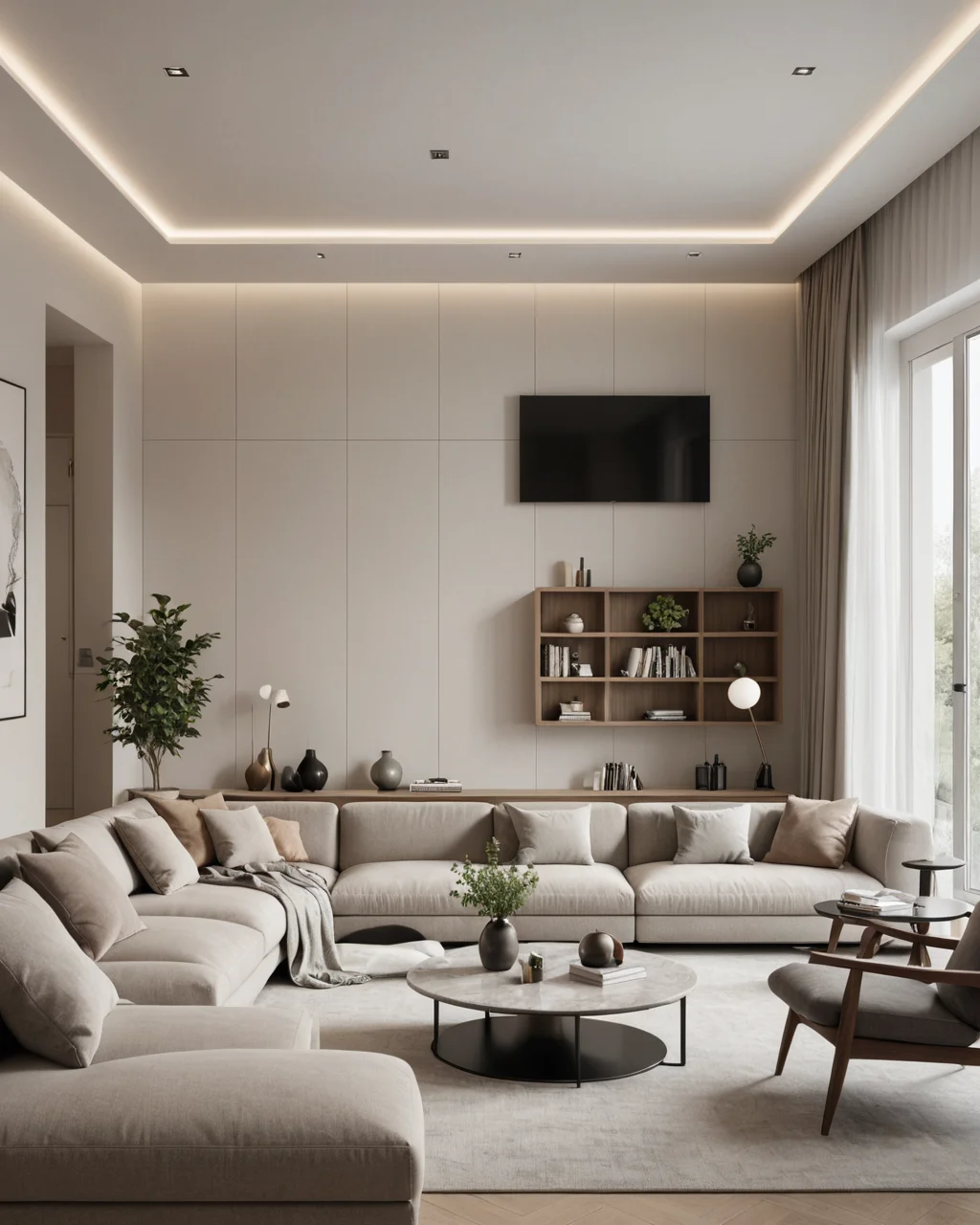
Furniture in your living room should promote harmony and comfortable movement. Optimizing furniture placement will help create a space that is not only comfortable to be in but also to socialize in. Try to arrange furniture so that it does not block passages and ensures free movement. For example, a sofa can be placed so that it does not obstruct the path to a window or door.
Functionality and comfort also play an important role. Choose items that are convenient to use and harmoniously fit into the interior. For example, multifunctional sofas and tables will help save space while maintaining coziness. Use smart storage solutions to avoid clutter and ensure lightness in the space.
Avoid sharp corners and heavy structures that can create discomfort. Soft furniture, round tables, and light structures will contribute to a pleasant atmosphere. This is especially important in small apartments where every element matters.
The Play of Light: Lighting in a Small Apartment
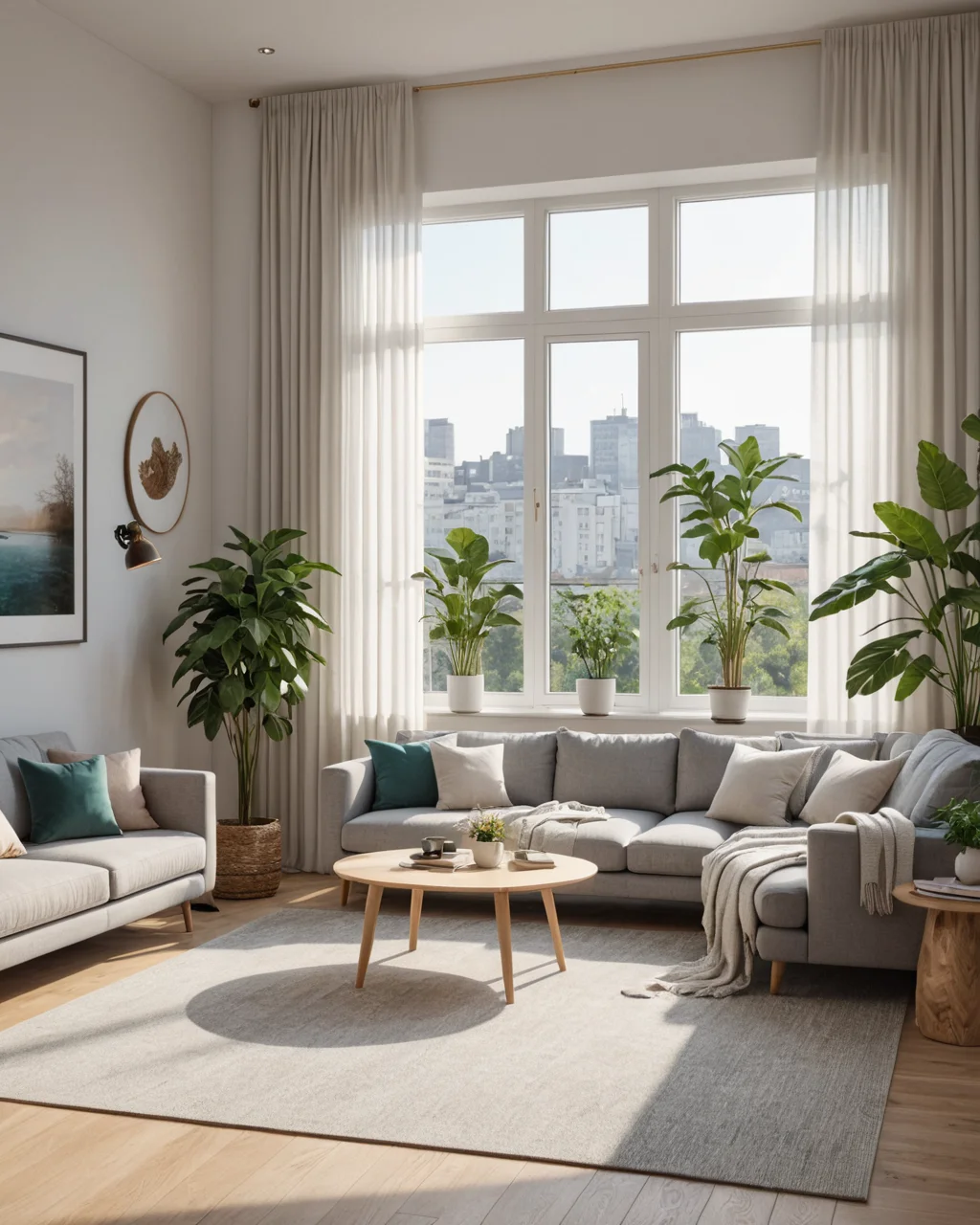
Lighting is one of the key factors that can transform your space. Natural light is the best friend of any living room. Try to maximize the use of windows, without blocking them with heavy curtains or furniture. Light curtains will allow sunlight to freely penetrate the room, creating a bright and cheerful atmosphere.
Artificial lighting also plays an important role. Choose lamps that match your interior style, and don’t forget about their placement. Different light sources can create different moods – from cozy evening light to bright daylight. Consider spotlights that can be placed in different corners of the room to create accent lighting.
Creating accents with light and shadow can be a true art. By illuminating certain areas, you can draw attention to paintings, plants, or other important interior elements. This will add volume to the space and help make it more lively.
Green Elements: Nature in the Interior
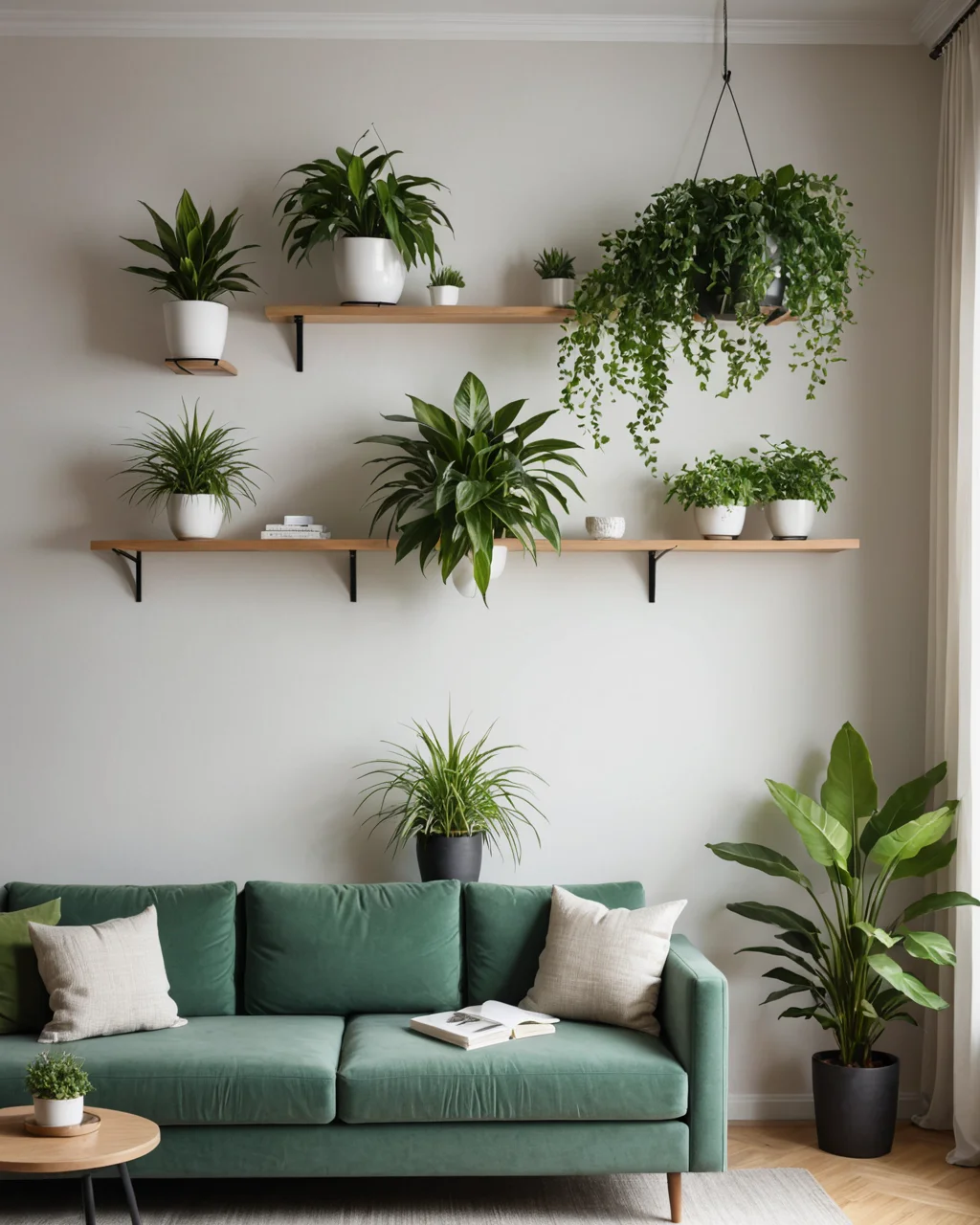
Nature in the interior is not only beautiful but also beneficial for the energy of the space. Certain plants can significantly improve the atmosphere in your living room, filling it with freshness and life-giving energy. For example, plants like Spathiphyllum or Sansevieria purify the air and have a positive effect on the health of the residents.
Tips for placing greenery will be useful for visually expanding the space. By placing plants in corners, on windowsills, and shelves, you can create an effect of lightness and airiness. For example, tall plants can visually extend the ceiling, and hanging flowers will add volume and dynamism.
Caring for plants is also important for maintaining their health and beauty. Greenery requires attention, but as a result, you will get not only a beautiful interior but also a favorable atmosphere for rest and recovery.
Personal Accents: Creating a Unique Style
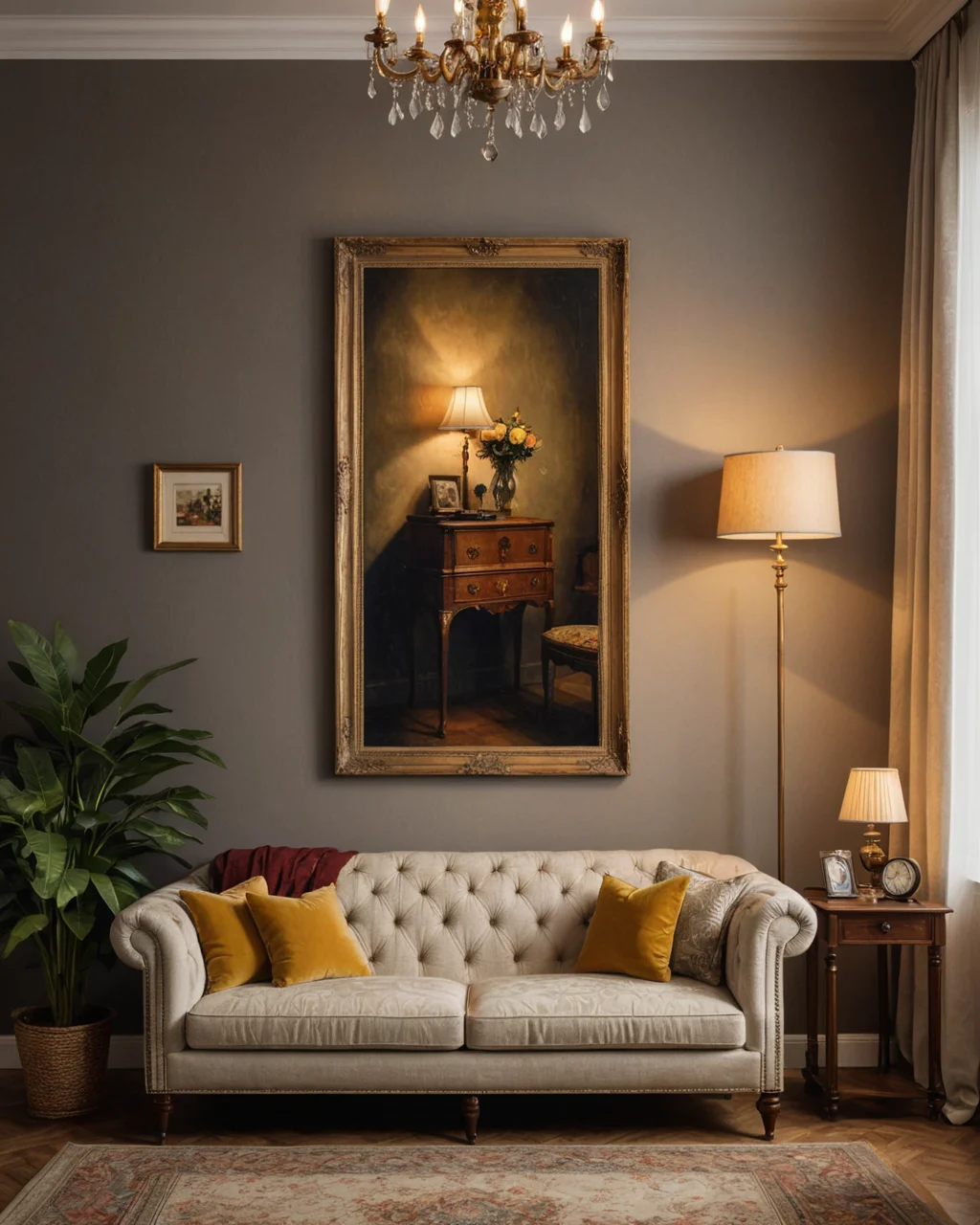
Creating a unique style begins with choosing decor that reflects your individuality. This can include both modern elements and antiques that bring depth and character to the interior. Posters and paintings that you like can become the focal point of your living room and help create an atmosphere that matches your preferences.
It is important to consider how decor affects the perception of space. For example, bright paintings can add dynamism and joy, while calm images promote tranquility. When choosing details, try to rely on your emotions and feelings so that the space is filled with what is close to you.
Using handmade items and antiques can bring uniqueness to your interior. These items often have their own history and can be an excellent conversation starter with guests, as well as add warmth and personal character to your living room.
Zoning: Multifacetedness in One Space
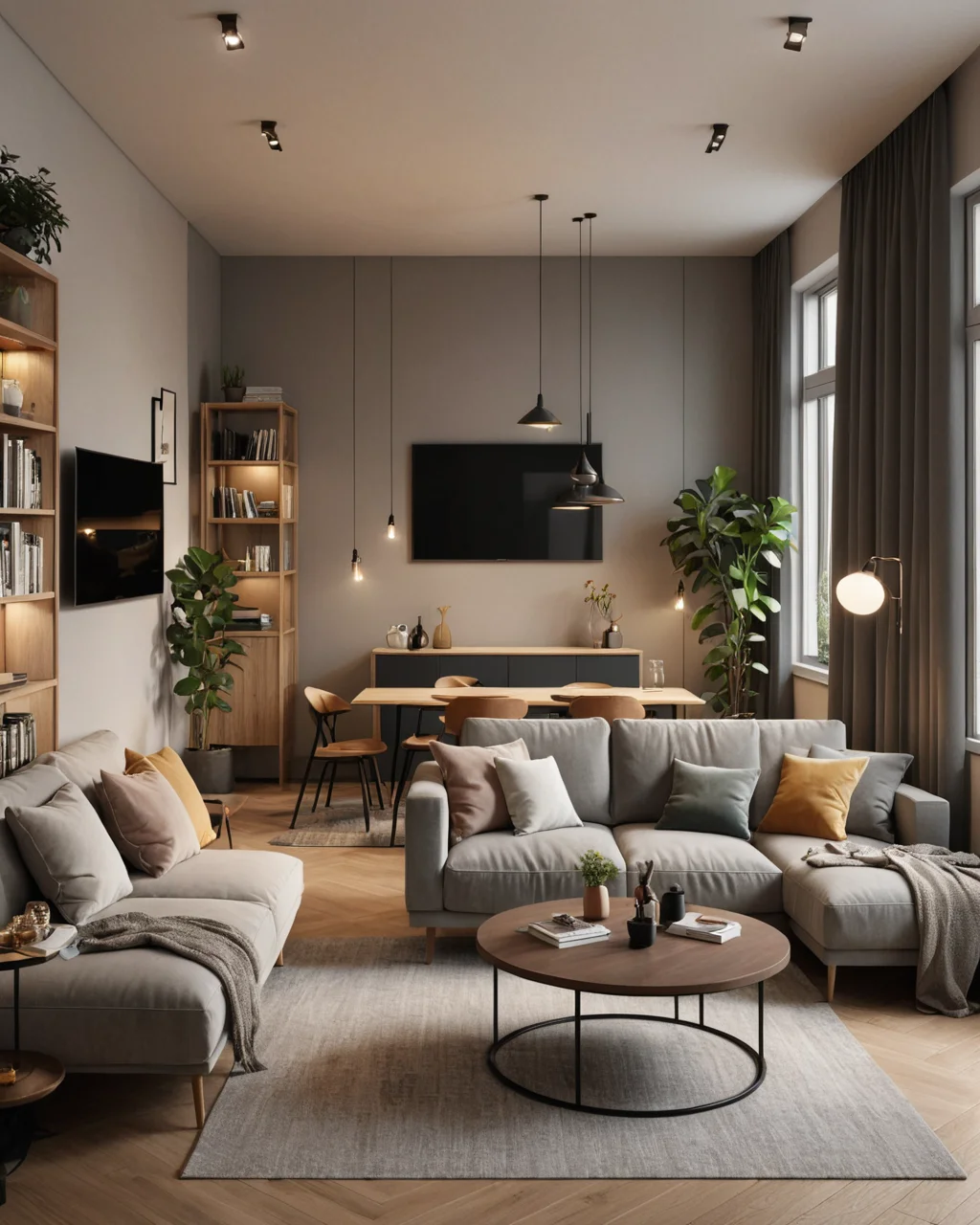
Zoning is an important aspect in a small apartment, allowing for the creation of a multifunctional space. There are many ways to divide a living room into functional zones, which allows for the most efficient use of space. For example, mobile partitions, shelving units, or even rugs can help delineate different zones – for relaxation, work, or socializing.
Using mobile furniture also promotes flexibility in space organization. For example, folding chairs or tables can be put away when not needed, freeing up space for games or other activities. This is especially relevant in small apartments where every square meter counts.
Creating coziness and privacy in a small space is possible through the use of different textures and materials. Pillows, blankets, rugs, and other elements will help make the space warmer and more friendly. Zoning allows not only for functional use of space but also for creating an atmosphere of coziness and tranquility where it is pleasant to spend time.